What is a Ball Screw Used For?
Ball screws are a crucial component in a wide variety of precision motion control systems. They transform rotational motion into linear motion with remarkable efficiency and accuracy. While seemingly simple, their application spans across numerous industries, from aerospace and automotive to medical and manufacturing. Understanding ball screws and their uses is essential for engineers, designers, and anyone involved in building or maintaining machinery that requires precise movement. This article will explore the applications, benefits, and key considerations when choosing a ball screw for your project.
Core Principles of Ball Screw Operation
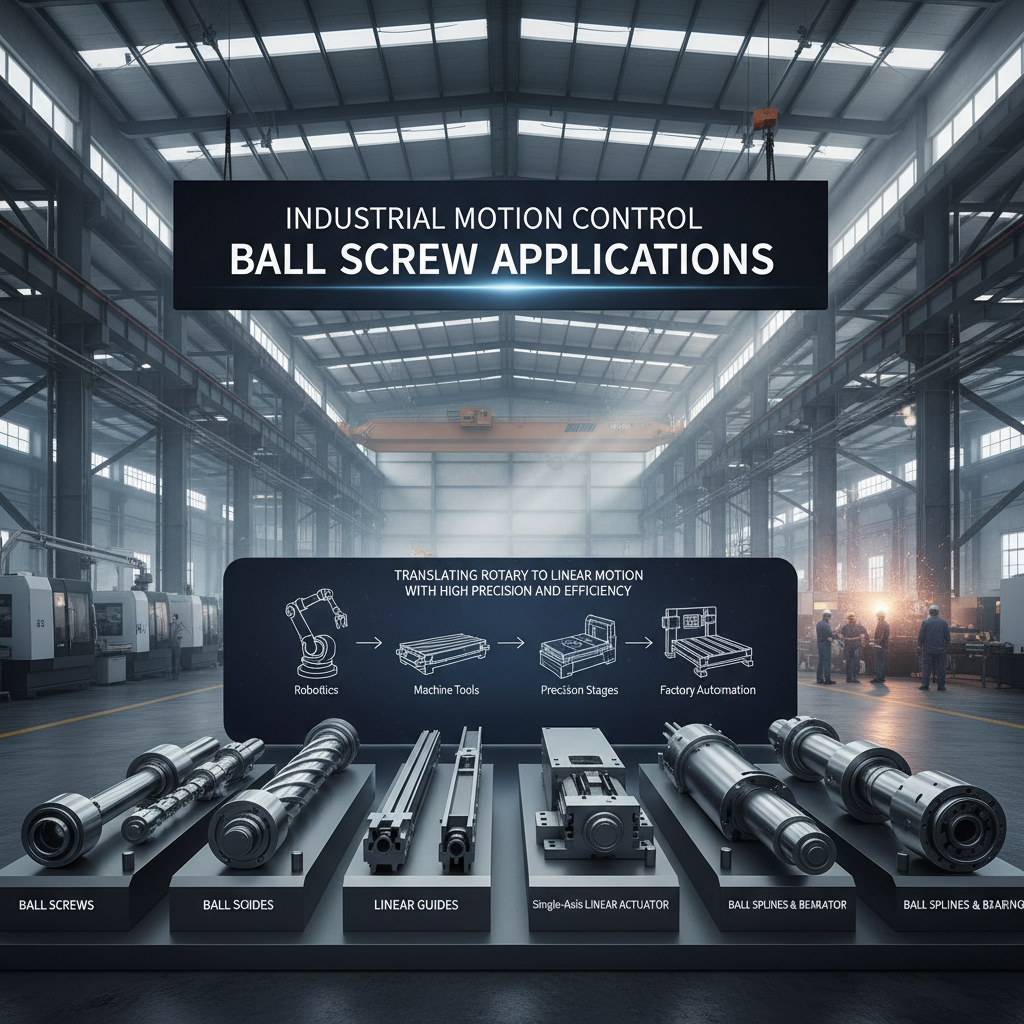
At its core, a ball screw consists of a screw shaft and a nut, with ball bearings positioned between the two. As the screw shaft rotates, the ball bearings circulate within grooves on both the screw and the nut, creating a smooth, rolling interface. This rolling action dramatically reduces friction compared to traditional lead screws, resulting in higher efficiency, lower heat generation, and longer lifespan. The precision of the screw and nut’s machining, combined with the use of high-quality ball bearings, is what allows ball screws to achieve exceptionally accurate linear motion.
Key Benefit: Ball screws offer significantly higher efficiency and longer life compared to traditional lead screws due to their rolling, rather than sliding, friction.
Common Applications of Ball Screws
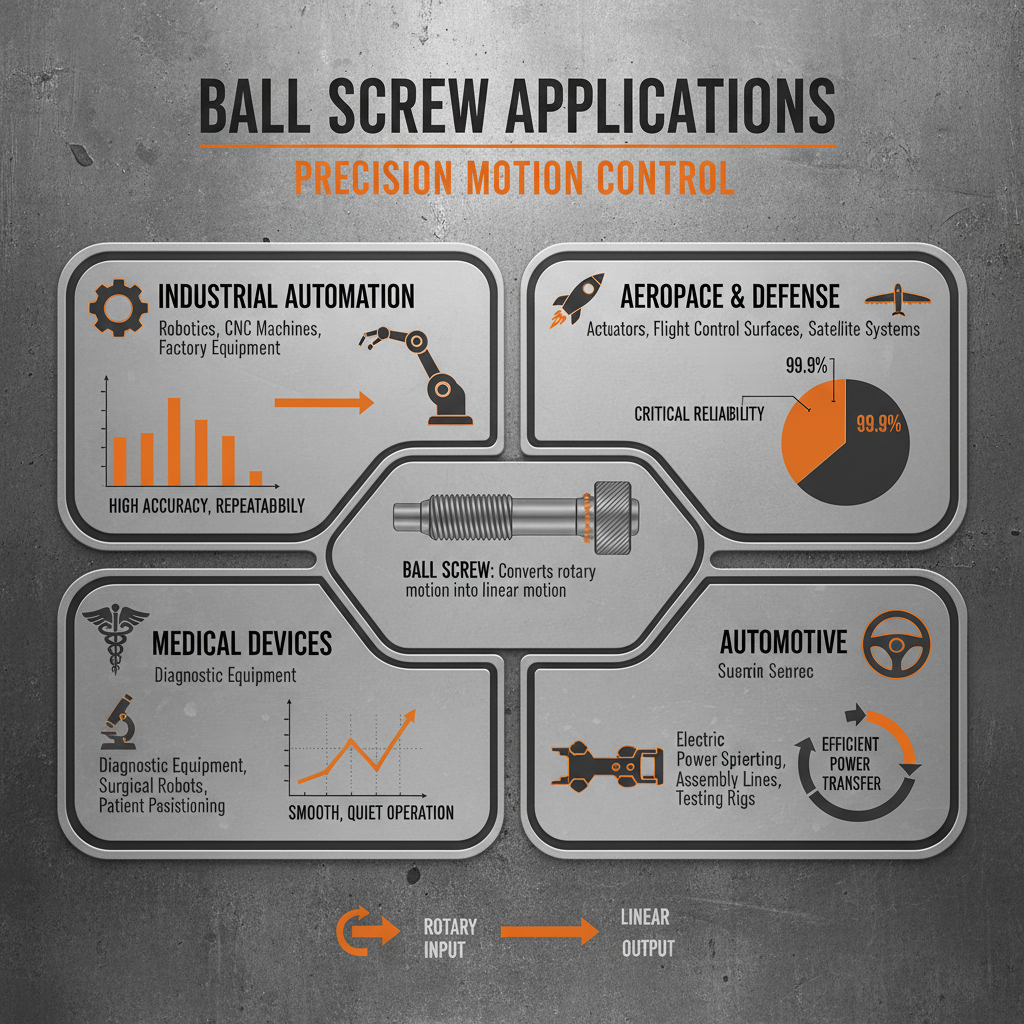
The precise and efficient nature of ball screws makes them ideal for a broad range of applications. In CNC machines, they are vital for controlling the movement of cutting tools, enabling intricate and accurate machining. Robotics utilizes ball screws for joint actuation, providing smooth and controlled motion. The medical industry employs them in surgical tables and imaging equipment, demanding precision and reliability. They’re also found in material handling systems, 3D printers, and even camera positioning systems. The versatility of ball screws is a testament to their superior performance.
Application Examples:
• CNC Machines
• Robotics
• 3D Printers
• Medical Equipment
Ball Screw vs. Lead Screw: A Detailed Comparison
While both ball screws and lead screws convert rotational motion to linear motion, they differ significantly in their efficiency and performance. Lead screws rely on a sliding friction between the screw and the nut, resulting in higher friction, wear, and heat generation. Ball screws, with their rolling element design, minimize friction, leading to higher efficiency, longer life, and greater accuracy. The higher initial cost of a ball screw is often offset by its improved performance and reduced maintenance requirements.
Factors to Consider When Selecting a Ball Screw
Choosing the right ball screw involves several critical considerations. Load capacity, speed requirements, accuracy, and environmental conditions all play a role. The screw’s diameter and lead determine its load capacity and speed. Preload is another key factor; it eliminates backlash and improves stiffness. Material selection, such as stainless steel or carbon steel, depends on the operating environment and corrosion resistance needs. Finally, consider the end support configuration to ensure proper stability and alignment. For a wide range of high-quality ball screws, visit Yidi Bearings.
The Future of Ball Screw Technology
Ongoing advancements in ball screw technology are focused on improving efficiency, reducing noise, and enhancing durability. New materials and coatings are being developed to minimize friction and wear, while innovative designs are increasing load capacity and stiffness. Integration with smart sensors and predictive maintenance systems is also emerging, enabling real-time monitoring and optimized performance. As automation and precision manufacturing continue to evolve, ball screws will undoubtedly remain a vital component in countless applications.
Conclusion
Ball screws are essential for precision motion control, offering superior efficiency and longevity compared to lead screws. Their widespread application across diverse industries underscores their importance in modern manufacturing and automation. Choosing the right ball screw requires careful consideration of factors like load, speed, and environment.
Frequently Asked Questions (FAQs)
What is the typical lifespan of a ball screw?
The lifespan of a ball screw is significantly longer than a lead screw, often exceeding 10,000 hours of operation. However, it depends on factors like load, speed, lubrication, and environmental conditions. Regular maintenance, including proper lubrication and cleaning, is crucial for maximizing lifespan. Proper installation and alignment also contribute to longevity. With appropriate care, a ball screw can provide reliable performance for many years.
What are the key benefits of using a preloaded ball screw?
Preloading a ball screw eliminates backlash – the small amount of free play between the nut and the screw – which is critical for applications requiring precise positioning. Preload also increases the stiffness of the system, improving its responsiveness and reducing vibrations. This results in more accurate and reliable motion control, particularly in high-performance applications such as CNC machining and robotics.
What type of lubrication is recommended for ball screws?
The optimal lubrication for a ball screw depends on the operating conditions and load. Generally, a high-quality synthetic grease is recommended. It's crucial to choose a grease specifically designed for ball screws, as it must provide adequate lubrication, prevent corrosion, and resist washout at high speeds. Regular relubrication is essential to maintain optimal performance and prevent wear. Consult the manufacturer's guidelines for specific recommendations.
Can ball screws be used in corrosive environments?
Yes, ball screws can be used in corrosive environments, but it’s vital to select the appropriate materials. Stainless steel ball screws offer excellent corrosion resistance and are ideal for applications exposed to moisture, chemicals, or harsh environments. Protective coatings can also be applied to carbon steel ball screws to enhance their corrosion resistance. Proper sealing and lubrication are also crucial for preventing corrosion.