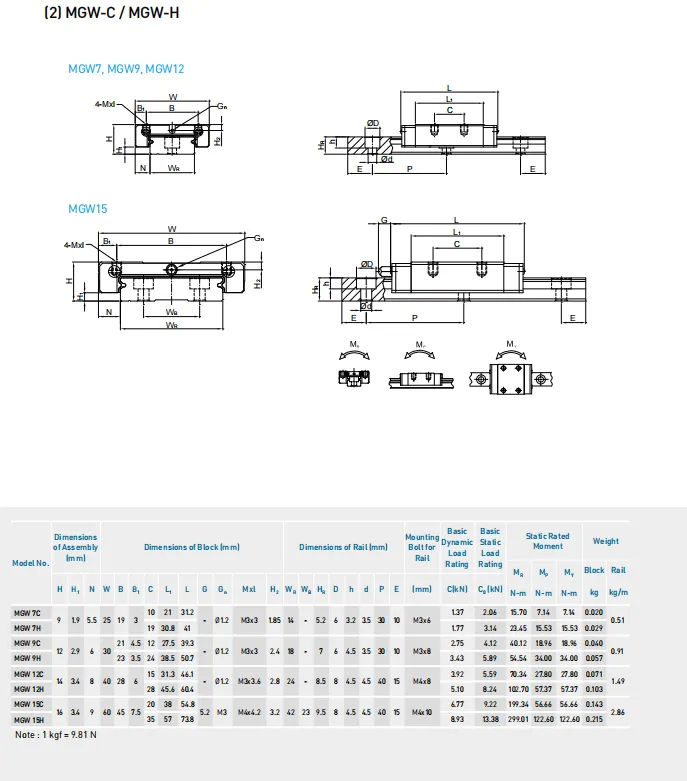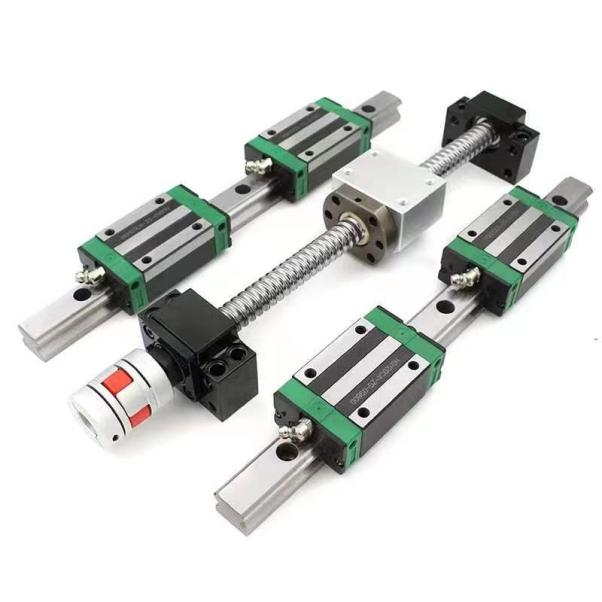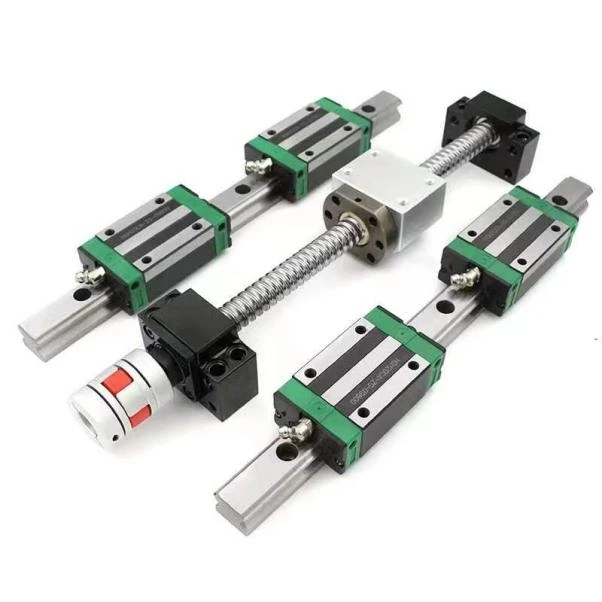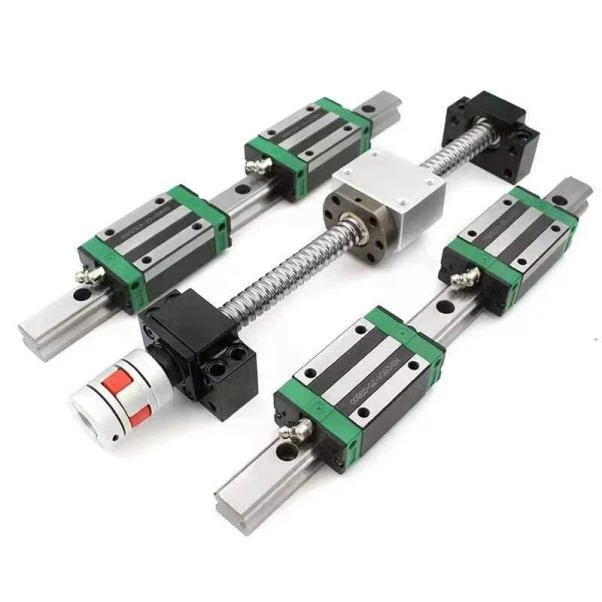
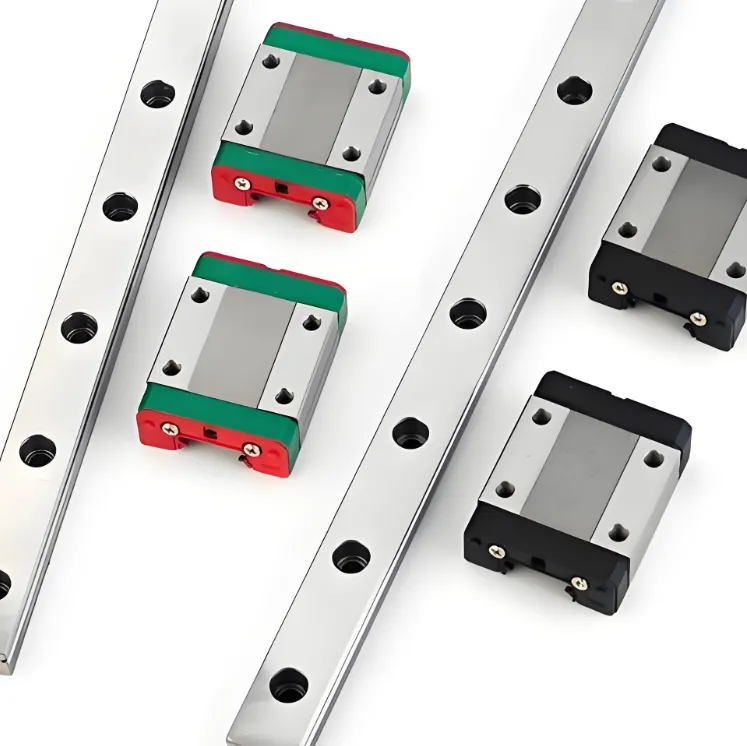
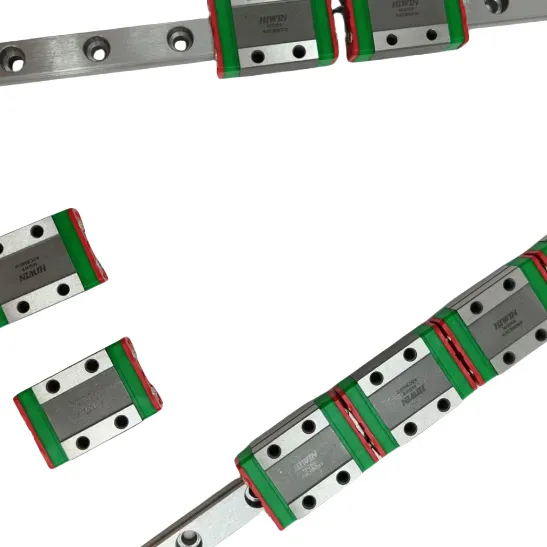
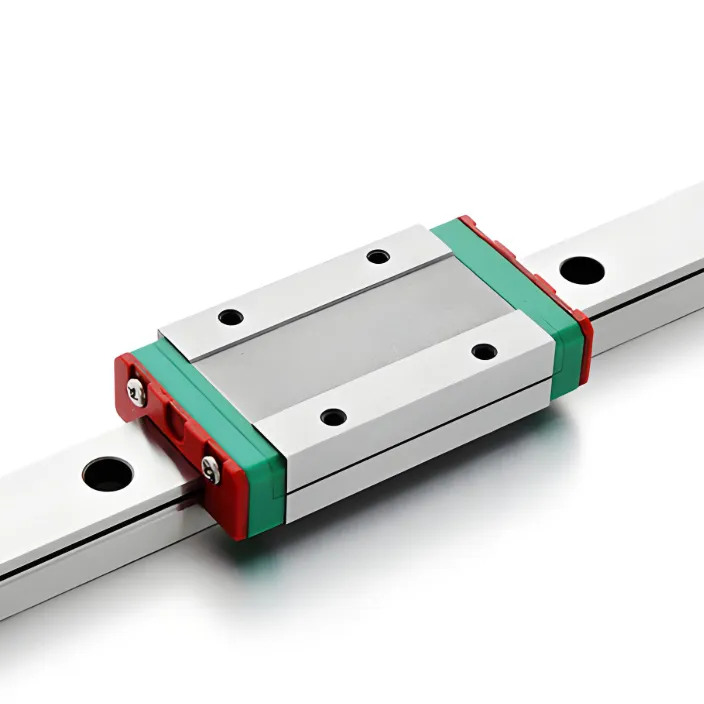
MG Series Micro Bearing Linear Guide Mgn7 Mgn9 Stainless Steel Linear Guide Rails

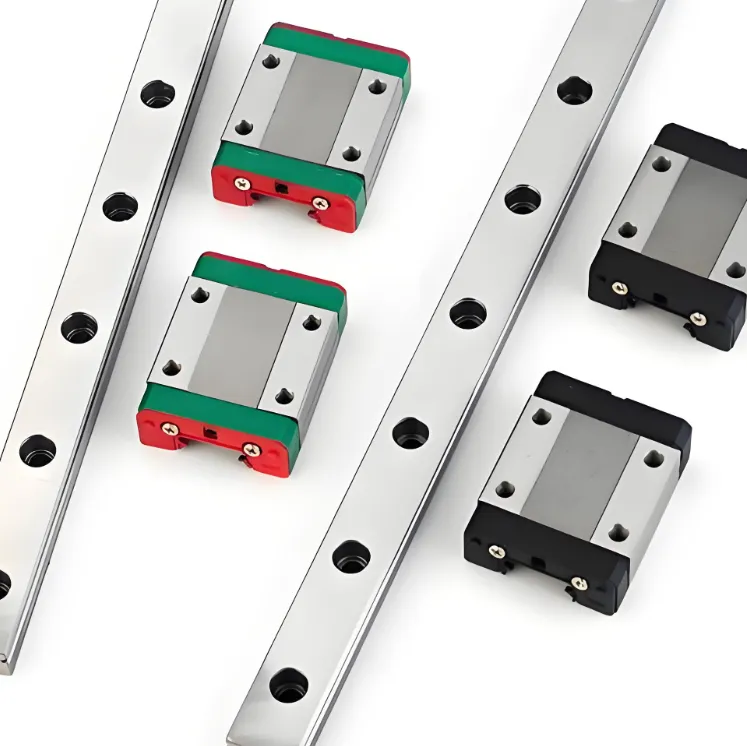
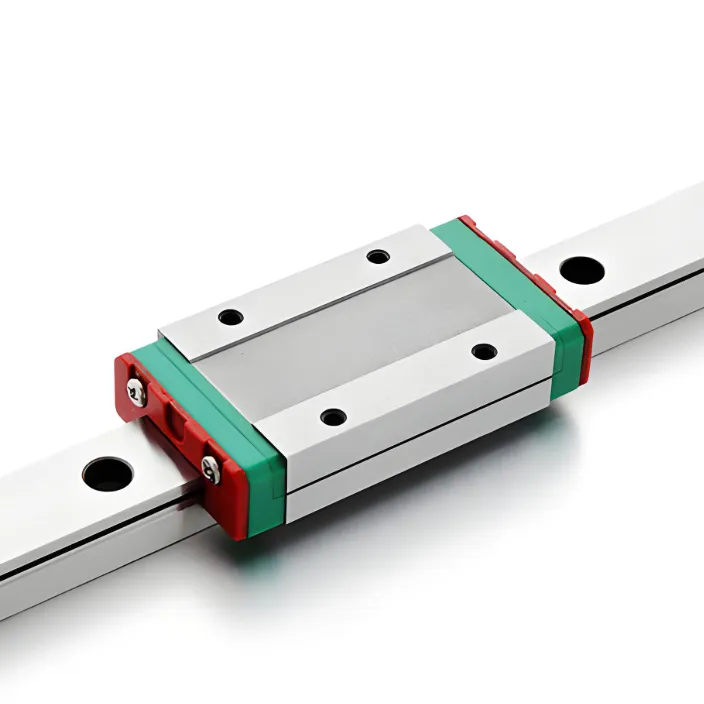
The MG series is a miniature ball linear guide designed specifically for space limited equipment, featuring three major characteristics: compactness, high precision, and low friction.

Share:
  • Product Features

    Lightweight structure: The slider and slide rail adopt ultra-thin design, reducing weight by more than 20% and suitable for miniaturized devices;


    Four directional equal load: 45 ° Goethe style groove+four point contact steel ball design, can evenly bear radial, anti radial, and transverse longitudinal loads, with strong resistance to eccentric loads;


    Rust prevention and material selection: available in stainless steel (slider/slide rail/steel ball all series rust prevention) version to meet different environmental requirements;


    Low noise and high lubrication: Optimized the steel ball return path and oil circuit design, reduced friction resistance, and significantly lower operating noise than conventional guide rails.   

  • Product Application

    Electronic manufacturing: IC packaging machine, PCB placement machine positioning platform

    Medical equipment: Endoscopic robotic arm, microinjection mechanism

    Robots: Collaborative robot joints, SCARA end effectors

    Testing instruments: optical testing platform, wafer probe platform

  • Product Detail


  • Product Parameters

  • What is the average lead time?

    Request a Quote

    If you are interested in our products, you can choose to leave your information here, and we will be in touch with you shortly.
    • name*
    • email*
    • phone*
    • message*
Products
Tapered Roller Bearing

Tapered Roller Bearing

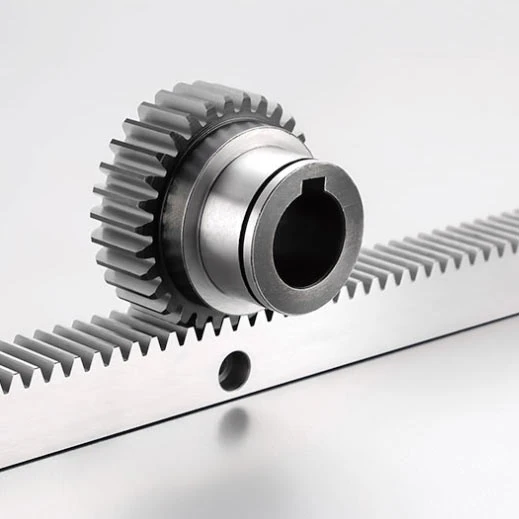
Rocket Pinion Gear And Rack

Rocket Pinion Gear And Rack

bearings
Reliable Rack and Pinion Suppliers for Precision Machinery
As a precision machinery manufacturer, we highly appreciate the quality and consistency from this rack and pinion supplier. The gear accuracy is excellent, and the delivery is always on time.
bearings
Carlos Ramirez
Precision Machinery Manufacturing
ball screw manufacturers
Best Rack and Pinion Supplier for Automation Equipment
We’ve been working with this rack and pinion supplier for over 5 years. Their products are durable, precise, and the customer service is outstanding. Highly recommended for anyone in the automation sector.
ball screw manufacturers
Michael Thompson
Automation Equipment Manufacturing
ball screw manufacturers
High-Quality Rack and Pinion for Heavy Machinery
Their rack and pinion systems are exceptionally strong and reliable. As a heavy machinery manufacturer, we rely on their products to ensure the stability and performance of our equipment.
ball screw manufacturers
Diego Fernández
Heavy Machinery Manufacturing
ball screw manufacturers
Top Rack and Pinion Supplier for Robotics Applications
This rack and pinion supplier has been instrumental in supporting our robotics projects. The precision and smooth operation of their components greatly improve our robotic systems’ efficiency.
ball screw manufacturers
Kenji Nakamura
Robotics Manufacturing

Follow Our Blog

Understanding Rack and Pinion Systems What is Rack and Pinion Used For and Applications

The rack and pinion is a deceptively simple, yet incredibly versatile mechanical system used to convert rotational motion into linear motion. This principle finds applications in a surprisingly wide range of industries, from automotive steering systems to industrial machinery. Understanding how a rack and pinion system works and its various applications is crucial for engineers, mechanics, and anyone involved in these fields. This article delves into the intricacies of rack and pinion systems, exploring their components, working principles, common applications, and advantages. At its heart, a rack and pinion system consists of two main parts: the rack and the pinion. The rack is a linear gear – a flat, toothed bar. The pinion is a circular gear that meshes with the teeth of the rack. When the pinion is rotated, its teeth engage with the rack, causing the rack to move linearly. The materials used for both components vary based on the application, but commonly include steel, brass, and plastic. The precision of the teeth is paramount for smooth and efficient operation. Quality rack and pinion gears are vital for consistent performance.
Feb 02 . 26

Comprehensive Guide to Back Bearings Functionality and Application

Back bearings, also known as one-way clutches or freewheel bearings, are critical components in a wide range of mechanical systems. They allow for power transmission in one direction while providing free rotation in the opposite direction. This functionality is vital in applications from automotive alternators to industrial machinery. Choosing the right back bearing is essential for optimal performance and longevity of your equipment. This article explores their types, applications, how they work, maintenance, and factors to consider when selecting one for your specific needs. At their core, back bearings utilize a cleverly designed mechanism to enable one-way rotation. They typically consist of a housing, bearing elements (often rollers or balls), and a locking mechanism. When torque is applied in the drive direction, the bearing elements engage, transmitting power. When torque is applied in the reverse direction, the elements are free to rotate, allowing for free-wheeling.
Mar 03 . 26

Comprehensive Guide to Angular Ball Bearings Design and Application

Angular ball bearings are a crucial component in many mechanical systems, renowned for their ability to handle both radial and axial loads. These bearings are essential in applications demanding precision and durability. This article provides an in-depth exploration of angular ball bearings, covering their design, applications, advantages, and selection criteria. Whether you're an engineer, a maintenance professional, or simply seeking to understand this vital technology, this guide will offer valuable insights. Proper bearing selection is key to optimal performance and longevity. Angular ball bearings are designed with a unique raceway geometry. The inner and outer races are displaced axially relative to each other, creating a contact angle. This contact angle allows the bearing to support significant axial loads in one direction. Because of this, angular ball bearings are often used in pairs or in opposing configurations to handle axial loads in both directions. The balls themselves are precisely manufactured to ensure smooth rolling motion and minimal friction.
Mar 03 . 26

If you are interested in our products, you can choose to leave your information here, and we will be in touch with you shortly.


3_3ricon1-webp17404468391174113810811 819_2025032815201169958.png

If you are interested in our products, you can choose to leave your information here, and we will be in touch with you shortly.