Understanding Air Bearings: A Comprehensive Guide
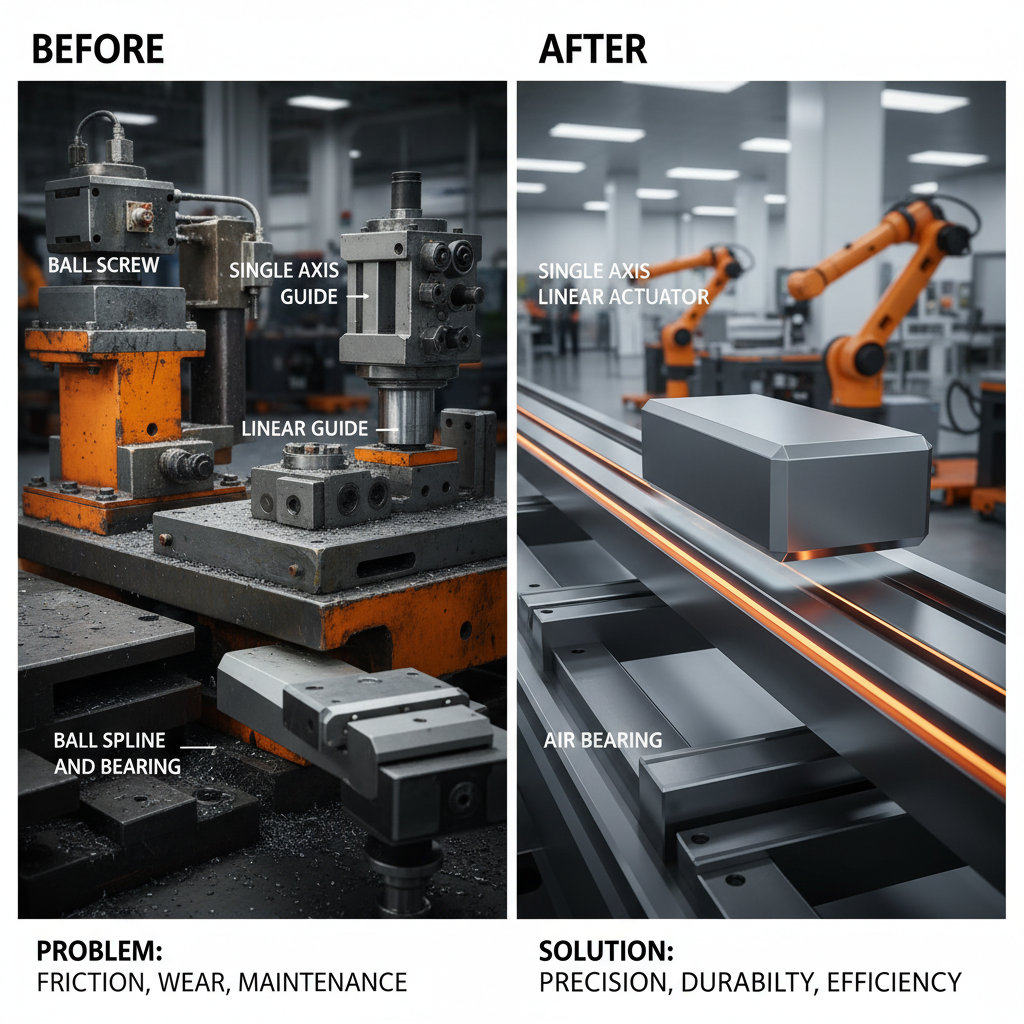
Air bearings represent a sophisticated technology offering frictionless motion and precise positioning in a variety of industrial applications. Unlike traditional bearings that rely on rolling elements or sliding surfaces, air bearings utilize a thin film of pressurized air to separate moving surfaces. This article delves into the principles, types, advantages, and applications of air bearings, providing a thorough overview for engineers, designers, and anyone interested in this innovative technology. Choosing the right bearing solution is crucial for optimal performance and longevity, and air bearings often provide a superior option in demanding environments.
How Do Air Bearings Work?
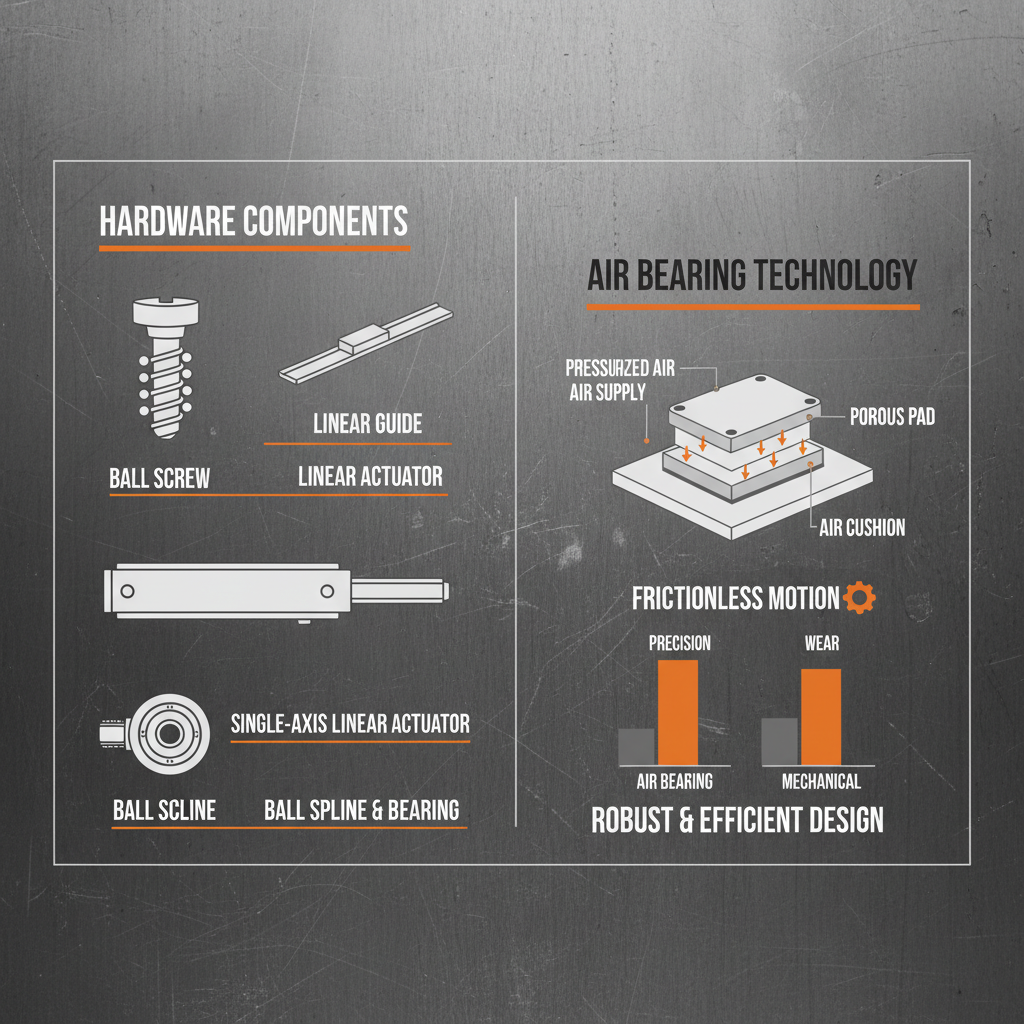
The fundamental principle behind air bearings is simple: a thin film of pressurized air supports a load, eliminating direct contact between moving surfaces. This is achieved by precisely metering air through small orifices (pores) in the bearing surface. The air film creates a near-frictionless interface, resulting in remarkably smooth and precise motion. The pressurized air supply is typically provided by an external compressor, and the air film thickness is controlled by the air pressure and the bearing's geometry. Yidi Bearings specializes in designing and manufacturing high-precision air bearings tailored to specific application requirements.
Key Advantages: Near-zero friction, high precision, long life, absence of wear particles, and suitability for harsh environments.
Types of Air Bearings
Air bearings come in several configurations, each suited to different applications. The most common types include:
- Orifice Bearings: Simplest type, relying on fixed orifices for air distribution.
- Grooved Bearings: Feature shallow grooves for more uniform air film generation.
- Vented Bearings: Incorporate venting structures to control air film thickness and stability.
- Self-Leveling Bearings: Can compensate for slight misalignment between surfaces.
- Annular Bearings: Suitable for rotary applications, providing radial and axial support.
Choosing the Right Type:
• Consider the load capacity requirements.
• Evaluate the required precision and stiffness.
• Assess the operating environment (temperature, cleanliness).
• Determine the necessary dynamic range.
Air Bearing vs. Traditional Bearing: A Comparison
Compared to traditional bearings (ball, roller, sleeve), air bearings offer distinct advantages, but also have limitations. The following table highlights key differences:
Applications of Air Bearings
Air bearings are employed in a wide array of precision applications, including:
- Precision Machining: Providing ultra-smooth motion for CNC machines and grinders.
- Semiconductor Manufacturing: Enabling precise wafer handling and positioning.
- Coordinate Measuring Machines (CMMs): Enhancing measurement accuracy.
- Medical Devices: Facilitating delicate movements in surgical robots and diagnostic equipment.
- Optical Systems: Supporting mirrors and lenses with minimal distortion.
Yidi Bearings offers custom-engineered air bearing solutions for diverse industry needs.
Maintaining and Troubleshooting Air Bearings
Proper maintenance is crucial for ensuring the longevity and performance of air bearings. This includes keeping the air supply clean and dry, regularly inspecting for leaks, and monitoring the air pressure. Common issues such as instability or reduced performance can often be traced to insufficient air supply, contamination, or bearing damage. Contacting a specialist like Yidi Bearings is recommended for complex troubleshooting and repair needs.
Conclusion: The Future of Precision Motion
Air bearings are revolutionizing precision motion control across a multitude of industries. Their unique combination of frictionless operation, high precision, and long-term reliability makes them an ideal choice for demanding applications. As technology continues to advance, air bearings will undoubtedly play an increasingly significant role in driving innovation. Explore the possibilities with Yidi Bearings and discover how air bearing technology can enhance your products and processes.
Frequently Asked Questions (FAQs)
What are the main limitations of air bearings?
While air bearings offer numerous advantages, they also have some limitations. The primary one is their relatively low load capacity compared to traditional bearings. They require a continuous supply of clean, compressed air, which can add to the system's complexity and operating cost. Additionally, air bearings can be sensitive to contamination and require effective air filtration to prevent damage. Precise control of the air supply is also essential to maintain stability and performance. Yidi Bearings designs systems to mitigate these limitations.
What level of air purity is required for air bearings?
Air purity is critical for air bearing performance and longevity. The air supply should be free of oil, water, and particulate matter. Typically, a filtration system capable of providing air with a particle size of 1 micron or less is recommended. Desiccant dryers are often used to remove moisture, and oil-free compressors are preferred. Regular maintenance of the air filtration system is essential to ensure consistent air quality. Yidi Bearings can advise on appropriate air filtration solutions.
Can air bearings be used in vacuum environments?
Yes, air bearings can be used in vacuum environments, but careful consideration must be given to the design and operating parameters. Since air bearings rely on a pressurized air film, maintaining sufficient pressure in a vacuum requires a more robust air supply system. The bearing geometry and orifice size may need to be optimized to ensure stable operation at reduced pressures. Specialized air bearing designs are available for vacuum applications, ensuring reliable performance even under extreme conditions. Contact Yidi Bearings to discuss your specific vacuum application.
How does temperature affect air bearing performance?
Temperature can influence air bearing performance in several ways. Changes in air temperature affect its density and viscosity, which can alter the air film thickness and stiffness. Extreme temperatures can also cause thermal expansion or contraction of the bearing components, potentially affecting precision. In applications where precise temperature control is critical, temperature compensation mechanisms may be necessary. Yidi Bearings offers solutions designed to operate effectively across a wide temperature range.