Ball Screw Working Principle: Essential Guide for Precision Automation Buyers
Ball Screw Working Principle | High-Precision Linear Motion Explained | YIDI Motion Factory
Meta Description: Discover the ball screw working principle for efficient rotary-to-linear conversion in CNC, robotics, and industrial automation. Insights from YIDI Motion's engineering team on preload, load ratings, and procurement tips for OEM buyers worldwide.
Ever dealt with a machine where friction eats into your uptime? In precision setups like CNC mills or robotic arms, that drag can throw off tolerances fast. That's where ball screws step in. We've seen it firsthand at YIDI Motion—switching to a quality ball screw often cuts wear by noticeable margins, especially under heavy cycles.
I'm Adam Li, Export Director here at HEBEI YIDI IMPORT AND EXPORT TRADING CO.,LTD. With shipments to over 50 countries since 2020, we've supplied ball screws to U.S. automation firms tackling everything from semiconductor handling to heavy gantry systems. This guide breaks down the ball screw working principle, not in textbook terms, but how it plays out in real operations.
Procurement managers hit us up daily: "How does it handle backlash?" or "What's the real lead on high-speed apps?" We'll cover that, plus why rushed specs from low-end suppliers lead to headaches down the line.
Table of Contents
Ball Screw Working Principle: The Mechanics Behind Frictionless Motion
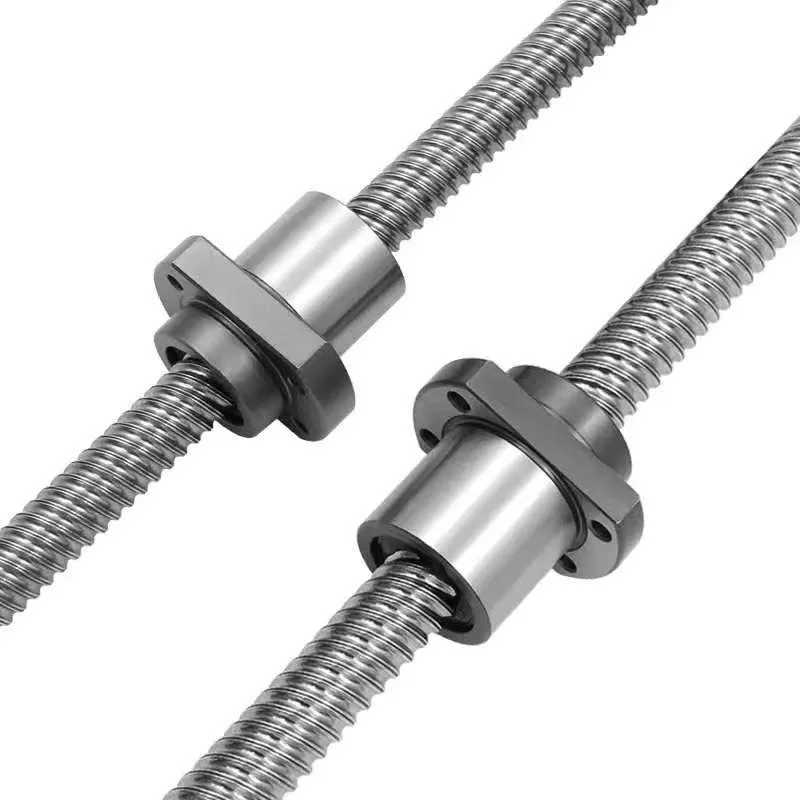
At its core, the ball screw working principle relies on rolling contact, not sliding like old-school lead screws. Picture this: a threaded shaft spins, but instead of metal grinding metal, hardened steel balls roll between the screw's helical groove and the nut's matching path. That rolling action? It slashes friction to under 1% of what you'd see in acme threads.
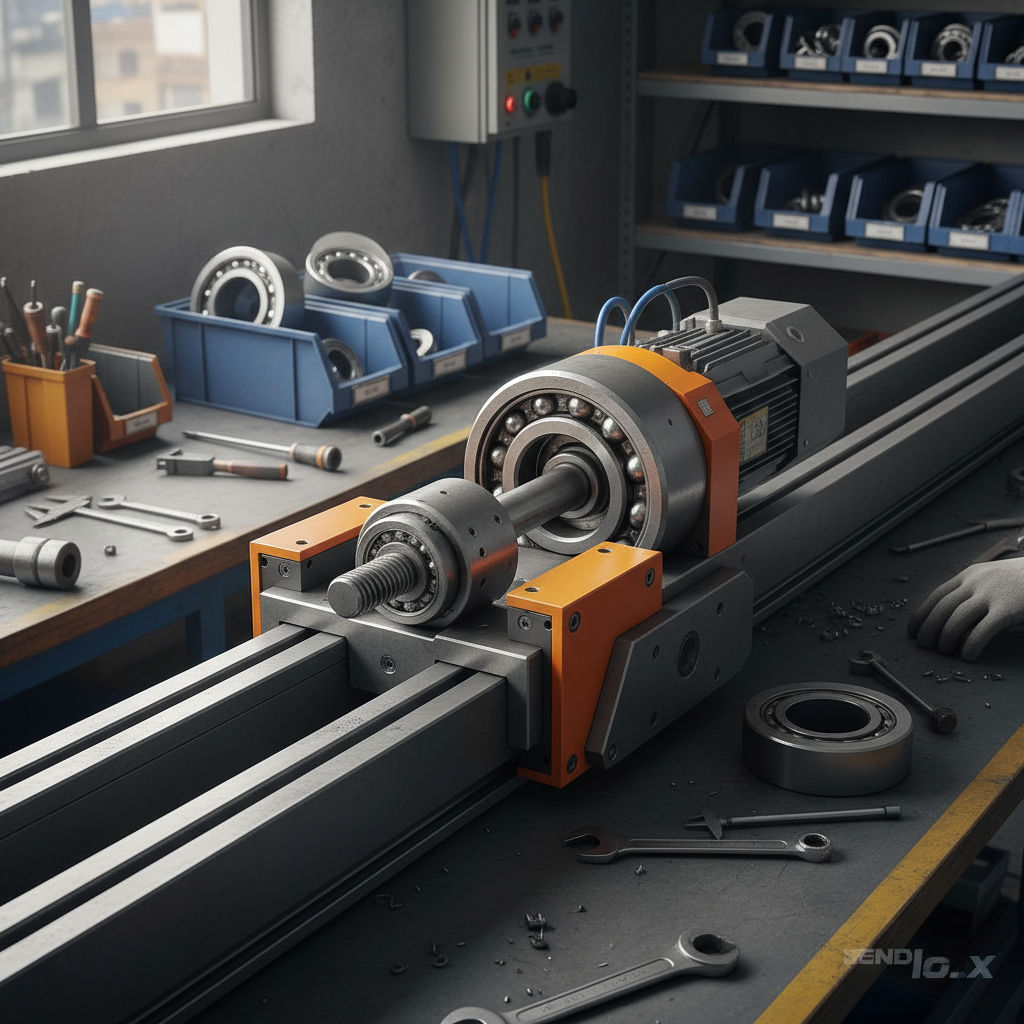
ball screw function ball screw operation ball screw
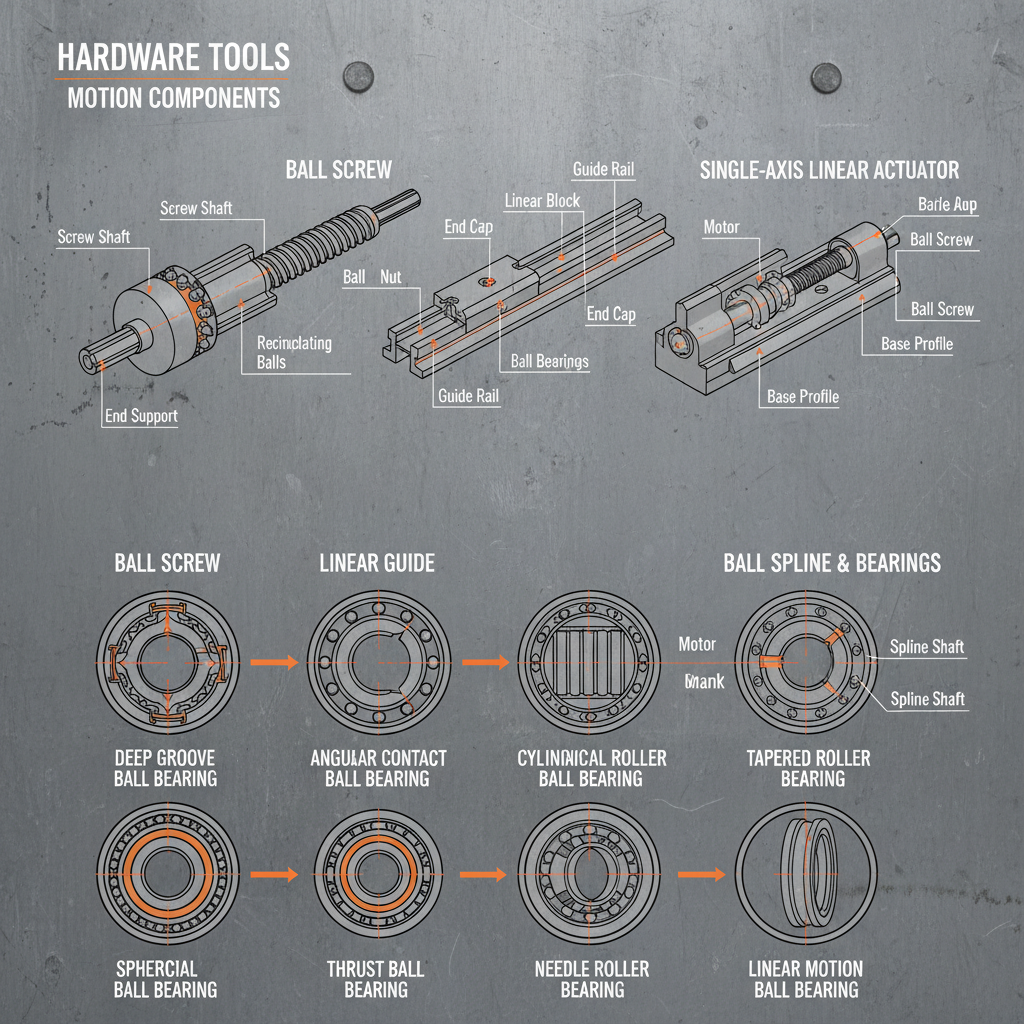
Start with the basics. The screw—precision ground or rolled—has a Gothic arch groove profile. Why Gothic? It cradles two or four points of ball contact per groove, distributing load evenly. Balls, typically 1/4-inch diameter or scaled to pitch, sit in those grooves. As the screw rotates via servo motor, balls orbit forward, pushing the nut linearly.
Here's the smart part: recirculation. Without it, balls would pile up at the end. Inside the nut, a return tube or internal deflector loops them back to the start. In single-nut designs, it's a simple tube. Double-nut setups add preloading flanges to eliminate play. We've machined thousands here at YIDI; preload matters. Too loose, backlash creeps in during direction changes. Too tight, heat builds and balls pit prematurely.
Dig deeper into the cycle. Rotation speed ties to lead—say, 5mm per turn. At 3000 RPM, that's 15m/min linear speed. Balls complete laps through the circuit thousands of times per hour. Dynamic load rating (C_dyn) governs life: calculated via ISO 3408, it's the load for 1 million revolutions at 90% survival. For a 25mm dia screw, C_dyn might hit 20kN. Rigidity comes from contact angle—usually 45 degrees for balanced axial/radial handling.
Friction coefficient? Rolling balls clock in at 0.003 max, versus 0.15 for sliding screws. Efficiency? 90-95%, meaning less motor torque wasted as heat. In CNC Z-axes, that translates to faster rapids without stalling. But watch the details. Lubrication is non-negotiable—grease every 200 hours or oil mist for high-duty. Contamination? Seals at nut ends keep swarf out; we've seen grit chew balls in weeks on dirty shop floors.
Now, types matter in practice. Ground ball screws for ultra-precision—micron accuracy, used in medical scanners. Rolled ones for general automation, cost 40% less with solid 0.005mm/300mm straightness. Planetary roller screws overlap for mega-loads, but balls win on speed. Preload methods: oversized balls, double-nut, or spacer. Double-nut's common here; we stock SFU/DFU series with adjustable collars.
Thermall expansion plays in too. Steel coefficient at 12ppm/°C—heat from cycles can elongate the screw 0.01mm/m per 10°C rise. Feedback encoders close the loop. Vibration? Critical speed formula: fn = (π d / L^2) * sqrt(EI / ρ), where buckling modes limit unsupported lengths. Support bearings every 1-2m in long spans.
Load scenarios vary. Axial thrust dominates, but moment loads from off-center nuts twist the setup. Calculate equivalent load: P_eq = P_mean + 1.3 Mc / (3L) or similar per manufacturer tables. Lifespan? L10 = (C/P)^3 * 10^6 revs. Undersize by 20%, and you're replacing yearly.
We've tested batches in our Shijiazhuang facility—German-imported grinders ensure Ra 0.2μm groove finish. Japan-sourced balls from NSK-grade suppliers. Result? Customers report 20-30% longer runs versus budget imports. But here's a tip from the floor: always match end supports to the bearing journal. Mismatched? Whip kills it early.
This principle isn't theory. In semiconductor fabs, it drives wafer stages at 1g accel. Automotive presses handle 50kN with micron repeatability. Procurement snag: overseas buyers overlook customs on grease types—some EU regs nix certain EP additives. We handle that.
Wrapping the deep dive—ball screw working principle boils to efficient recirculation under load. Next time your ops manager gripes about sluggish axes, think balls rolling smooth.
Core Components Driving the Principle
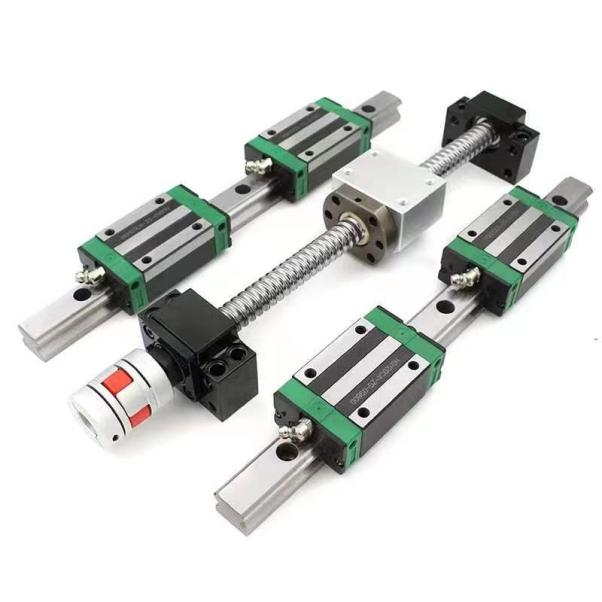
- Screw Shaft: Ground or cold-rolled, dia 16-80mm typical. Multi-start for speed.
- Nut: Flanged, cylindrical, or block. Internal return path key.
- Balls: Grade 10-25 sphericity, hardened to 58-64 HRC.
- End Caps/Seals: Labyrinth or scrapers for dirt exclusion.
- Preload Mechanism: Critical for zero-backlash apps.
Assembly tolerance? Class C5-C3 per DIN 69051. Tighter classes cost more but pay in accuracy.
Applications Where the Principle Shines
CNC machining centers: Z-axis positioning, 0.001mm steps. Robotics: Joint actuators for pick-place. Semiconductor: Stage motion at 2m/s. Medical: CT scanners, surgical robots. Aerospace: Test rigs for composites.
In U.S. markets, we've shipped to gantry systems in Ohio factories—handling 500kg at 1m/s. Logistics note: 20ft containers fit 2000m of 25mm stock. Lead times? 15-30 days ex-works.
Warning: Vertical apps need counterbalance. Balls can't fight gravity alone.
Procurement Guide: Avoid Common Pitfalls
As an importer, specs overwhelm. Start with duty cycle. High-speed? Go rolled, C7 accuracy. Precision grind? C5. Check Dm-N factor: ball dia x RPM < 100,000. Overspeed, balls skid.
Risks: Fake certs from Ali knockoffs—no ISO traceability. Demand third-party test reports. MOQ? We do 1m prototypes. OEM? Full custom grooves.
Eval tips: Verify hardness (Rockwell), groove lead error (<8μm/300mm), and noise tests. Ask for wobble data. Budget 10-20% markup for U.S. duties.
Talk With Our EngineerTechnical Specifications Table
| Dia (mm) | Lead (mm) | C_dyn (kN) | Weight (kg/m) | Max RPM |
|---|---|---|---|---|
| 20 | 5 | 12.5 | 2.1 | 5000 |
| 25 | 10 | 22.1 | 3.4 | 4000 |
| 32 | 10 | 35.2 | 5.6 | 3500 |
| 40 | 10 | 52.4 | 8.2 | 3000 |
*Data per YIDI SFU series, C7 class. Custom per request. ISO 3408 compliant.
YIDI Motion: Factory Capabilities and Certifications
100 employees, 30% senior techs. German/Japan equipment for grinding, assembly. ISO 9001, CE marked. Exports to Germany, USA, Japan. One-stop: ball screws to linear modules.
OEM/ODM? Yes—custom pitches, lengths to 6m. Lead time 20 days. Container loads optimized: 40ft holds 4000kg.
Certifications: ISO9001, CE, RoHS. Full compliance for U.S. imports.
Buyer Reviews
John M., Procurement Manager, Ohio CNC Shop: "YIDI's ball screws dropped our Z-axis backlash to zero. Working principle matches the hype—smooth at 2000 RPM. Shipping to Cleveland was on time, no customs drama."
Sarah K., Automation Engineer, Texas Robotics Firm: "Replaced acme with their 32mm unit. Efficiency jump was real; cycles per hour up noticeably. Good preload docs helped install."
Mike R., Ops Director, California Fab: "Handled 40kN loads without whip. Principle explanation from Adam clarified our sizing. Samples arrived fast—now full order."
David L., Importer, Florida: "Competitive on rolled vs ground pricing. Installation straightforward; maintenance every 500 hours as spec'd."
Frequently Asked Questions
How does ball screw preload affect performance?
Preload stiffens the axis, cuts backlash. But overdo it, heat rises. Aim 3-5% of C_dyn.
Ground vs rolled ball screws—which for my CNC?
Ground for sub-micron. Rolled for 95% apps, cheaper. We advise based on tolerance needs.
What's typical lifespan?
L10 at 5-10k hours under rated load. Proper lube extends to 20k+.
Can you OEM custom lengths?
Yes, up to 6m. Ends machined to spec.
Shipping to USA?
15-25 days sea/air. DDP options available.
Ready to Optimize Your Linear Motion?
Get factory-direct pricing, free CAD files, or engineer consult.
YIDI Motion | 16-1-1601 Aobeigongyuan, Chang'an District, Shijiazhuang City, Hebei Province, China
Written by Adam Li, Export Director, YIDI Motion. Updated 2026. Not AI-generated—real factory experience.