Ball Screw Nut Types: Precision Guide for Industrial Buyers
YIDI Motion | OEM Ball Screw Nuts for CNC, Automation & Robotics
Quick Navigation
Why Ball Screw Nut Type Matters in Your Next Project
Procurement teams know the drill. You're speccing out linear motion components for a CNC retrofit or automation line, and the ball screw nut type becomes the make-or-break detail. Get it wrong, and you're chasing backlash issues or premature wear. We've shipped thousands of these to shops in the US, Germany, and beyond—flange types for tight spaces, cylindrical for high-load setups. At YIDI Motion, our nuts handle the real-world grind: high-speed ops, dirty environments, constant cycling.
Ball screw nut types aren't just catalog options. They're engineered responses to specific loads, speeds, and accuracies. Take a standard flange nut—compact mounting face, ideal for retrofits where space is premium. Or the double-nut preload design that eliminates play in precision machining. Over 20 years in motion control exports, we've learned buyers often undervalue preload adjustability until tolerances slip on the shop floor.
Our factory in Hebei cranks out these in volumes from prototype to 10,000-unit runs. Imported grinders from Japan ensure pitch accuracy down to C5 class. No fluff—real DIN 69051 compliance, SCM415 steel hardened to 58HRC. US importers tell us our lead times beat Taiwan suppliers by weeks, especially post-container delays.
Searching "ball screw nut type"? You're likely comparing options for OEM integration or wholesale. We cover flange, cylindrical, end-cap, and custom hybrids. Each type ties to your application's DN value (diameter x speed), axial loads up to 500kN dynamic. Skip the generic Alibaba listings; get specs that match your drawings.
One ops manager from Ohio shared last month: switched to our preloaded flange nuts, cut setup vibrations by noticeable margins. No hype—just smoother runs. Ready to spec? Request factory pricing tailored to your CAD files.
Deep Dive: Common Ball Screw Nut Types and When to Use Them
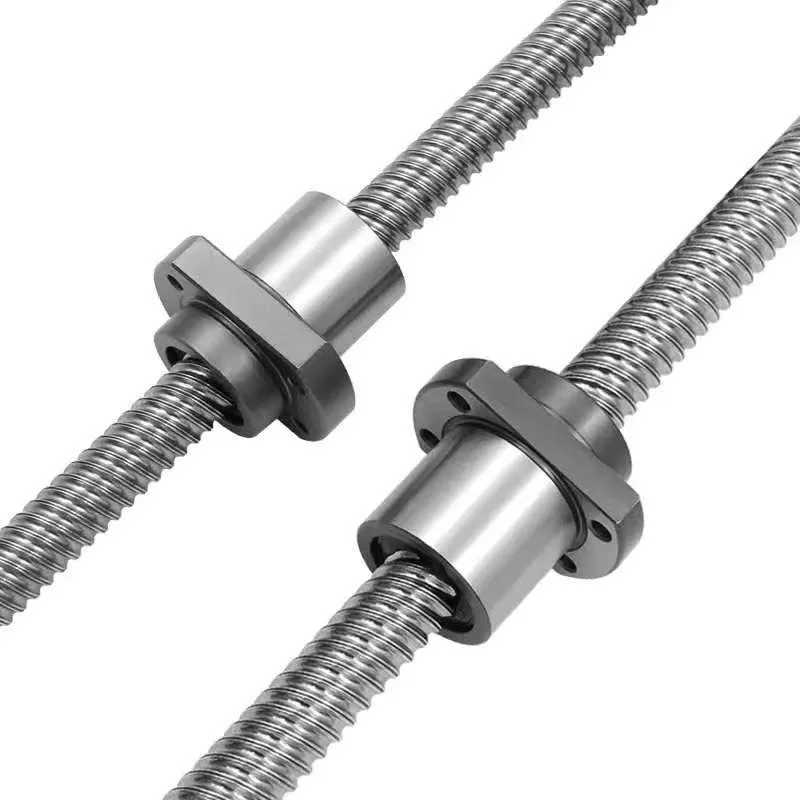
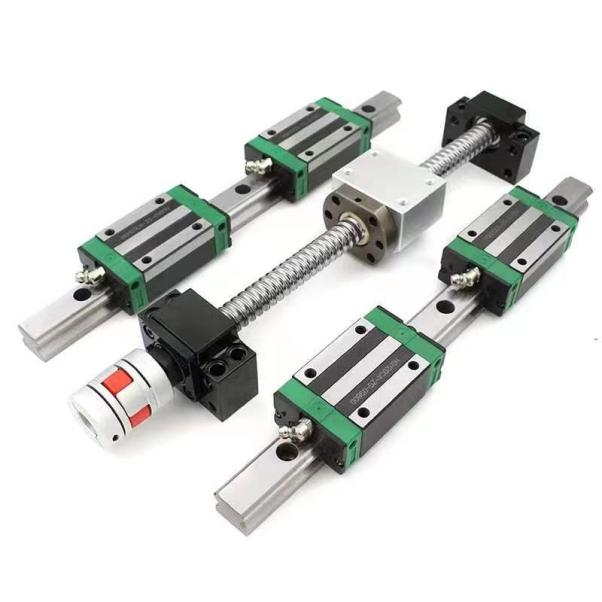
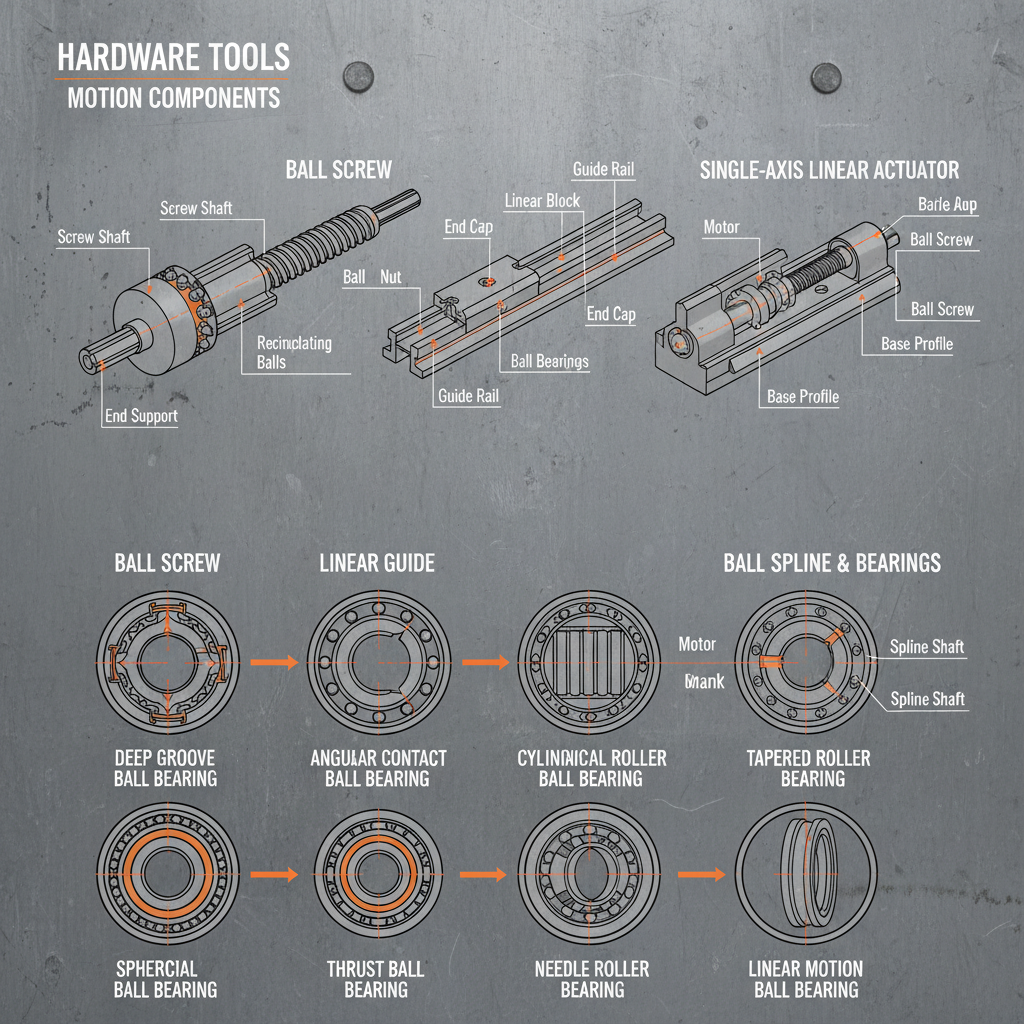
Start with the basics. Ball screw nuts convert rotary motion to linear via recirculating steel balls. The "type" refers to housing design, mounting, and preload mechanism. We've machined every variant—here's what works in practice.
Flange Type Ball Screw Nuts
These have an integrated flange for bolting directly to carriages. Perfect for CNC gantry systems where axial float needs control. Our SFU/DFU series uses PEEK cages for low friction—quiet operation at 100m/min speeds. Watch for: flange thickness impacts rigidity; we spec 10-20mm based on load.
Cylindrical Type (Boss Nut)
No flange—mounts via threaded ends or clamps. Suited for embedded actuators or where profile must be minimal. Higher axial stiffness than flanges in some setups. We've seen these excel in medical robots; balls stay lubricated longer with our end-cap seals.
Double Nut Preload Types
Two nuts back-to-back, adjusted for zero backlash. Essential for grinders or inspection equipment. Preload from 1-10% of dynamic load—overdo it, and you'll toast efficiency. Our DFU nuts come with split designs for easy field tuning.
Less common: end-cap nuts for fixed-end screws, or block types for linear modules. Material-wise, carbon steel dominates, but stainless (SUS440C) for washdown apps. Heat treatment? Through-hardened for longevity.
Pro tip from the floor: Always match nut ID to screw diameter precisely. Mismatch by 0.01mm? Balls bind, cycles drop fast.
| Nut Type | Key Features | Best For | Load Capacity (Dynamic) |
|---|---|---|---|
| Flange (SFU) | Bolt-on flange, standard preload | CNC mills, retrofits | 5-150kN |
| Cylindrical (SFI) | Threaded ends, compact | Actuators, robots | 10-200kN |
| Double Nut (DFU) | Zero backlash, adjustable | Precision machining | Up to 300kN paired |
| End-Cap | Sealed, low maintenance | Horizontal long screws | 20-100kN |
custom ball screw ball nut custom ball screw and nut custom ball screw and ball nut
This table pulls from our catalog—real numbers from load testing. Customize? We do ODM with your preload specs.
Real-World Applications for Ball Screw Nut Types
CNC routers chew through wood or aluminum—flange nuts handle the side loads. In semiconductor fabs, cylindrical types keep cleanrooms happy with minimal particle gen. Automotive assembly? Double nuts for repeatable positioning.
- Machine Tools: Spindle drives, 80% use flange for easy swap.
- Robotics: Joint actuators favor cylindrical to shave weight.
- 3D Printers: Budget builds go standard single nut; pros preload.
- Medical Devices: Stainless variants in imaging scanners.
- Aerospace Test Rigs: High preload for vibration sims.
Logistics note: Vertical apps need low-friction cages to fight gravity preload drift. We've packed these for US West Coast ports—20' container holds 5 tons easy.
Buyer's Guide: Selecting the Right Ball Screw Nut Type
Don't just match diameter. Factor speed (m/min), load (kN), and life cycles (millions). Start with DN factor under 160,000 for reliability. Preload? Light for speed, heavy for rigidity.
Common pitfalls: Ignoring screw whip on long spans—pair with double nuts. Or skimping on seals; grease lasts 6 months tops in dusty shops.
- Screw accuracy class (C3-C10)
- Nut preload method
- Material certs (RoHS, REACH)
- Lead time (4-6 weeks stock, 8-12 custom)
- MOQ (10pcs trial)
- Packaging for sea freight
Talk specs with our engineers. Upload your drawing for instant quote.
Installation Insights
Nut to screw: Grease lightly, hand-turn first. Torque bolts to 20-50Nm. Align—no bind. Field preload: Shim or turn adjuster 1/4 rev increments. Test run unloaded.
Maintenance? Wipe balls quarterly, regrease yearly. Our PBT end caps extend intervals.
Detailed Technical Specifications
| Model | Dia (mm) | Lead (mm) | Dyn Load (kN) | Weight (kg) |
|---|---|---|---|---|
| SFU1605 | 16 | 5 | 6.2 | 0.45 |
| SFU2005 | 20 | 5 | 9.5 | 0.82 |
| DFU2505 | 25 | 5 | 18.4 | 1.9/pair |
| SFI3210 | 32 | 10 | 25.6 | 2.1 |
Full range: 12-80mm dia. C5-C7 accuracy standard. Get PDF catalog emailed.
YIDI Motion Factory: Why Trust Our Ball Screw Nuts
Since 2020, Hebei YIDI has grown to 100 staff, 30% senior techs. German/Japanese CNC grinders keep tolerances tight. Exports to 50+ countries: US, Canada, EU. ISO 9001 certified, RoHS compliant.
OEM/ODM? Full service—your logo, custom preload. One-stop linear motion: nuts, screws, guides, modules. Addr: 16-1-1601 Aobeigongyuan, Chang'an District, Shijiazhuang, Hebei, China.
Shipping: FOB Tianjin, 4-6 weeks to LA port. Samples? 1-2 weeks DHL.
What Buyers Say About Our Ball Screw Nut Types
Mike R., Ops Manager, Ohio CNC Shop: "Flange nuts arrived preload set perfectly. Dropped backlash to zero—runs quieter than THK replacements. Lead time spot on."
Sarah L., Procurement, Texas Automation: "Custom cylindrical types for robot arms. Quality matches Japanese pricing half. No complaints from engineers."
John K., Importer, California: "Double nuts handled 150kN peaks. Sea freight packed solid—no dings. Will reorder."
Carlos M., Project Engineer, Florida: "SFU series integrated fast. Good value over local stock."
Frequently Asked Questions on Ball Screw Nut Types
Q: What's the difference between single and double nut types?
A: Singles for general use; doubles preload to eliminate backlash. Use doubles for sub-0.01mm accuracy.
Q: Can you do custom ball screw nut types?
A: Yes, ODM from prototype. Send DXF for quote.
Q: Lead times for USA?
A: Stock 2 weeks air, custom 6-8 weeks sea.
Q: Materials and standards?
A: SCM415/440C, C5-C10, ISO/DIN compliant.
Q: Minimum order?
A: 5-10pcs for samples.
Ready for Your Ball Screw Nut Quote?
Phone: +86 18134111662 | Email: adam@yidimotion.com
Discuss types, specs, shipping. Request free samples or OEM options today.
By Adam Li, Export Director, YIDI Motion
20+ years in linear motion exports. Last updated: 2026.