Ball Screw Function: Driving Precision in Linear Motion Systems
From CNC mills to robotic arms, ball screws turn rotation into exact linear travel. YIDI Motion delivers proven assemblies built for demanding operations.
Talk to our engineers: +86 18134111662 or adam@yidimotion.com
What is Ball Screw Function? A Deep Dive for Engineers and Buyers
Ball screw function boils down to one critical job: converting rotary motion from a motor into smooth, precise linear movement. Think about it in a machine shop. You've got a stepper or servo turning at high speed, but you need that power to push a tool or workpiece along an axis with micron-level accuracy. That's where the ball screw steps in.
Unlike older lead screws that slide metal on metal, ball screws use a recirculating ball bearing system. Steel balls roll between the screw shaft and a nut, slashing friction by up to 90% compared to acme threads. This means higher efficiency—often 90% or better mechanical efficiency—and less heat buildup during long runs. In practice, I've seen shops cut energy draw noticeably on multi-axis setups.
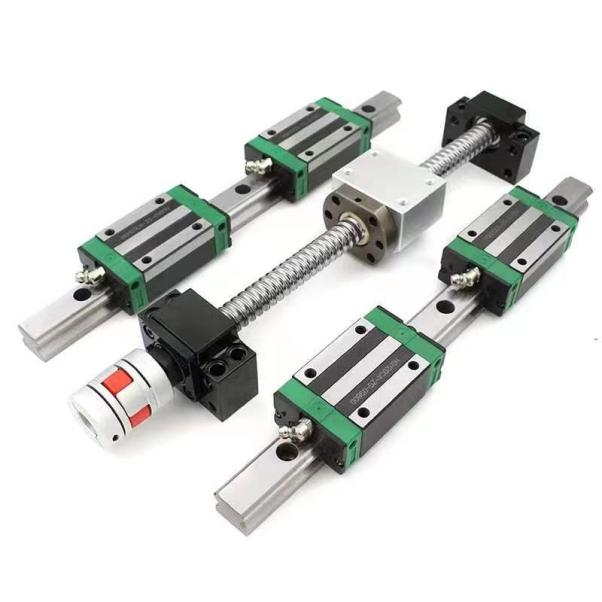
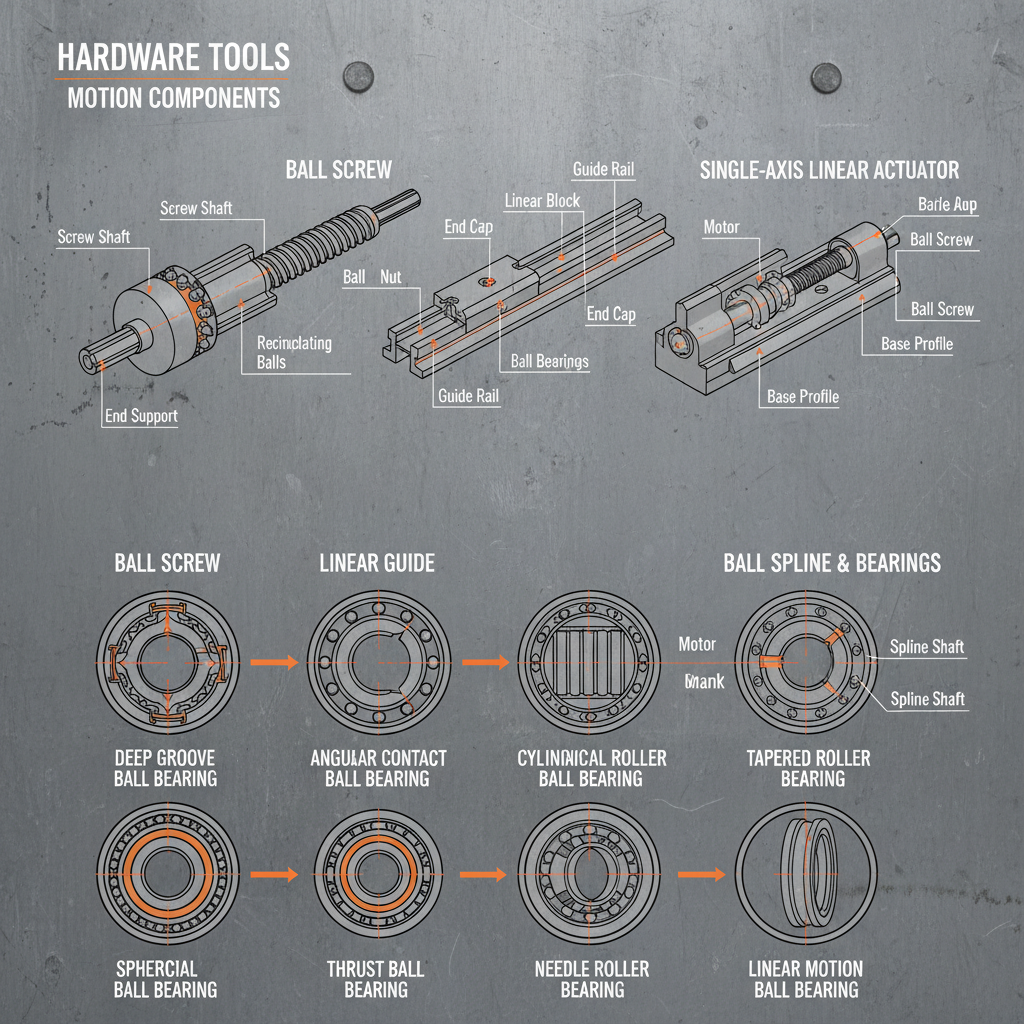
Let's break down the core components. The screw shaft is typically ground from high-tensile alloy steel like SCM440, with a helical groove precision-machined to tight tolerances. The nut houses the balls, which follow return channels to loop back after each pass. Preload options—single or double nut designs—eliminate backlash, crucial for reversing direction without slop.
Functionally, as the screw rotates, the balls transfer force without slipping. This gives you dynamic load ratings in the tens of kilonewtons and backlash-free travel. Accuracy classes from C0 to C10 define lead error—say, 3 microns per 300mm for C5 grade. It's not just theory; these specs dictate if your CNC can hold tolerances on aerospace parts.
Why does this matter for procurement? Poor ball screw function leads to vibration, wear, and scrapped parts. I've talked to buyers who switched from cheap imports and saw positioning errors drop from 0.05mm to under 0.01mm. Delivery on promises like that comes from proper manufacturing—grinding, not rolling—and material certs.
At YIDI Motion, we've shipped these to over 50 countries since 2020. Our assemblies handle speeds up to 100m/min and travels over 6 meters. Not every supplier can match that without deflection issues.
One operational note: lubrication is key. Grease-packed for life in some models, but high-duty cycles need periodic relube. Ignore it, and balls pit, function degrades fast.
This function isn't static. Evolving designs now include cooled shafts for high-speed spindles or corrosion-resistant coatings for washdown environments. Understanding these nuances helps when speccing for your build.
Over my years coordinating exports, buyers often overlook axial stiffness. It's what keeps the system rigid under load. Calculate it wrong, and your precision motion turns wobbly.
In short, ball screw function powers modern automation. It's reliable, efficient, and scalable—from lab prototypes to factory floors.
Technical Breakdown: Inside Ball Screw Function Mechanics
Start with the basics of motion conversion. Torque on the shaft rolls the balls forward in the thread raceway. Each ball contacts the groove at two points—load-bearing flanks—distributing force evenly. Return tubes or flanges recirculate them seamlessly, maintaining constant contact.
Key to function: the lead angle. Steeper leads mean faster travel per rotation but lower load capacity. Typical leads range 5-50mm, balanced for your application's speed vs. force needs. For example, a 20mm dia screw with 5mm lead might push 10kN at 50m/min.
Preload enhances function by tensioning the nut. Fixed preload uses oversized balls; adjustable types let you dial it in. This boosts rigidity and compensates for wear over time. But overdo it, and friction climbs, efficiency drops.
Load ratings split into dynamic (Cd) for motion and static (Ca) for holding. Factor in life expectancy—L10 at 50km travel is standard. Use manufacturer calculators, but field experience shows safety margins of 1.5x prevent surprises.
Materials matter hugely. Shafts hardened to 58-62 HRC, nuts from alloy steel or even engineering plastics for low-load apps. Flange-mounted nuts ease bolting to carriages.
| Diameter (mm) | Lead (mm) | Accuracy Class | Dynamic Load (kN) | Max Speed (m/min) |
|---|---|---|---|---|
| 16 | 5 | C7 | 12.5 | 80 |
| 25 | 10 | C5 | 28.4 | 100 |
| 40 | 20 | C3 | 63.2 | 120 |
| 63 | 25 | C5 | 112 | 90 |
These are samples from our standard range. Custom diameters to 120mm available. Note: C3 class suits high-precision semiconductor tools.
Whipping effects at high speeds? Larger diameters or supported ends counter that. We've engineered dual-supported designs for 3m+ lengths without sag.
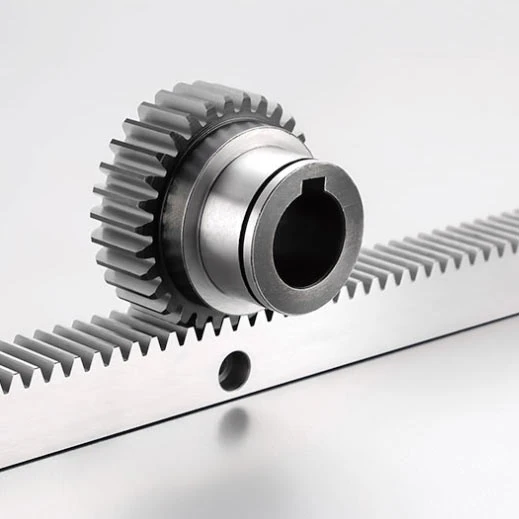
Compared to belts or racks, ball screws excel in repeatability. Rack gears wear unevenly; belts stretch. Balls roll clean.
Installation tip: align concentricity to 0.02mm. Misalign, and function suffers—uneven ball loading accelerates failure.
Maintenance? Visual checks quarterly, relube per hours run. Seals keep contaminants out; replace if scored.
Real-World Applications: Where Ball Screw Function Shines
CNC machining centers rely on it for X/Y/Z axes. Rapid traverses hit 60m/min with sub-5 micron repeatability.
Robotics: Joint actuators in collaborative arms. Compact nuts fit tight spaces.
Semiconductor: Wafer handlers demand C1 accuracy. Cleanroom-compatible versions with low outgassing.
Medical: CT scanners, surgical robots. Quiet operation, long life critical.
Automotive testing rigs: High loads, cyclic duty. Our preloaded doubles handle millions of cycles.
Other spots: injection molding, solar panel trackers, even elevators in compact lifts.
Procurement angle: Match function to environment. IP65 seals for dusty factories; stainless for food/pharma.
Buyer's Guide: Selecting Ball Screws Without Regrets
Step 1: Define loads, speeds, cycles. Oversize by 20% for unknowns.
Step 2: Accuracy needs. C7 for general, C3 for molds.
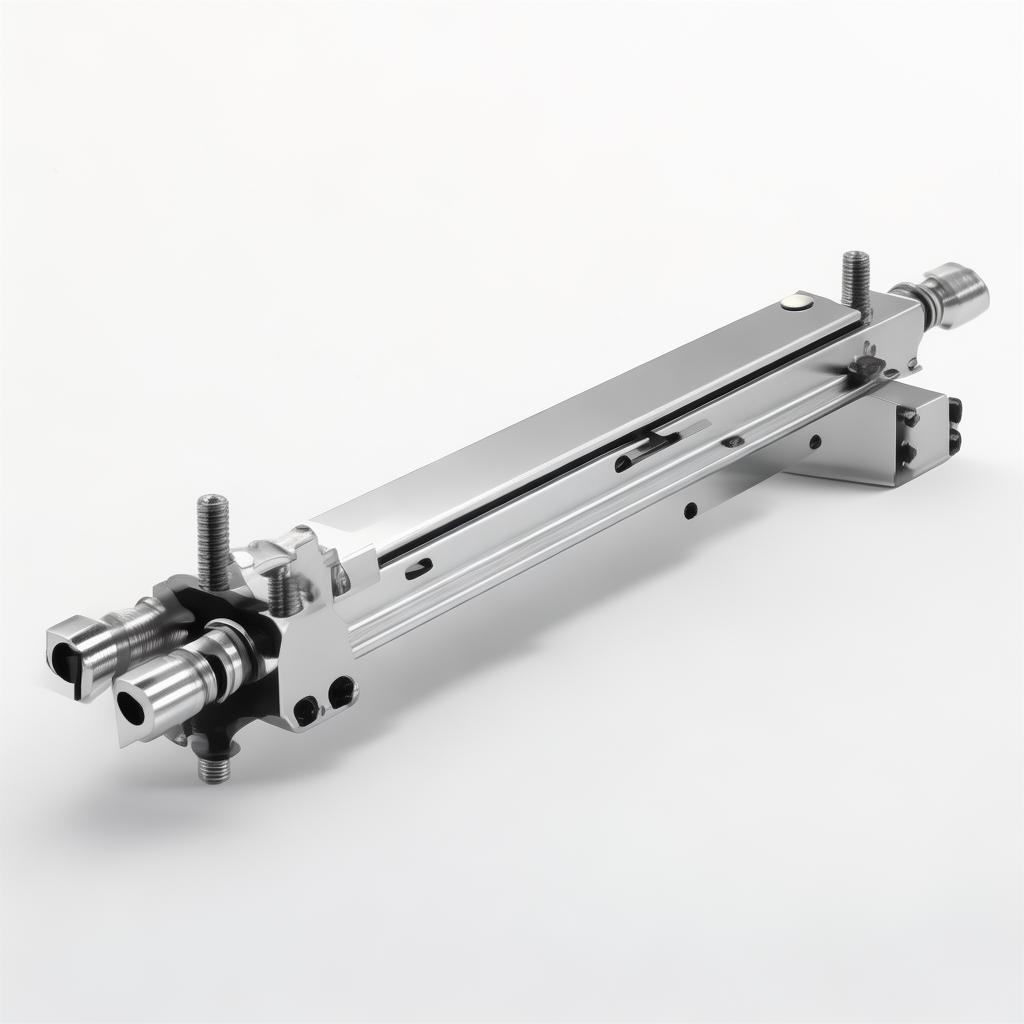
Step 3: Ends—flange, foot, or trunnion? Affects mounting.
Common pitfalls: Ignoring critical speed, leading to vibration. Or skimping on nuts—cheap ones gall.
- Check ISO 3408 compliance.
- Verify preload method.
- Ask for load/ life calcs.
- Confirm lead times—4-6 weeks standard.
- OEM? We customize grooves, pitches.
Supplier eval: Factory tours virtual ok. Look for German/Japanese grinders—we have them.
Logistics: FCL from Tianjin port. 20ft holds 500+ units. Duties? HS 8483.40.
YIDI Motion: Our Factory Strength Behind Reliable Function
Since 2020, 100 staff, 30% senior techs. Imported Okuma grinders, DMG CNCs from Japan/Germany. Ensures C0 capable.
OEM/ODM full service. From prototype to 10k/mo. Exports to US, Germany, Japan—50+ countries.
Certs: ISO9001, CE, RoHS. Test benches simulate your loads.
One-stop linear motion: guides, actuators, splines too.
Contact: Hebei YIDI Import Export Trading Co., Ltd. 16-1-1601 Aobeigongyuan, Chang'an Dist., Shijiazhuang, China.
What Buyers Say About Our Ball Screw Performance
Mark Thompson, CNC Ops Manager, Texas USA: "Switched to YIDI for Z-axis screws. Function is spot-on—C5 accuracy holds. Lead time beat quotes by 10 days. Solid partner."
ball screw operation ball screw ball screw ball
Dr. Elena Ruiz, Robotics Engineer, Ontario Canada: "Preloaded nuts eliminated backlash in our arms. Efficiency up, no heat issues at 80m/min. OEM tweaks perfect."
Procurement Head, German Auto Supplier: "High loads handled without deflection. Packaging pro—zero damage on sea freight. Will reorder."
John Park, Machine Builder, Australia: "Competitive on 40mm dia. Function matches THK specs at half price. Quick samples helped decide."
Frequently Asked Questions on Ball Screw Function
Q: What's the main advantage in function over lead screws?
A: Rolling vs. sliding cuts friction, boosts efficiency to 90%, allows higher speeds/loads.
Q: How to calculate required size?
A: Use Cd > load / (life factor x speed factor). Our team runs sims free.
Q: Custom leads possible?
A: Yes, non-standard pitches ground to spec. Min order 10 units.
Q: Warranty?
A: 12 months or 3000km travel. Field failure <0.5%.
Q: Shipping to USA?
A: 25-35 days sea, DDP options. Samples air 7 days.
Ready to Optimize Your Linear Motion?
Get factory-direct pricing, free CADs, or samples.
Call: +86 18134111662 | Email: adam@yidimotion.com
Visit: https://www.yidibearings.com/contactus.html
Request your ball screw spec sheet now.
By Adam Wang, Technical Sales Engineer, YIDI Motion
15+ years in linear motion exports. Last updated: 2026.