Ball Bearing Types: Essential Guide for Procurement Managers and Engineers
Sourcing the right ball bearing type isn't just about matching specs on paper. I've spent years in export sales for precision components out of Hebei, dealing with buyers from Detroit assembly lines to wind turbine ops in Texas. One wrong choice in bearing type, and you're looking at premature wear, vibration issues, or full downtime. This guide breaks down ball bearing types based on real-world applications, not textbook theory.
Deep groove ball bearings handle radial loads fine, but throw in any misalignment and they falter. Angular contact types step in for combined loads—think spindle tools or conveyor setups. We'll cover the main categories, when to spec each, and pitfalls I've seen trip up even seasoned purchasers.
Table of Contents
- Technical Deep Dive into Ball Bearing Types
- Key Applications by Bearing Type
- Buyer's Guide: Selecting the Right Type
- Technical Specifications Overview
- Our Manufacturing Edge at YIDI Motion
- Certifications and Compliance
- What Buyers Are Saying
- Frequently Asked Questions
- Shipping and Procurement Logistics
- Get Started with Your Quote
Technical Deep Dive: Understanding Ball Bearing Types
Ball bearings reduce friction by placing balls between two grooved rings—an inner race, outer race, and cage to keep everything spaced. The "type" refers to design variations tailored to load direction, speed, and environment. Let's drill into the core ones without fluff.
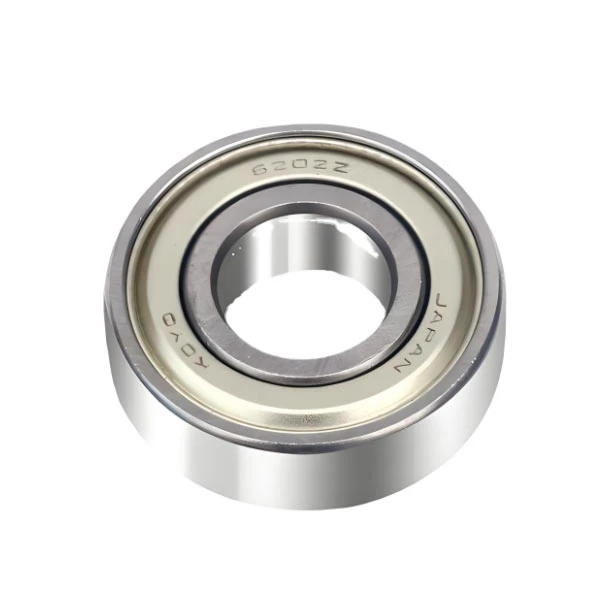
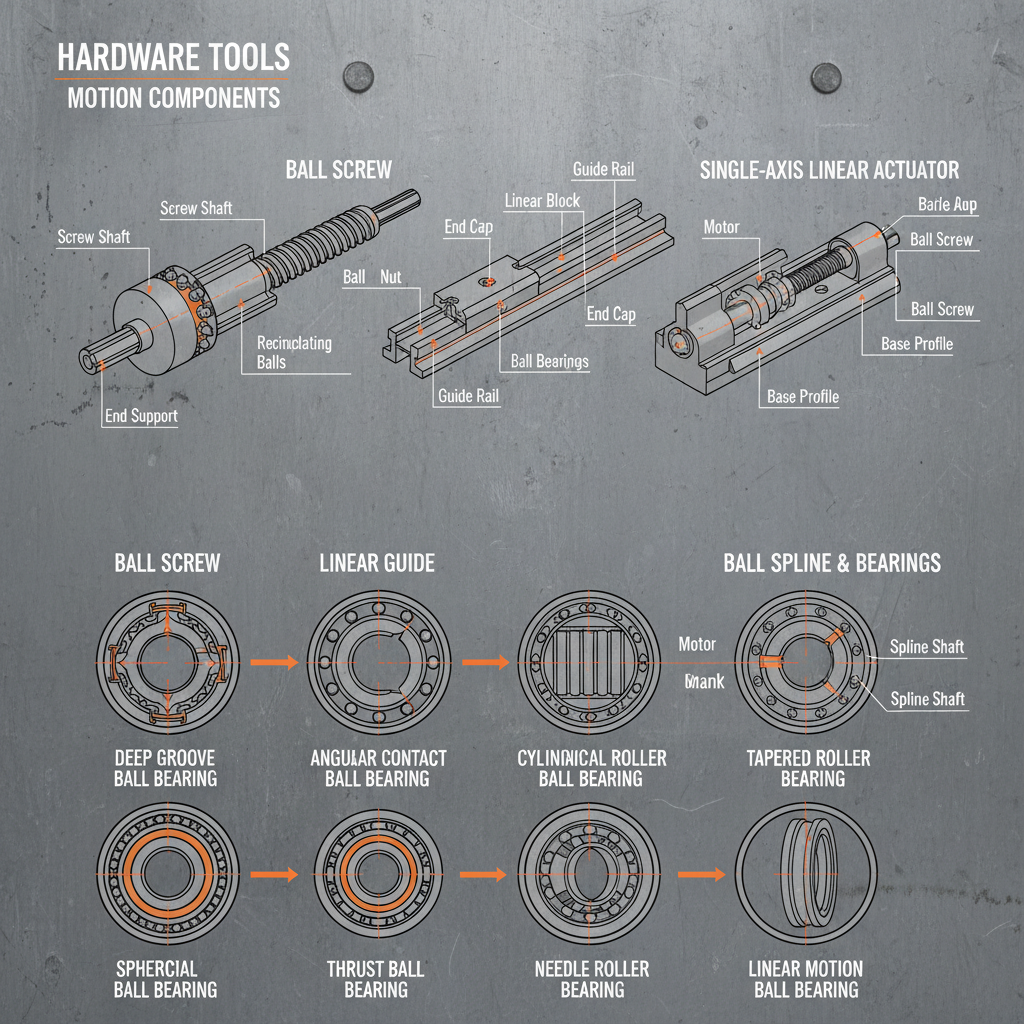
Deep Groove Ball Bearings. These are the workhorses. Single-row design with deep raceway grooves. They take radial loads primarily, some axial too. Common in electric motors, fans, pumps. ABEC 1 to ABEC 7 precision levels—most OEMs stick to ABEC 3 or 5 for cost balance. Chrome steel standard, but stainless for corrosive spots. Run speeds up to 20,000 RPM easy, depending on size.
I've shipped thousands to US conveyor manufacturers. Pro: versatile, low torque. Con: not great under heavy thrust—balls can skew.
Angular Contact Ball Bearings. Here, races are angled, creating contact lines for axial and radial handling. Single-row for one-direction thrust, duplex pairs for bidirectional. Used in machine tools, automotive wheels. Higher speeds than deep groove under load. Preload options tune stiffness. Watch for misalignment; it spikes stress.
Operational note: In high-vibe apps like CNC spindles, pair with proper lubrication—grease intervals drop if overlooked.
Self-Aligning Ball Bearings. Two rows of balls, spherical outer race. Forgiving on shaft misalignment up to 3 degrees. Ideal for textile machinery, paper mills where shafts flex. Not for heavy axial loads, though. Tapered bore variants for easy mounting.
Thrust Ball Bearings. Axial load specialists. Washer-like design, no radial capacity really. Grooved or flat races. Low-speed apps: turntables, cranes. Separate components for easy assembly.
Other notables: Precision Angular Contact for ultra-high speeds (ABEC 9, hybrid ceramic balls optional). Miniature types under 10mm bore for instruments. Four-Point Contact for pure radial with some axial.
Material callouts: SAE 52100 chrome steel dominates (Rockwell C58-65 hardness). Polymers or ceramics for extremes. Seals: rubber contact (2RS) vs. metal shield (ZZ)—trade leak resistance for friction.
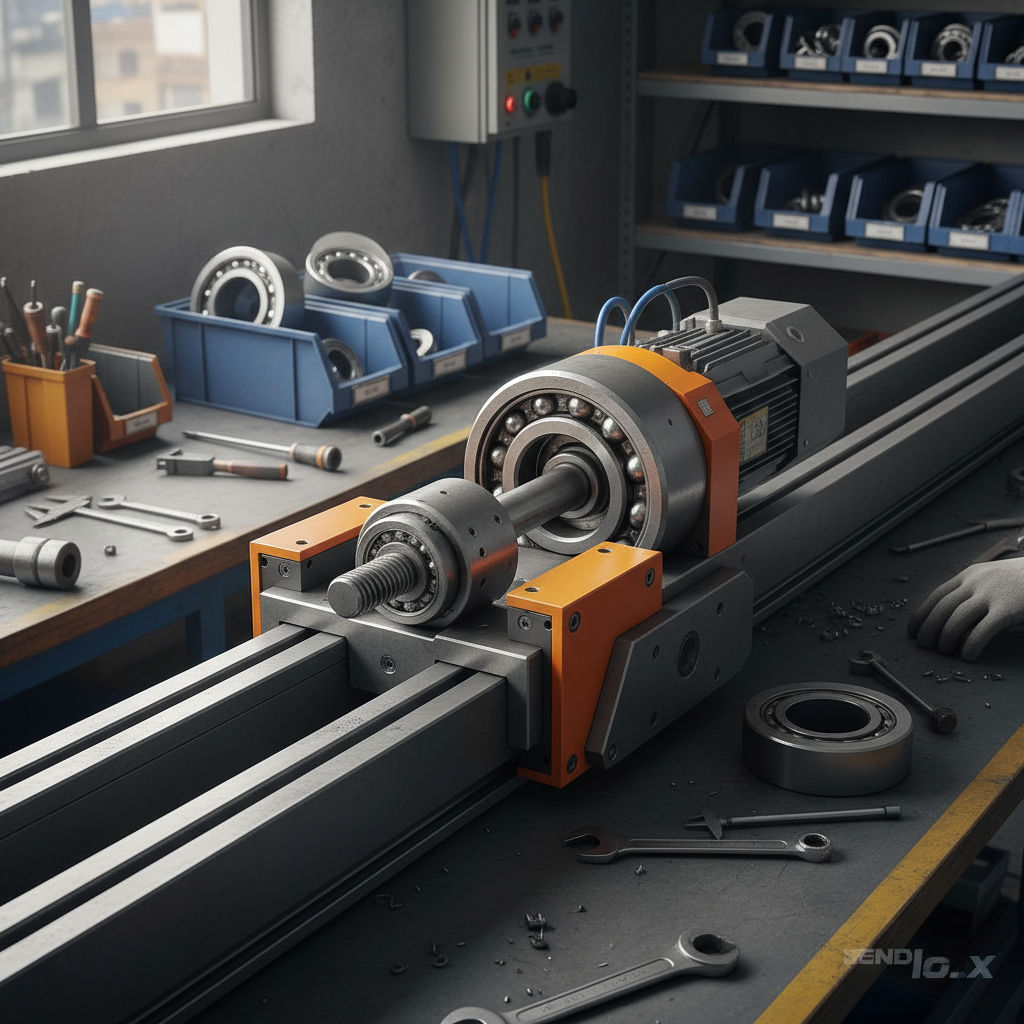
Production wise, at factories like ours, CNC grinding ensures roundness to microns. Heat treatment stabilizes dimensions post-run-in.
This isn't exhaustive—hundreds of SKUs per type—but covers 90% of procurement queries I field. Next time a vendor quotes "standard ball bearing," ask for the type code. Saves headaches.
Real-World Applications by Ball Bearing Type
Matching type to use case separates reliable suppliers from guesswork. Here's what we've seen perform across exports to USA, Canada, Europe.
- Deep Groove: Household appliances to ag equipment. Think John Deere tractors, HVAC units. Handles 10-20g vibration fine.
- Angular Contact: Power tools, EV motors, pumps. Bosch-level spindles demand them.
- Self-Aligning: Fans with belt drives, mining conveyors. Misalignment killer.
- Thrust: Screw compressors, steering gears. Axial only.
Procurement tip: For OEM automotive, specify duplex angular with 15-25 degree contact angle—optimizes life under cornering loads.
In wind turbines, deep groove hybrids cut weight 30% vs. steel—though cost jumps. Balance per project ROI.
Technical Specifications Table
| Bearing Type | Load Capacity | Max Speed (RPM) | Common Sizes (ID x OD x Width mm) | Typical Applications |
|---|---|---|---|---|
| Deep Groove | High Radial / Low Axial | 20,000+ | 10x30x9 to 100x215x47 | Motors, Wheels |
| Angular Contact | Combined Loads | 15,000-30,000 | 15x42x13 to 200x360x58 | Spindles, Pumps |
| Self-Aligning | Radial, Misalignment Tolerant | 10,000 | 20x52x22 to 120x260x86 | Conveyors, Fans |
| Thrust | Axial Only | 5,000 | 10x24x9 to 500x920x140 | Cranes, Turntables |
ball bearing description ball bearing bearing ball
Note: Values approximate; consult dynamic load ratings (C) per ISO 281 for exact life calcs. Basic rating life L10 often 1-5 million revs.
Buyer's Guide: How to Choose Your Ball Bearing Type
Procurement directors hate surprises. Start with load analysis: radial, axial ratio? Use FAG or SKF catalogs for reference—our YIDI specs match.
Step 1: Define loads/speeds. Radial > axial? Deep groove. Need thrust? Angular or dedicated.
Step 2: Environment. Dust? Sealed 2RS. High temp? 200C grease limits most; go special.
Step 3: Mounting. Adapter sleeves for self-aligning ease.
Warning: Cheap imports fail early on hardness—test Rockwell if possible. Lead times: 4-6 weeks standard from China factories like ours.
Quick Checklist:
- Calculate required C rating (kN)
- Match bore/shaft fit (h6 common)
- Factor safety 1.5-3x
- Verify ABEC/ISO class
- Request grease type spec
Get our engineer on a call—sends tailored recs fast.
YIDI Motion: Our Factory Strengths for Ball Bearings
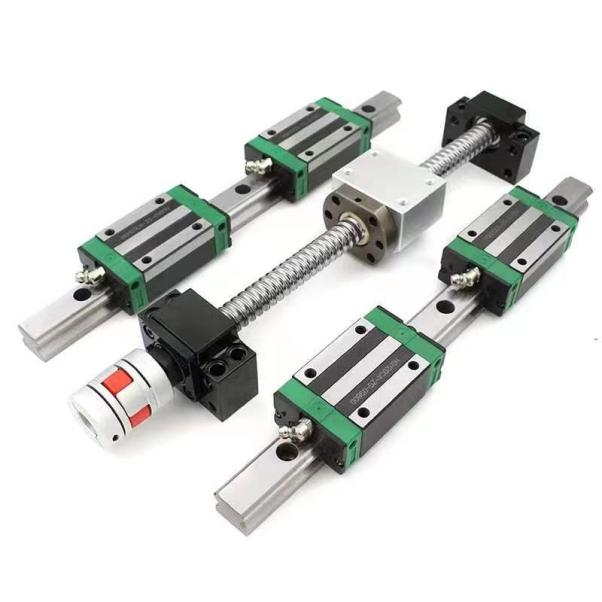
HEBEI YIDI IMPORT AND EXPORT TRADING CO.,LTD., doing business as YIDI Motion since 2020. We're not resellers—we run a 100-employee factory in Shijiazhuang, Hebei, focused on linear motion: ball screws, guides, actuators, splines, and bearings. Senior techs make up 30%+ of staff.
Equipment? German/Japanese imports for grinding, heat treat. Ensures micron tolerances. OEM/ODM full service: custom races, logos, packaging. Exported to 50+ countries—USA gets steady shipments to ports like LA, NY.
One-stop: Bearings pair with our ball screws for actuator builds. Cuts your vendor count.
Observation from the floor: Vibration testing catches 95% defects pre-ship. Buyers notice the quiet run.
Certifications That Matter
ISO 9001:2015 certified. RoHS compliant for EU. Materials trace back to mills—full PED if needed. US importers appreciate our REACH docs ready.
No shortcuts: Every batch hardness tested, dims checked. Matches SKF/NSK quality at fraction cost.
Feedback from USA and Global Buyers
Mike R., Operations Manager, Texas Machinery Inc.
"Switched to YIDI angular contact for our CNC line. Half the price of Timken, same life after 18 months. Lead time was 5 weeks—spot on. Solid for rebuilds."
Sarah L., Procurement Lead, Midwest Automation
"Deep groove 6205-2RS sealed units held up in dusty welders. No relube needed yet. OEM marking request handled quick—looks pro."
Tom K., Supply Chain Dir., California Renewables
"Self-aligning for turbine shafts. Misalignment tolerance saved install time. Container arrived perfect, no damage."
Carlos M., Engineer, Florida Pumps
"Thrust bearings for compressor overhauls. Quiet, no galling. Engineer chat clarified preload—key detail."
Frequently Asked Questions on Ball Bearing Types
What's the most common ball bearing type?
Deep groove—versatile for radial loads in 70%+ apps. 6000/6200/6300 series dominate.
Deep groove vs. angular contact—which for high speed?
Angular contact wins under combined loads/high RPM. Deep groove simpler/cheaper otherwise.
How to calculate bearing life?
L10 = (C/P)^3 * 10^6 revs. Factor speed, contamination.
OEM minimum order?
500pcs type-dependent. Samples available.
Lead time to USA?
4-6 weeks FOB Tianjin. Air for urgent.
Logistics from Hebei to Your Door
FOB Tianjin port standard. 20ft container holds ~20 tons bearings. Duty? 2.5% US avg, confirm HTS 8482.10.
Incoterms: CIF possible. Tracking full via sea freight partners. No hidden fees—quote includes packing.
Pro tip: Bundle with linear guides—optimizes freight rates.
Ready to Spec Your Ball Bearing Type?
Request factory-direct pricing, samples, or engineer consult. OEM/ODM welcome.
Call: +86 18134111662 | Email: adam@yidimotion.com
Or visit Contact Us for full details. Addr: 16-1-1601 Aobeigongyuan, Chang'an District, Shijiazhuang City, Hebei Province, China
Written by Adam Li, Export Director at YIDI Motion. 15+ years in precision bearings, from factory floor to US deals.