
Premium Mill Balls for Industrial Grinding – High Durability, Competitive Pricing
Reduce downtime and maintenance costs with our wear-resistant mill balls. Trusted by global manufacturers for consistent performance in harsh milling environments.
Get Free Quote in 24hContents
Understanding Mill Balls in Industrial Applications
What Are Mill Balls?
Mill balls, also known as grinding media balls, are spherical components used in ball mills to crush and grind materials into fine powders. They are essential in industries such as:
- Mining and mineral processing
- Cement production
- Ceramic manufacturing
- Chemical and pharmaceutical industries
How Do Mill Balls Work?
In a ball mill, the mill ball acts as the grinding medium. The mill's rotation causes the balls to collide with the material, breaking it down through impact and abrasion. Key factors affecting performance include:
| Factor | Impact on Grinding |
|---|---|
| Material Hardness | Harder balls (e.g., chrome steel) resist wear but may cost more |
| Ball Size | Larger balls for coarse grinding; smaller for fine powders |
| Filling Ratio | Optimal fill level (30-50%) balances efficiency and wear |
At HEBEI YIDI IMPORT AND EXPORT TRADING CO., LTD., we specialize in high-performance mill balls engineered for maximum efficiency and longevity in your grinding operations.
Common Challenges with Mill Balls
Purchasing managers and technical directors often face these pain points when sourcing grinding media balls:
High Replacement Costs
Low-quality mill balls wear out quickly, increasing downtime and replacement frequency by 30-50%.
mill motor mini mill ball screw slide ball
Inconsistent Grinding Efficiency
Poor size or material selection leads to uneven particle sizes, reducing product quality and yield.
Supplier Reliability Issues
Delayed shipments or inconsistent quality from suppliers disrupt production schedules.
Lack of Customization
Standard mill balls may not suit unique applications, forcing compromises in performance.
High Import Tariffs
Sourcing from non-competitive markets inflates costs by 20-40% due to tariffs and logistics.
Environmental Compliance
Non-certified mill balls may fail to meet RoHS or REACH standards, risking legal issues.
Our HEBEI YIDI mill balls address these issues with superior material science, precise manufacturing, and global supply chain efficiency.
HEBEI YIDI's Premium Mill Ball Solutions
Why Choose Our Mill Balls?
As a trusted mill ball manufacturer with over 50+ global clients, we offer:
- Unmatched Durability: Our high-chrome steel mill balls (Cr: 10-30%) achieve 50,000+ hours of service life in abrasive environments.
- Cost Efficiency: Competitive pricing from our China-based supply chain reduces costs by 20-35% without sacrificing quality.
- Customization: Tailored sizes (10mm–150mm), materials (steel, ceramic, alumina), and hardness (55-67 HRC) to match your application.
- Rapid Delivery: Stock available for immediate shipment; custom orders delivered in 15-30 days.
- Global Compliance: Certified to ISO 9001, CE, and RoHS standards.
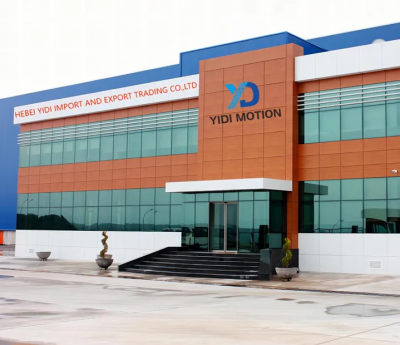
Our state-of-the-art facility in Hebei, China, equipped with German and Japanese machinery.
Technical Specifications
| Property | Forged Steel Balls | High-Chrome Cast Balls | Ceramic Balls |
|---|---|---|---|
| Material | Carbon Steel (AISI 1045) | Chrome Alloy (Cr 10-30%) | 92% Alumina (Al₂O₃) |
| Hardness (HRC) | 55-62 | 58-67 | 80-90 (Mohs) |
| Size Range (mm) | 20-150 | 10-120 | 5-50 |
| Wear Rate (g/ton) | 100-300 | 50-150 | 0.1-1 |
| Best For | Cement, coal | Mining, minerals | Ceramics, chemicals |
Application Scenarios
Mining
High-chrome balls for gold, copper, and iron ore processing. 30% longer lifespan than standard balls.
Cement
Forged steel balls optimized for clinker grinding. Reduces energy consumption by 15%.
Ceramics
Alumina ceramic balls for ultra-fine grinding. Zero contamination, ideal for food-grade applications.
Frequently Asked Questions About Mill Balls
1. What is the difference between forged and cast mill balls?
Forged mill balls are made from heated steel bars hammered into shape, offering higher density and toughness. Cast mill balls are molded from molten metal, allowing for higher chrome content (better wear resistance) but may have more porosity. For most mining applications, high-chrome cast balls provide the best balance of cost and performance.
2. How do I choose the right size of mill ball for my application?
The optimal ball size depends on:
- Feed particle size: Larger balls for coarse feed (e.g., 80mm for 25mm feed).
- Desired product fineness: Smaller balls for finer output (e.g., 10mm for micron-sized particles).
- Mill diameter: Ball size should be 15-25% of the mill's internal diameter.
Our engineers can help you calculate the ideal size distribution for your mill.
3. Can you provide custom mill ball compositions?
Yes! We offer OEM/ODM services for customized:
- Chemical compositions (e.g., high carbon, low alloy, or stainless steel).
- Heat treatment processes (quenching, tempering) for specific hardness.
- Surface finishes (polished, coated) for corrosion resistance.
Minimum order quantity (MOQ) for custom batches: 5 tons.
4. What is your lead time for mill ball orders?
- Stock items: Shipped within 3-5 days.
- Standard sizes (20-100mm): 15-20 days for production.
- Custom sizes/materials: 25-30 days.
Expedited shipping options available for urgent orders (additional fees apply).
5. Do you offer samples for testing?
Yes! We provide free samples (up to 10kg) for performance testing in your mill. Simply cover the shipping cost, and we’ll send samples within 24 hours. This allows you to verify wear rates, grinding efficiency, and compatibility with your material.
6. How do I calculate the required quantity of mill balls for my ball mill?
Use this formula:
Quantity (tons) = (Mill Volume × Filling % × Bulk Density) / 1000
Example: For a 3m diameter × 4m length mill with 40% filling and forged steel balls (bulk density = 4.5 t/m³):
Volume = π × (1.5)² × 4 ≈ 28.27 m³
Quantity = (28.27 × 0.4 × 4.5) / 1000 ≈ 5.09 tons
Our team can perform this calculation for you—contact us with your mill dimensions.
7. What payment methods do you accept?
We support:
- TT (Telegraphic Transfer): 30% deposit, 70% before shipment.
- LC (Letter of Credit): At sight or 60/90/120 days.
- Western Union: For small orders (under $5,000).
- PayPal: Available for sample orders.
All transactions are secured with export credit insurance.
8. How do you ensure quality control?
Our 6-step QC process includes:
- Raw Material Inspection: Spectrometer testing for chemical composition.
- Forging/Casting: Temperature and pressure monitoring.
- Heat Treatment: Hardness testing (HRC) and metallographic analysis.
- Dimensional Check: Laser measurement for size accuracy (±1%).
- Performance Testing: Wear rate simulation in our lab.
- Final Inspection: Visual and magnetic particle inspection for defects.
Every batch comes with a test report and certificate of compliance.
Customer Reviews

Michael R.
Purchasing Manager, USA
"Switched to HEBEI YIDI after our previous supplier kept missing deadlines. Their high-chrome balls last 20% longer, and their logistics team is top-notch. Highly recommend!"
– Verified Buyer (Order: 20 tons, Feb 2025)

Sarah L.
Operations Director, Canada
"The alumina ceramic balls we ordered for our paint grinding process exceeded expectations. Zero contamination and consistent particle size distribution. Will reorder!"
– Verified Buyer (Order: 8 tons, Jan 2025)

David K.
Technical Engineer, Australia
"Great product, but shipping to Australia took longer than expected. The forged steel balls are holding up well in our copper mine. Would give 5 stars with faster logistics."
– Verified Buyer (Order: 15 tons, Dec 2026)
Ready to Upgrade Your Grinding Efficiency?
Get a free sample of our premium mill balls or request a custom quote tailored to your needs. Limited stock available for immediate shipment!
✓ 24-hour response guarantee | ✓ Free technical consultation | ✓ Money-back quality assurance

About the Author
Adam Zhang
Senior Metallurgist & Grinding Media Specialist
With 15+ years of experience in metallurgy and material science, Adam Zhang has helped 200+ industrial clients optimize their grinding processes. As the Technical Director at HEBEI YIDI, he oversees product development, quality control, and customer technical support. Adam holds a Ph.D. in Materials Engineering from Tsinghua University and has published 12+ research papers on wear-resistant alloys.
Connect with Adam:



Social Proof: Trusted by Global Leaders
Customer Testimonials
Global Mining Corp
USA
"HEBEI YIDI's high-chrome mill balls reduced our wear rate by 40%. Their technical support team helped us optimize ball sizes for our SAG mill."
– John Carter, Operations Manager
EuroCement
Germany
"Consistent quality and on-time delivery. Their forged steel balls cut our grinding media costs by 25% annually."
– Klaus Schmidt, Procurement Director
AsiaCeramics
Japan
"Their alumina ceramic balls are the only ones that meet our 99.9% purity requirement for electronic ceramics."
– Yuki Tanaka, R&D Manager
Certifications and Compliance
All our mill balls comply with international standards for quality, safety, and environmental protection.