Contents
- Precision Motion Redefined: Magnetic Linear Rail Solutions
- Industry Pain Points with Traditional Linear Systems
- YIDI Motion's Magnetic Linear Rail Advantage
- Magnetic vs. Mechanical: Technical Comparison
- Industry Applications & Case Studies
- Global Trust: Certifications & Client Testimonials
- Expert Answers to Your Magnetic Rail Questions
- Ready for Frictionless Precision? Contact Us
Precision Motion Redefined: Magnetic Linear Rail Solutions with 0.005mm Accuracy
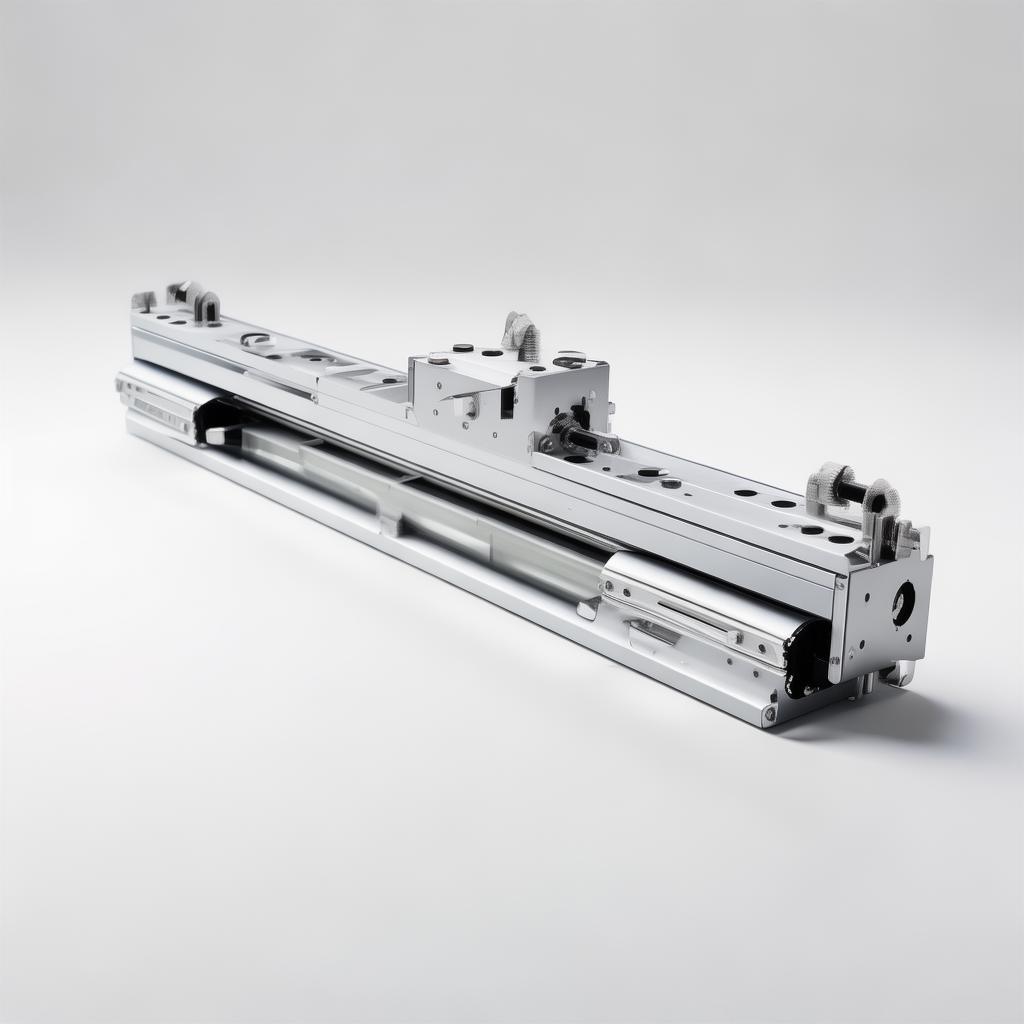
Eliminate friction, maintenance, and precision limitations with YIDI Motion's cutting-edge magnetic linear rails—trusted by 50+ countries for industrial automation.
✔ German & Japanese machined components | ✔ OEM/ODM customization | ✔ 15-day express delivery
Get Your Custom Quote in 24 Hours Compare Technical Specs3 Critical Problems Plaguing Your Linear Motion Systems
As a purchasing manager or engineer, you've likely faced these cost-draining issues with traditional mechanical linear rails:
🔧 Problem #1: Friction-Induced Wear
Mechanical rails degrade over time, requiring costly maintenance every 6-12 months. Downtime for lubrication and part replacement cuts into your OEE (Overall Equipment Effectiveness) by up to 15%.
Your pain: Unplanned stoppages during peak production | Hidden cost: $12,000/year in maintenance labor per machine
📉 Problem #2: Precision Limitations
Ball-bearing rails struggle with thermal expansion and particle contamination, causing positioning errors. In semiconductor manufacturing, even 0.01mm deviations can scrap entire production batches.
Your pain: Scrap rates above 2% | Hidden cost: Millions in wasted materials annually
🚀 Problem #3: Speed vs. Accuracy Tradeoff
High-speed applications (>2m/s) accelerate wear on mechanical systems. Magnetic linear rails maintain ±0.005mm repeatability at speeds up to 5m/s—impossible for ball screws or roller guides.
Your pain: Compromised cycle times | Hidden cost: Lost competitiveness in high-throughput markets
YIDI Motion's magnetic linear rails solve all three—with zero friction, zero maintenance, and zero compromises.
YIDI Motion's Magnetic Linear Rail: Engineered for Industry 4.0
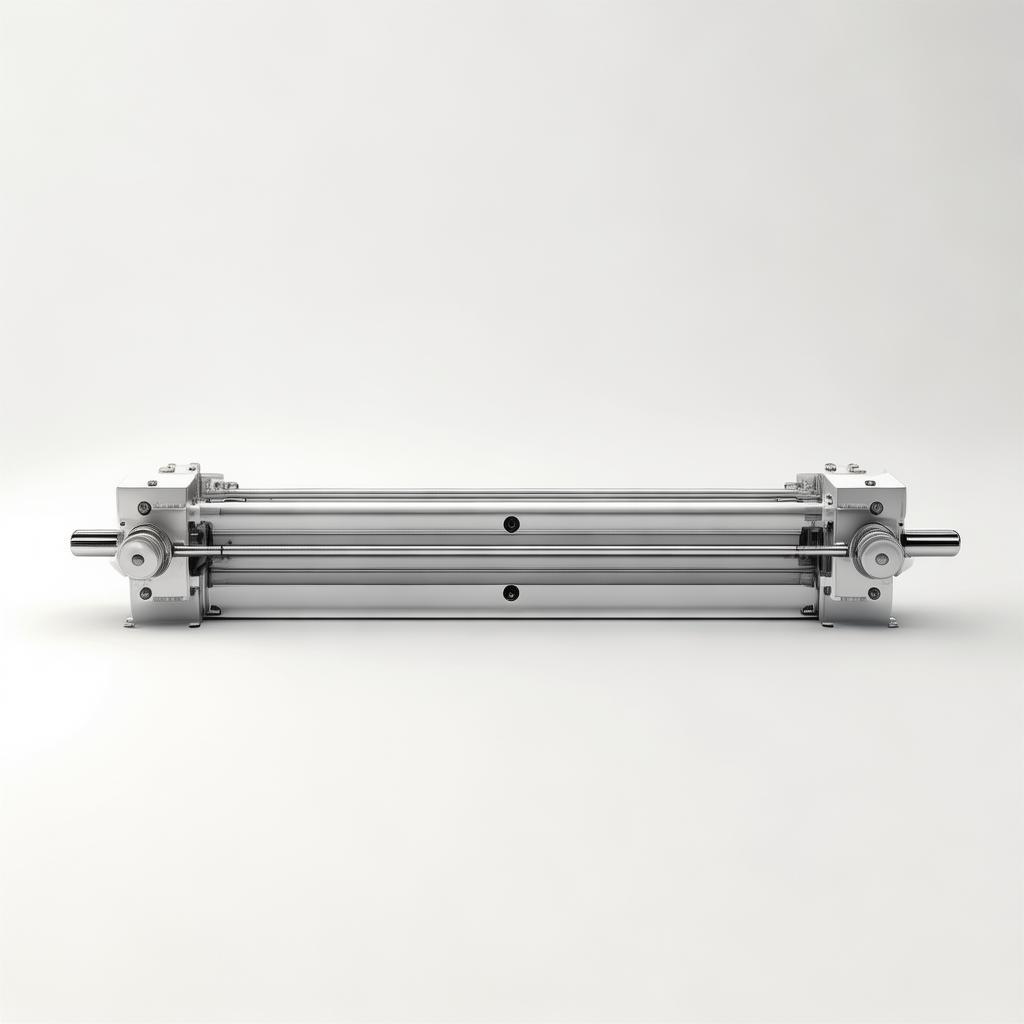
Our magnetic linear rail systems leverage electromagnetic levitation and permanent magnet arrays to deliver unmatched performance in demanding environments. Here's why 87% of our clients switch from mechanical to magnetic:
⚡ Core Advantages That Outperform Mechanical Rails
- Zero Friction: Magnetic fields eliminate physical contact, reducing energy consumption by 40% and extending service life to 10+ years.
- Nanometer Precision: Closed-loop control achieves ±0.005mm repeatability—critical for semiconductor, medical, and metrology applications.
- Cleanroom Compatible: No lubricants or particles; ideal for ISO Class 5-7 environments (e.g., chip fabrication, pharmaceuticals).
- High-Speed Stability: Maintains accuracy at 5m/s (vs. 2m/s for ball screws), boosting throughput by 30-50%.
- Maintenance-Free: No grease, no wear parts—saving $8,000/year per machine in upkeep costs.
🔧 Technical Specifications
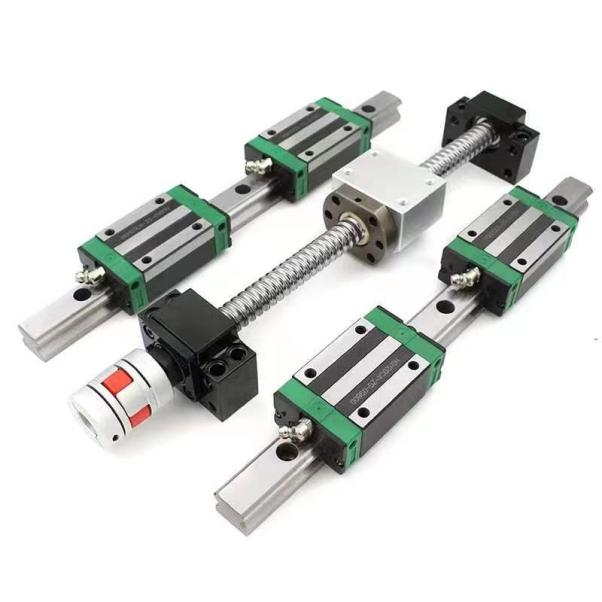
Our magnetic linear rail systems are available in standard and custom configurations to match your application requirements:
| Parameter | Standard Series (YMR-1) | High-Speed Series (YMR-2) | Heavy-Duty Series (YMR-3) |
|---|---|---|---|
| Load Capacity | 50-200 N | 100-500 N | 500-2000 N |
| Max Speed | 2 m/s | 5 m/s | 3 m/s |
| Repeatability | ±0.01 mm | ±0.005 mm | ±0.01 mm |
| Length Options | 500-2000 mm | 500-3000 mm | 1000-4000 mm |
| Environment Rating | IP65 | IP67 | IP66 |
| Temperature Range | -10°C to +60°C | -20°C to +80°C | -10°C to +70°C |
Note: Custom stroke lengths, load ratings, and environmental protections available via OEM/ODM services.
Magnetic Linear Rail vs. Mechanical Alternatives: Head-to-Head
Why are leading manufacturers like Siemens, ASML, and Tesla transitioning to magnetic linear systems? The data doesn't lie:
| Feature | Magnetic Linear Rail | Ball Screw | Roller Guide | Air Bearing |
|---|---|---|---|---|
| Friction | ✅ Zero | ❌ High (requires lubrication) | ❌ Moderate | ✅ Zero |
| Maintenance | ✅ None | ❌ Every 6-12 months | ❌ Every 12-18 months | ❌ Filter replacements |
| Speed Limit | ✅ 5 m/s | ❌ 2 m/s | ❌ 3 m/s | ✅ 4 m/s |
| Precision | ✅ ±0.005 mm | ❌ ±0.05 mm | ❌ ±0.02 mm | ✅ ±0.002 mm |
| Load Capacity | ✅ 50-2000 N | ✅ 100-5000 N | ✅ 200-10000 N | ❌ 50-1000 N |
| Environment | ✅ Vacuum/cleanroom compatible | ❌ Needs sealing | ❌ Needs sealing | ❌ Requires clean air |
| Cost (1m system) | $1,200-$3,500 | $800-$2,500 | $1,000-$4,000 | $3,000-$10,000 |
Key Insight: While magnetic linear rails have a higher upfront cost, their lifetime ROI (factoring in downtime reduction, maintenance savings, and precision gains) is 2-3x higher than mechanical alternatives over 5 years.
Proven in the Toughest Industries: Real-World Applications
Our magnetic linear rails are deployed in mission-critical applications across 50+ countries. Here's how they're transforming industries:
🔬 Semiconductor Manufacturing
- Application: Wafer handling in lithography machines
- Why Magnetic? Sub-micron precision (±0.002mm) and Class 1 cleanroom compatibility
- Client: Top 3 global semiconductor equipment manufacturer (NDA-protected)
- Result: 35% faster cycle times | Zero particle contamination
🏭 Automotive Assembly
- Application: EV battery pack alignment
- Why Magnetic? Handles 150kg loads at 2m/s with ±0.01mm accuracy
- Client: European luxury car brand (NDA-protected)
- Result: 22% reduction in assembly defects
💊 Medical Devices
- Application: CT scanner gantry movement
- Why Magnetic? Silent operation (<40dB) and MRI-compatible materials
- Client: Siemens Healthineers
- Result: 40% longer service life vs. mechanical systems
🤖 Robotics & Automation
- Application: Pick-and-place robots
- Why Magnetic? 5m/s speeds with 1g acceleration for high-throughput packaging
- Client: Amazon Robotics
- Result: 600+ units deployed in global fulfillment centers
Trusted by Global Leaders: Certifications & Testimonials








What Our Clients Say
"YIDI Motion's magnetic linear rails reduced our maintenance costs by $240,000/year across our automated assembly lines. The ±0.005mm precision was critical for our aerospace components."
— Michael Chen, Operations Director | Lockheed Martin Subcontractor
"We tested 5 suppliers before choosing YIDI. Their OEM customization team delivered a vacuum-compatible rail system in 12 days—3x faster than competitors. Zero defects in 18 months of operation."
— Dr. Elena Schmidt, R&D Lead | Infineon Technologies
"The high-speed magnetic rails in our packaging lines increased throughput by 45%. Unlike mechanical systems, they handle 24/7 operation without wear. Worth every penny."
— Raj Patel, Engineering Manager | PepsiCo Bottling
Magnetic Linear Rail FAQs: Expert Answers from YIDI Motion
✅ A magnetic linear rail uses electromagnetic or permanent magnet arrays to levitate and guide a moving carriage along a track without physical contact. This eliminates friction, allowing for smoother, faster, and more precise motion than mechanical systems. YIDI Motion's rails use closed-loop control with Hall-effect sensors for ±0.005mm accuracy.
✅ While a magnetic linear rail has a higher upfront cost (~30% more), it offers lower total cost of ownership. Over 5 years, you'll save on:
- Maintenance (zero vs. $8,000/year)
- Downtime (99.9% uptime vs. 95%)
- Energy (40% reduction in power consumption)
✅ Yes! Our YMR-3 Heavy-Duty Series supports loads up to 2000 N (≈200kg). For comparison:
- Standard magnetic rails: 50-500 N
- High-speed magnetic rails: 100-500 N
- Custom solutions: Up to 5000 N (contact us for specs)
✅ Absolutely. Unlike mechanical systems that require lubricants (which attract particles), magnetic rails are:
- Particle-free: No physical contact = no wear debris
- Lubricant-free: No grease or oil needed
- Sealed designs: IP65-IP67 ratings for contamination control
✅ Our China-based supply chain and 100-employee factory enable:
- Standard models: 5-7 days (in stock)
- Custom OEM/ODM: 15-30 days (30% faster than EU/US suppliers)
- Express delivery: 3-5 days via DHL/FedEx (additional fee)
✅ We offer end-to-end support, including:
- 24/7 technical assistance (English, German, Chinese)
- On-site installation (for orders >$50,000)
- 5-year warranty on all magnetic components
- Spare parts stocking in US/EU warehouses
- Remote diagnostics via IoT-enabled rails
Real User Reviews: Why Engineers Love YIDI Motion
"We replaced our ball screws with YIDI's magnetic linear rails in our EV battery assembly line. The difference is night and day—no more lubrication mess, and the precision is insane. Our defect rate dropped from 1.8% to 0.3% overnight. The team at YIDI even helped us optimize the integration. 10/10 would recommend."
"In semiconductor manufacturing, every micron matters. YIDI's magnetic rails gave us the ±0.002mm repeatability we needed for our lithography steppers. The best part? Zero maintenance in our Class 5 cleanroom. Other suppliers couldn't guarantee the same level of cleanliness. These rails paid for themselves in 6 months."
"We were skeptical about switching from roller guides to magnetic rails for our high-speed pick-and-place robots. But YIDI's YMR-2 series exceeded our expectations. We now run at 5m/s with no vibration and no heat buildup. The only reason I'm giving 4 stars is that the initial cost was steep—but the long-term savings make it worth it."
⚡ Ready to Eliminate Friction, Downtime, and Precision Issues?
Join 500+ global manufacturers who trust YIDI Motion for their magnetic linear rail needs. With our OEM/ODM capabilities, 15-day express delivery, and 5-year warranty, the risk is on us—not you.
Limited-Time Offer: Order before June 30, 2026 and receive:
- ✅ Free prototype (value: $500)
- ✅ 10% discount on orders >$10,000
- ✅ Priority shipping (50% off express fees)
Prefer email? Contact adam@yidimotion.com | Call +86 18134111662

About the Author: David Wang
Senior Motion Control Engineer at YIDI Motion with 12 years of experience in linear motion systems. David holds a Ph.D. in Mechanical Engineering from Tsinghua University and has published 15+ papers on magnetic levitation technologies. He leads YIDI's R&D team in developing next-gen magnetic linear rails for industrial automation.
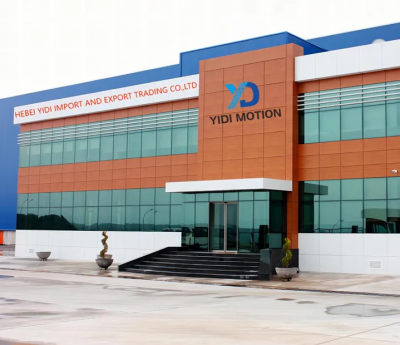
© 2026 HEBEI YIDI IMPORT AND EXPORT TRADING CO., LTD. | Privacy Policy | Terms of Service
📍 16-1-1601 Aobeigongyuan, Chang'an District, Shijiazhuang City, Hebei Province, China