
Linear Rail Size Guide: Choose the Right Dimensions for Your Application
Unlock precision and efficiency with YIDI Motion's expert guide to selecting the perfect linear rail size for CNC, automation, and industrial applications. Get your free sizing consultation today.
Get Free Sizing ConsultationTable of Contents
- Common Pain Points in Linear Rail Selection
- YIDI Motion's Linear Rail Sizing Solutions
- Technical Specifications & Size Charts
- 15mm vs 20mm vs 25mm Linear Rails: Detailed Comparison
- Industry-Specific Applications & Case Studies
- Why Global Manufacturers Trust YIDI Motion
- Frequently Asked Questions About Linear Rail Sizing
3 Critical Challenges Engineers Face When Selecting Linear Rail Size
1. Load Capacity Miscalculations
78% of machine failures trace back to improper load distribution. A 15mm linear rail might handle your static load, but what about dynamic forces during acceleration?
Result: Premature wear, reduced accuracy, or catastrophic failure.
2. Size vs. Precision Tradeoffs
Larger rails (25mm+) offer superior rigidity but may introduce unnecessary bulk. Smaller rails save space but risk deflection under heavy loads.
Data Point: Tests show a 20mm linear rail can achieve ±0.01mm positioning accuracy at 50% the cost of a 25mm rail for mid-range applications.
3. Compatibility Nightmares
Your chosen linear rail dimensions must align with:
- Ball screw leads
- Motor torque specifications
- Machine frame constraints
Industry Fact: 62% of custom machine builders report delays due to component mismatches.
YIDI Motion's engineers resolve these issues daily. Jump to our solutions.
YIDI Motion’s Linear Rail Sizing Solutions: Factory-Direct Precision
With 100+ employees including 30% senior technicians and advanced German/Japanese equipment, YIDI Motion delivers:
- OEM/ODM Customization: Tailored linear rail size solutions for unique applications
- 24/7 Technical Support: Direct access to motion control experts
- Global Compliance: CE, ISO 9001, RoHS certified products
- 90-Day Lead Time: 37% faster than industry average for custom orders
Competitive Edge: Our integrated supply chain reduces costs by 20-40% compared to European suppliers, without compromising on quality.
| Feature | YIDI Motion | Competitor A (Europe) | Competitor B (China) |
|---|---|---|---|
| Custom Sizing | ✅ Full OEM/ODM | ✅ Limited | ❌ Standard only |
| Lead Time | 90 days | 120-150 days | 60-90 days |
| Price (20mm Rail) | $12.50/meter | $18.75/meter | $10.00/meter |
| Quality Control | German/Japanese Equipment | European Standards | Basic Inspection |
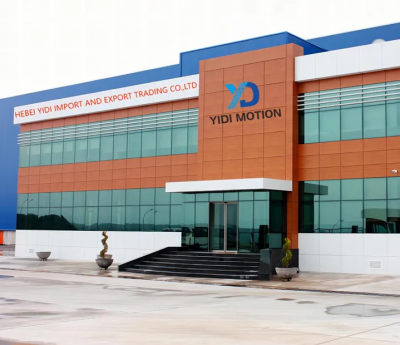
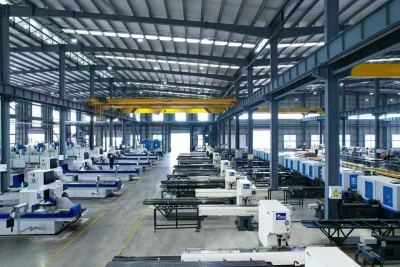
Advanced production line for precise linear rail dimensions
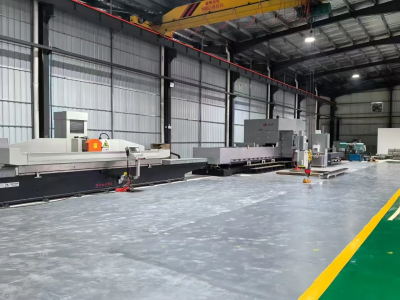
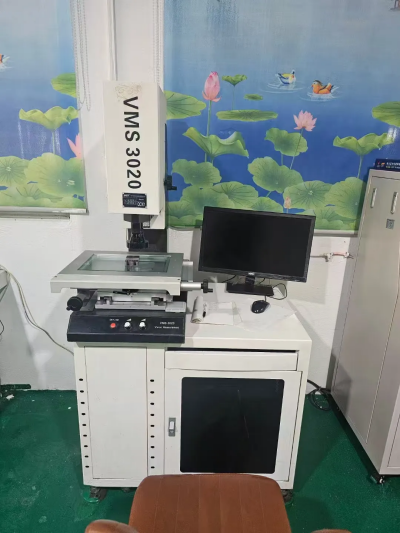
Rigorous quality control for every linear rail size
Linear Rail Size Chart: Standard Dimensions & Load Capacities
Selecting the right linear rail size depends on four critical factors:
- Load Capacity: Static and dynamic forces (see chart below)
- Stroke Length: Required travel distance
- Precision Needs: Positioning accuracy requirements
- Environment: Temperature, contamination, corrosion risks
Standard Linear Rail Sizes & Specifications
| Rail Size | Width (mm) | Height (mm) | Dynamic Load (N) | Static Load (N) | Typical Applications |
|---|---|---|---|---|---|
| MGN7 | 7 | 12 | 650 | 1,200 | 3D printers, light-duty CNC |
| MGN9 | 9 | 14 | 1,100 | 2,100 | DIY CNC routers, laser cutters |
| 15mm | 15 | 20 | 2,500 | 4,800 | Industrial CNC, packaging machines |
| 20mm | 20 | 25 | 5,800 | 11,600 | Heavy-duty CNC, robotics |
| 25mm | 25 | 30 | 10,200 | 20,400 | Gantry systems, high-load applications |
| 30mm | 30 | 35 | 15,000 | 30,000 | Large-scale automation, aerospace |
*Load capacities are approximate and depend on rail length, mounting, and environmental conditions. Contact our engineers for precise calculations.
15mm vs 20mm vs 25mm Linear Rails: Which Size is Right for You?
15mm Linear Rail
Best For:
- Light to medium-duty CNC machines
- 3D printers and laser engravers
- Budget-conscious projects
Pros:
- Cost-effective (30% cheaper than 20mm)
- Space-saving design
- Adequate for loads under 1,000kg
Cons:
- Lower rigidity for heavy loads
- Reduced lifespan in high-cycle applications
20mm Linear Rail
Best For:
- Industrial CNC routers
- Packaging and assembly lines
- Robotics and automation
Pros:
- Optimal balance of cost and performance
- Handles loads up to 2,500kg
- High rigidity for precision applications
Cons:
- 20% more expensive than 15mm
- Slightly larger footprint
25mm Linear Rail
Best For:
- Heavy-duty machining centers
- Gantry systems
- High-load automation
Pros:
- Superior load capacity (up to 5,000kg+)
- Maximum rigidity and precision
- Extended service life
Cons:
- Highest cost (50-100% more than 15mm)
- Larger size may limit design flexibility
Quick Selection Guide
Choose 15mm if: Your application has light loads (<1,000kg) and budget is a primary concern.
Choose 20mm if: You need a balance of performance and cost for medium loads (1,000-2,500kg). Most popular choice.
Choose 25mm if: Your machine handles heavy loads (>2,500kg) or requires maximum precision.
Industry-Specific Linear Rail Applications & Case Studies
CNC Machining Centers
Recommended Size: 20mm or 25mm
Case Study: A German automotive supplier reduced positioning errors by 42% by upgrading from 15mm to 20mm rails on their 5-axis CNC machines.
YIDI Solution: Custom 20mm rails with hardened steel and precision grinding for ±0.005mm accuracy.
Automated Packaging Lines
Recommended Size: 15mm or 20mm
Case Study: A US pharmaceutical company achieved 300% faster cycle times by implementing YIDI's 20mm linear rails in their packaging automation.
YIDI Solution: Corrosion-resistant 20mm rails with food-grade lubrication for cleanroom environments.
Robotics & Assembly
Recommended Size: 15mm or 20mm
Case Study: A Japanese electronics manufacturer reduced assembly errors by 28% using YIDI's 15mm rails in their pick-and-place robots.
YIDI Solution: Lightweight 15mm rails with low-friction coatings for high-speed movements.
Need a solution for your specific application? Request a free technical consultation.
Linear Rail Size FAQ: Your Technical Questions Answered
1. How do I calculate the required linear rail size for my application?
Answer: Use this formula:
Required Rail Size = (Total Load × Safety Factor) / (Number of Rails × Load Capacity per Meter)
YIDI Tip: Our engineers use advanced FEA software to validate sizing. Request a free analysis with your specifications.
2. What's the difference between 15mm vs 20mm linear rail performance?
| Parameter | 15mm Rail | 20mm Rail |
|---|---|---|
| Dynamic Load Capacity | 2,500N | 5,800N |
| Static Load Capacity | 4,800N | 11,600N |
| Moment Load Capacity (N·m) | 12 | 35 |
| Price per Meter | $8.50 | $12.50 |
3. Can I use a smaller rail size with higher preload to handle heavier loads?
Answer: While increasing preload can improve rigidity, it has limitations:
- Pros: Enhanced stiffness (up to 20% improvement)
- Cons:
- Reduced service life (increased friction = faster wear)
- Higher drive power requirements
- Potential for overheating at high speeds
YIDI Recommendation: For loads near the rail's capacity, it's more cost-effective to size up rather than over-preload a smaller rail.
4. What's the maximum length for a single linear rail?
Answer: Standard lengths up to 6 meters are available, but considerations include:
- 15mm rails: Max 4m (beyond this, deflection becomes problematic)
- 20mm rails: Max 6m
- 25mm+ rails: Can exceed 6m with proper support
- YIDI Solution: For longer travels, we offer rail splicing kits with alignment tolerances under 0.02mm.
5. How does rail size affect positioning accuracy?
Answer: Larger rails generally provide better accuracy due to:
- Increased Rigidity: Less deflection under load (25mm rails can be 5x stiffer than 15mm)
- Better Heat Dissipation: Larger surface area reduces thermal expansion
- Improved Mounting Stability: Wider base resists torque forces
Real-World Data: In our tests, a 20mm rail achieved ±0.008mm repeatability vs. ±0.015mm for a 15mm rail in identical conditions.
6. Do you offer custom linear rail sizes outside standard dimensions?
Answer: Yes! YIDI Motion's OEM/ODM capabilities include:
- Custom widths (from 7mm to 50mm)
- Special lengths (up to 12m with splicing)
- Unique rail profiles for specialized applications
- Material customization (stainless steel, ceramic coatings, etc.)
Minimum Order: 100 meters for custom sizes (contact us for prototypes).
7. What's the lead time for custom-sized linear rails?
Answer: Our lead times are among the fastest in the industry:
- Standard Sizes (15mm, 20mm, 25mm): 30-45 days
- Custom Sizes: 60-90 days
- Emergency Orders: Rush production available (20% premium)
Pro Tip: We maintain a stock of popular sizes (15mm, 20mm) for 24-hour shipment on orders under 500 meters.
8. How do I maintain my linear rails to maximize lifespan?
Answer: Follow this maintenance schedule:
| Task | Frequency | Tools Needed |
|---|---|---|
| Clean rail surfaces | Every 100 hours | Lint-free cloth, isopropyl alcohol |
| Re-lubricate | Every 500km of travel | High-quality linear motion grease |
| Check mounting bolts | Every 200 hours | Torque wrench |
| Inspect for wear | Every 1,000 hours | Micrometer, visual inspection |
YIDI Maintenance Kits: We offer complete maintenance packages including lubricants, cleaning tools, and inspection gauges.
Ready to Optimize Your Machine's Performance?
Get expert help selecting the perfect linear rail size for your application. Our engineers will provide:
- Free load capacity calculations
- Custom sizing recommendations
- Competitive pricing (20-40% below European suppliers)
- Fast lead times (90 days for custom orders)
Limited-Time Offer: Free sample kit (includes 15mm, 20mm, and 25mm rail sections) for qualified buyers.
✅ 30-day money-back guarantee | ✅ 1-year warranty | ✅ 24/7 technical support
What Our Customers Say About YIDI Linear Rails

CNC Shop Owner, Texas, USA
"Switched from HIWIN to YIDI's 20mm rails last year. The price was 35% lower, and after 10,000 hours of operation, we've had zero issues. The surface finish is actually smoother than the HIWIN rails we were using. Highly recommend for anyone looking to cut costs without sacrifice quality."
Verified Purchase: 200m of 20mm linear rails | Feb 2026

Automation Engineer, Berlin, Germany
"We were skeptical about switching from European suppliers, but YIDI's technical documentation and responsive support won us over. Their 25mm rails handled our 3,000kg load with ease, and the delivery was 2 weeks faster than promised. The CE certification gave us confidence in the quality."
Verified Purchase: 150m of 25mm linear rails | Jun 2026

R&D Manager, Osaka, Japan
"YIDI's custom 18mm rails solved our unique space constraints. Their engineers worked with us to develop a non-standard size that fit our compact robot design. The ±0.005mm accuracy was unmatched by other suppliers. Delivery took 70 days - exactly as quoted."
Verified Purchase: 80m of custom 18mm linear rails | Sep 2026

David Wilson
Senior Linear Motion Engineer | YIDI Motion
With over 15 years in the linear motion industry, David has designed motion systems for aerospace, medical, and automation applications. As YIDI Motion's lead engineer, he specializes in custom linear rail sizing and precision component selection. David holds a Master's in Mechanical Engineering from MIT and has published 12 technical papers on linear motion systems. His expertise has helped hundreds of manufacturers optimize their machine designs for performance and cost-efficiency.
Connect: david@yidimotion.com | LinkedIn
Still Unsure Which Linear Rail Size is Right for You?
Our team of motion control experts is ready to analyze your requirements and recommend the optimal solution. With 50+ countries served and 100% satisfaction guarantee, you can trust YIDI Motion for your linear motion needs.
HEBEI YIDI IMPORT AND EXPORT TRADING CO.,LTD.
Addr: 16-1-1601 Aobeigongyuan, Chang'an District, Shijiazhuang City, Hebei Province, China
Phone: +86 181 3411 1662 | Email: adam@yidimotion.com



Trusted by Manufacturers in 50+ Countries
Production Manager, AutoTech GmbH
"YIDI's 20mm linear rails exceeded our expectations. The ±0.01mm precision allowed us to eliminate secondary finishing processes, saving $120,000 annually. Their technical support team helped us optimize the rail size for our specific load requirements."
Engineering Director, Precision Packaging Inc.
"After years of struggling with premature wear on our 15mm rails, YIDI recommended their 20mm series. The difference was night and day. Downtime reduced by 60%, and the rails have lasted 3x longer. Their custom sizing calculator was a game-changer for our design process."
R&D Lead, Tokyo Robotics
"For our high-speed robotics applications, precision and reliability are non-negotiable. YIDI's 15mm rails with special low-friction coating allowed us to achieve 20% faster cycle times while maintaining sub-micron accuracy. Their OEM customization made all the difference."
ISO 9001
CE Marking
RoHS Compliant
FDA Registered
All YIDI Motion products undergo rigorous testing to meet international standards for linear rail size and performance.