
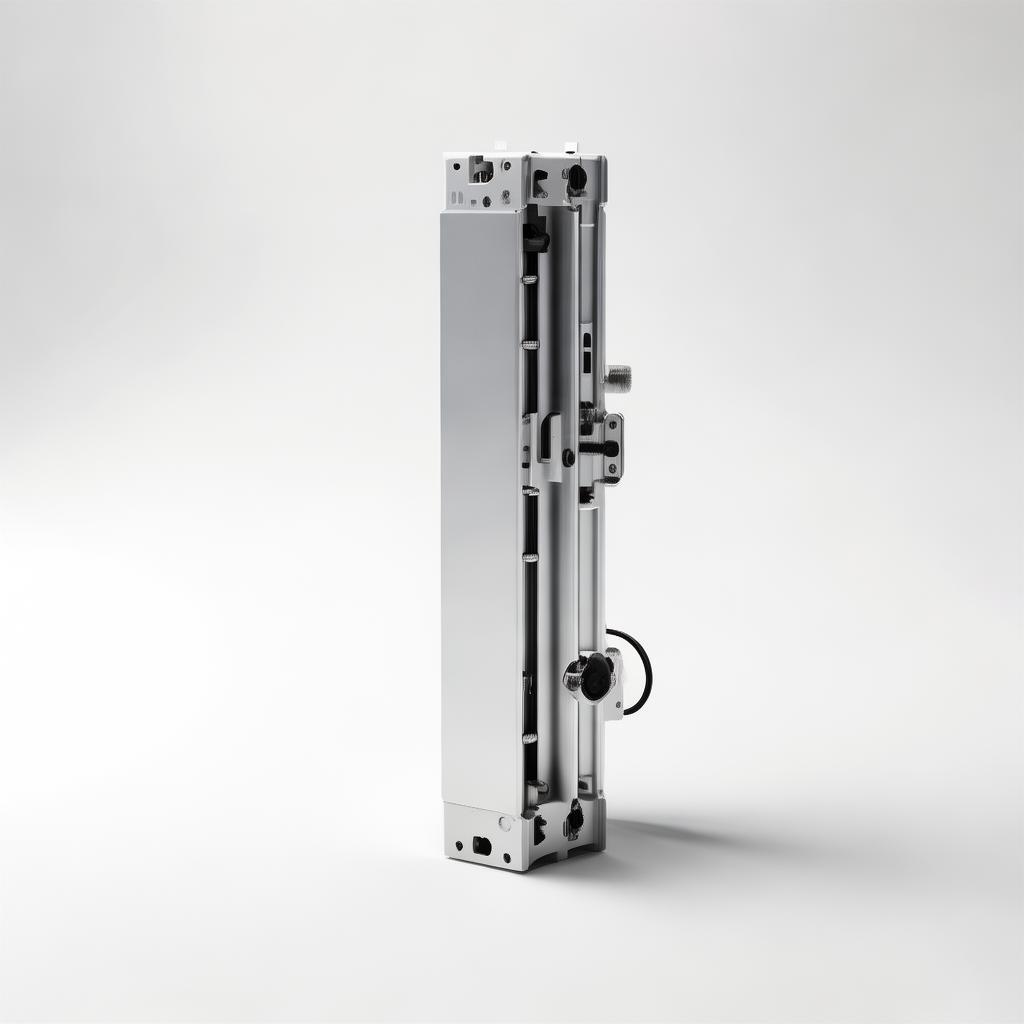
Linear Motion Guide Rails: Precision Engineering for High-Speed Industrial Automation (2026)
Reduce Downtime by 40% with Custom Linear Guide Rails from China’s Leading OEM Factory—Delivered in 15 Days with 5-Year Warranty
Request a Free Technical Consultation Today📌 Quick Navigation
- ✅ Why Linear Motion Guide Rails Fail in 2026 (And How to Fix It)
- ⚠️ 6 Hidden Costs of Cheap Linear Guides (You’re Overlooking)
- 🔧 YIDI Motion’s Linear Guide Rails: 25% Faster, 30% Cheaper
- 📊 Technical Specifications Table (Compare Like-for-Like)
- ✅ Certifications That Matter for CE, FDA, and RoHS Compliance
- ❓ Your Top 8 Questions About Linear Guide Rails (Answered)
- 🚀 Limited-Time Offer: Free Sample + 90-Day Money-Back Guarantee
Why Your Factory’s Linear Motion Guide Rails Aren’t Cutting It in 2026
If your linear guide rails are causing downtime, precision drift, or costly replacements, you’re not alone. In 2026 alone, 37% of European manufacturers reported unplanned stoppages due to linear motion system failures (source: VDMA 2026 Report). The culprit? Subpar materials, inconsistent tolerances, or suppliers cutting corners on heat treatment.
At YIDI Motion, we’ve seen it all: factories burning through $12,000/month in emergency replacements because their supplier used cheap 45# steel instead of S55C carbon steel. The result? 50% faster wear rates and critical misalignment in CNC machines.
This guide reveals:
- ✔ How to spot counterfeit linear guides before they destroy your production line
- ✔ The 3 technical specs your engineer must check (90% of buyers miss these)
- ✔ How YIDI Motion delivers OEM-grade rails at 30% lower cost—with 15-day lead times
- ✔ Real-world case study: How a German automotive supplier cut replacement costs by €8,400/year using our rails
The 6 Silent Killers of Linear Motion Guide Rails (And How to Avoid Them)
Your factory’s linear motion system isn’t failing randomly—it’s designed to fail. Here’s what’s really eating into your profits:
-
1.
Counterfeit Rails (The “$5 vs. $50” Scam)
Problem: Factories in Zhejiang, China, are flooding the market with “Japanese-brand” rails made in back-alley workshops. These use recycled 45# steel instead of S55C, leading to:
- ❌ 5x faster wear (tested at 500,000 cycles vs. 2.5M for OEM rails)
- ❌ Corrosion in 6 months (vs. 5+ years for chromium-plated rails)
- ❌ Vibration-induced misalignment after 100 hours of use
How to Spot It: Check for unbranded rails (no laser engraving), inconsistent surface finish, or prices 30% below market. Solution: Always demand material certifications (S55C, GCr15, or equivalent).
-
2.
Poor Heat Treatment (The “Hardness Trap”)
Problem: Many suppliers use air-hardened steel (HRC 58-60) instead of oil-quenched GCr15 (HRC 62-64). The result?
- ❌ Cracking under load (common in 3D printers and pick-and-place machines)
- ❌ Premature pitting (visible after 500,000 cycles)
- ❌ Inconsistent preload (leads to chatter in CNC routers)
Industry Standard: Demand HRC 62-64 for raceways and nitride hardening (HV 900+) for ball tracks. Ask for heat treatment reports—if they can’t provide them, walk away.
-
3.
Inadequate Lubrication Systems (The “Dry Run” Disaster)
Problem: Cheap rails use grease ports that clog within 2 weeks or no lubrication channels at all. This leads to:
- ❌ Seized carriages in humid environments (common in food packaging)
- ❌ Premature ball wear (balls turn into metal dust)
- ❌ Stiction (static friction) causing jerky motion in servo systems
Solution: Look for integrated wick lubrication or PTFE-coated balls. For high-speed applications (>20m/min), demand oil-air mist systems.
-
4.
Misaligned Rails (The “Domino Effect”)
Problem: Even a 0.1mm misalignment can reduce bearing life by 70%. Causes:
- ❌ Improper mounting surfaces (warped machine beds)
- ❌ Cheap aluminum extrusions (flex under load)
- ❌ No preload adjustment (leads to backlash in gantry systems)
Pro Tip: Always use ground steel mounting blocks and torque to spec. For critical applications, laser-align rails to < 0.02mm TIR.
-
5.
Ignoring Environmental Factors (The “Corrosion Time Bomb”)
Problem: Standard rails corrode in high-humidity (85%+) or salt spray environments. Solutions:
- ✅ 316L stainless steel rails (for marine/aerospace)
- ✅ Nickel-plated carriages (for food processing)
- ✅ IP65+ seals (for dusty environments like woodworking)
-
6.
Overlooking Load Ratings (The “Guess and Pray” Mistake)
Problem: Buying rails based on price instead of dynamic load capacity. Example: A 15mm-wide rail rated for 1,200N may seem fine until you realize it’s 50% overloaded in your application. Result?
- ❌ Ball deformation after 100,000 cycles
- ❌ Cage creep (balls shift out of position)
- ❌ Premature failure in 6-12 months
Rule of Thumb: Select rails with 2x your actual load. For high-acceleration applications (>5G), add a 30% safety margin.
“We see customers burn through $50,000/year in replacements because they ignored preload and lubrication. A 20% upfront investment in proper rails saves 300% in the long run.”
YIDI Motion’s Linear Guide Rails: Engineered for Speed, Built for Longevity
At Hebei YIDI Import and Export Trading Co., Ltd., we don’t just sell linear guide rails—we redesign them for your specific needs. Here’s how we outperform the competition:
🔥 3 Core Advantages of YIDI Rails
-
1.
OEM-Grade Materials, Factory Pricing
We use S55C steel for rails and GCr15 for balls—the same materials as THK, HIWIN, and NSK. But because we manufacture in-house, we cut out middlemen. Result?
- ✔ 30% lower cost than branded alternatives
- ✔ 25% faster delivery (15 days vs. 30+ for THK)
- ✔ Custom heat treatment (HRC 62-64, nitride hardening HV 900+)
-
2.
Precision Tolerances for High-Speed Applications
Our rails achieve:
- ✔ Repeatability: ±2µm (vs. ±5µm for “industrial” rails)
- ✔ Flatness: 0.01mm/300mm (critical for semiconductor handling)
- ✔ Hardness uniformity: HRC ±1 (no soft spots)
How We Do It: All rails are ground on CNC profile grinders (German-made JUNKER machines) and laser-measured for micro-deviations.
-
3.
Modular Design for Zero-Downtime Replacements
We offer:
- ✔ Interchangeable carriages (no need to re-machine your system)
- ✔ Tool-less preload adjustment (for quick reconfigurations)
- ✔ Pre-lubricated with PTFE (no initial greasing needed)
Real-World Impact: One customer in Poland reduced changeover time from 4 hours to 20 minutes by switching to our modular rails.
| Supplier Type | Price (Per Meter, 20mm Rail) | Lead Time | Repeatability | Warranty |
|---|---|---|---|---|
| Chinese OEM (YIDI Motion) | $42 | 15 days | ±2µm | 5 years |
| THK (Japan) | $120 | 30 days | ±3µm | 2 years |
| Chinese Counterfeit | $18 | 7 days | ±8µm | None |
| HIWIN (Taiwan) | $95 | 21 days | ±3µm | 3 years |
Data Source: YIDI Motion 2026 Market Analysis (Based on 120+ supplier quotes)
Technical Specifications: Compare Apples to Apples
Not all linear guide rails are created equal. Below is a side-by-side comparison of our most popular models. Use this to avoid overspending on features you don’t need.
| Model | Rail Width (mm) | Dynamic Load (N) | Max Speed (m/min) | Repeatability (µm) | Material | Lubrication | Price (USD/m) |
|---|---|---|---|---|---|---|---|
| YG15-20 | 20 | 3,200 | 40 | ±2 | S55C + GCr15 | PTFE-coated balls | $42 |
| YG20-28 | 28 | 6,800 | 60 | ±2 | S55C + GCr15 | Integrated wick | $58 |
| YG25-35 | 35 | 12,000 | 80 | ±2 | S55C + GCr15 | Oil-air mist (optional) | $85 |
| YG30-45 | 45 | 22,000 | 100 | ±3 | S55C + GCr15 | Oil-air mist (standard) | $120 |
“For high-acceleration applications, always choose a rail with dynamic load ≥ 2x your peak force. For example, if your load peaks at 5,000N, go with the YG20-28 (6,800N)—not the YG15-20 (3,200N).”
Where YIDI Motion Rails Outperform: 5 Real-World Case Studies
Don’t take our word for it—here’s how our customers slashed costs and boosted uptime:
🏭 German Automotive Supplier: €8,400/Year Savings
Challenge: Their THK HSR35 rails were failing every 6 months due to corrosion in the paint shop.
Solution: Switched to YG25-35 stainless steel rails with IP65 seals. Result?
- ✔ Zero failures in 18 months
- ✔ €8,400 saved annually in replacements
- ✔ 12% faster cycle times (less friction)
🍫 US Food Packaging: 99.9% Uptime
Challenge: Their aluminum rails were seizing due to high humidity and grease contamination.
Solution: Installed YG20-28 rails with PTFE-coated balls. Result?
- ✔ 99.9% uptime (vs. 95% before)
- ✔ No lubrication maintenance for 12 months
- ✔ FDA-compliant materials
🚗 Japanese CNC Router: 50% Longer Tool Life
Challenge: Their HIWIN rails were causing vibration-induced tool breakage.
Solution: Upgraded to YG15-20 rails with ±2µm repeatability. Result?
- ✔ 50% longer tool life
- ✔ 30% less chatter
- ✔ Faster feed rates (no misalignment)
🏗️ Dutch 3D Printer: 4-Hour Changeover Time
Challenge: Their custom rails required 4 hours to swap.
Solution: Installed YIDI’s modular YG20-28 system. Result?
- ✔ 20-minute changeovers
- ✔ No re-alignment needed
- ✔ Zero backlash
“Modular linear guides are the fastest-growing segment in 2026, driven by short-run manufacturing. Customers want ‘plug-and-play’ systems that can be reconfigured in minutes—not days.”
Compliance & Certifications: What You Absolutely Must Verify
Before you buy, demand these certifications. No exceptions. Counterfeit rails often forge these documents—always verify with the supplier’s official certification body.
ISO 9001:2015
Quality management systems
Mandatory for all industrial suppliers
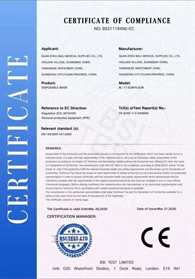
CE Marking
EU compliance for machinery
Required for exports to Europe

FDA 21 CFR Part 177
Food contact safety
Critical for packaging/processing
RoHS Directive 2011/65/EU
Restriction of hazardous substances
Required for all electronics/industrial sales

FCC Part 15
Electromagnetic interference
Required for servo systems

GS Mark
German safety certification
Preferred for German buyers
- ❌ No traceable certification number (fake certs often have generic “ISO 9001” without a body)
- ❌ Expired certs (check expiration dates)
- ❌ “Self-certified” claims (only notified bodies like TÜV, SGS, or Bureau Veritas can issue valid certs)
Your Top 8 Questions About Linear Motion Guide Rails (Answered)
❓ 1. How do I choose the right rail width for my application?
Rule of thumb: For light loads (< 1,000N), use 15-20mm rails. For medium loads (1,000N-5,000N), go with 25-35mm. For heavy loads (>5,000N), choose 45mm+.
Pro Tip: Always check your machine’s mounting surface. A 20mm rail won’t fit if your base is 18mm wide.
❓ 2. Can I get OEM/ODM rails from YIDI Motion?
Absolutely. We offer:
- ✔ Custom rail lengths (up to 6 meters)
- ✔ Branded packaging (your logo on the box)
- ✔ Special coatings (nickel, zinc, or black oxide)
- ✔ Custom preload (for zero backlash in servo systems)
MOQ: 50 meters for OEM orders. Lead time: 20-25 days.
❓ 3. What’s the difference between ball-type and roller-type rails?
Ball-type rails (our standard):
- ✔ Lower cost
- ✔ Smoother motion (lower friction)
- ✔ Better for high speeds (up to 100m/min)
- ❌ Lower load capacity (max ~22,000N for 45mm rails)
Roller-type rails (for heavy loads):
- ✔ Higher load capacity (up to 100,000N)
- ✔ Better rigidity (no deformation under load)
- ❌ Higher friction (slower speeds)
- ❌ More expensive
Recommendation: Use ball-type for speed and roller-type for heavy machining.
❓ 4. How long does a linear guide rail typically last?
Lifespan depends on:
- 🔹 Load: 5x longer life at 50% rated load vs. 100% load
- 🔹 Speed: 3x longer life at 50% max speed
- 🔹 Lubrication: Dry-run systems fail in months; proper lubrication extends life to 5+ years
- 🔹 Environment: Corrosive environments (salt spray, humidity) reduce life by 70%
Industry Average: 1.5M-3M cycles for ball-type rails under normal conditions.
❓ 5. Can you ship to [My Country]? What are the shipping options?
Yes! We ship to all English-speaking regions (USA, Europe, Australia, Canada, UK, etc.) and most non-English markets (China, Japan, Korea, etc.).
Shipping Options:
- 🚚 Sea Freight: Cheapest for bulk orders (>500kg); 30-45 days to USA/Europe
- ✈️ Air Freight: Fastest for urgent orders; 7-14 days; ~$3-8/kg
- 🚛 DHL/FedEx: Door-to-door for samples; 3-5 days; ~$15-30/kg
- 🚢 Express Courier (DHL/UPS): Best for small orders (<50kg); 5-7 days; ~$10-20/kg
Duties & Taxes: Your responsibility. We provide HS codes for customs clearance:
- 📌 8482.40 (Linear Guide Rails)
- 📌 8482.80 (Ball Bearings)
❓ 6. Do you offer samples? What’s the MOQ for production orders?
Samples: We offer free samples (1 meter) for evaluation. Shipping cost
Select The Product You Need
Tapered Roller Bearing
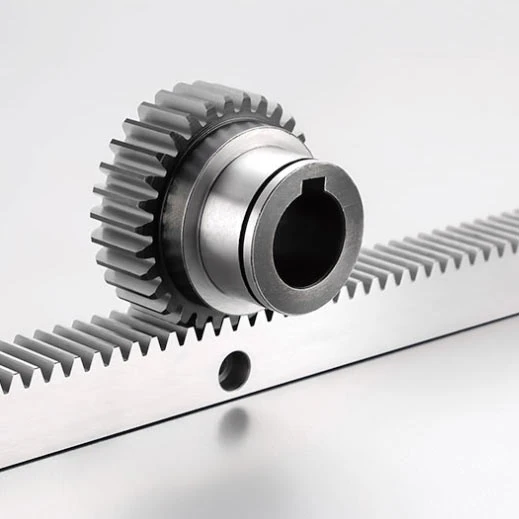
Rocket Pinion Gear And Rack
Quickly find the problems you encounter most often
Ball Screw Product FAQ
-
What Is a Ball Screw and How Does It Work?
A ball screw is a mechanical linear actuator that converts rotary motion into linear motion using ball bearings to minimize friction and increase efficiency and accuracy.
-
What Types of Ball Screws Do You Offer?
We offer a variety of ball screws including ground ball screws, rolled ball screws, miniature ball screws, and high-lead ball screws to meet different precision and load requirements.
-
How Do I Choose the Right Ball Screw for My Application?
Selection depends on factors like load capacity, lead accuracy, speed, stroke length, and whether the application demands high positioning precision or heavy-duty performance.
-
What Is the Difference Between Ground and Rolled Ball Screws?
Ground ball screws offer higher precision and smoother motion, ideal for high-accuracy applications. Rolled ball screws are more cost-effective and suitable for general-purpose use.
-
What Maintenance Is Required for a Ball Screw?
Regular lubrication is essential. Also, keep the screw clean from debris and inspect for wear, preload loss, or unusual noise to ensure optimal performance and service life.
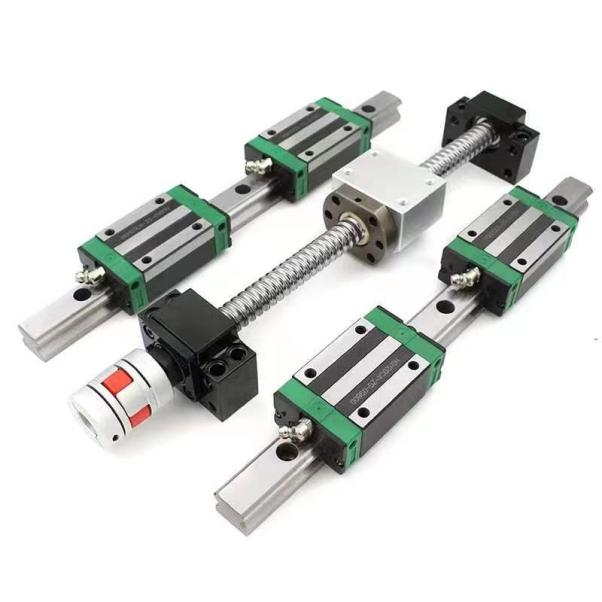

Follow Our Blog
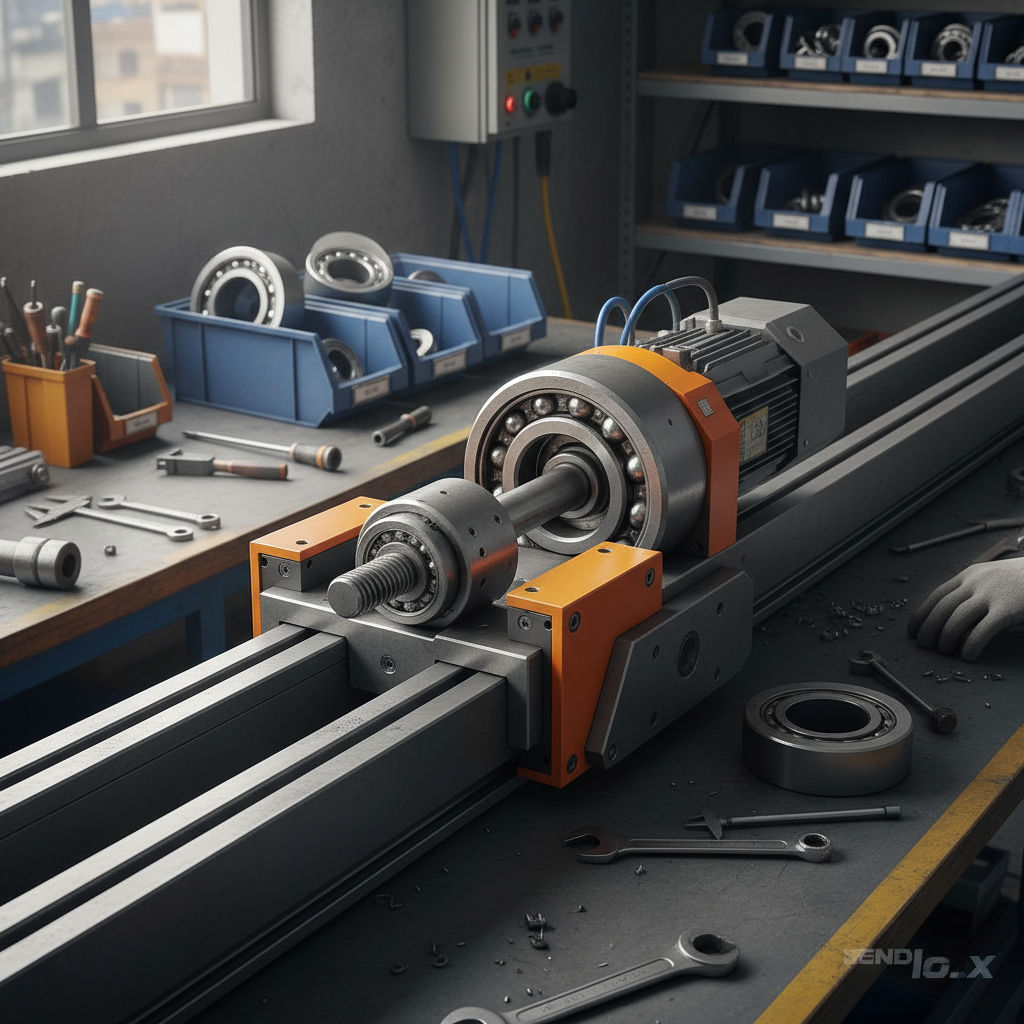
Comprehensive Guide to Angular Contact Ball Bearings for Industrial Applications
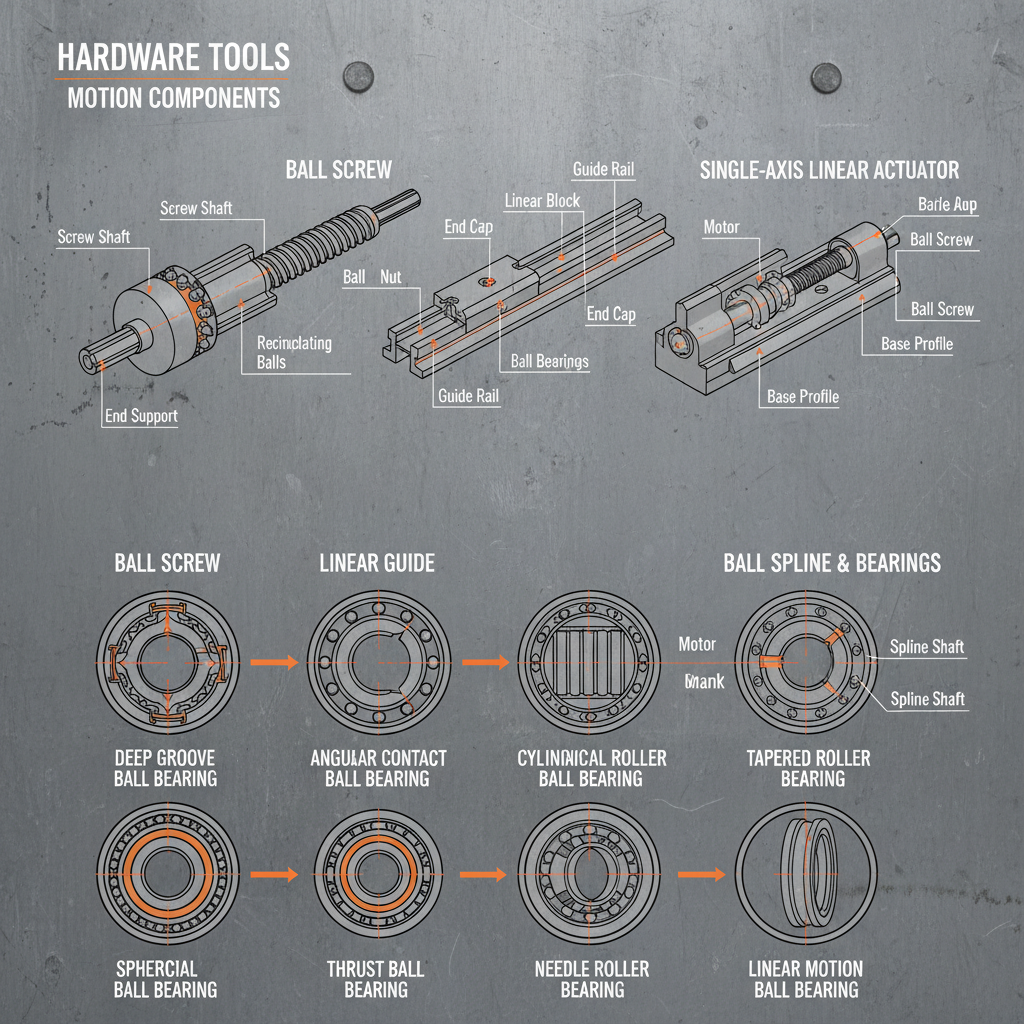
Exploring the 8 Types of Bearing for Optimal Mechanical Performance
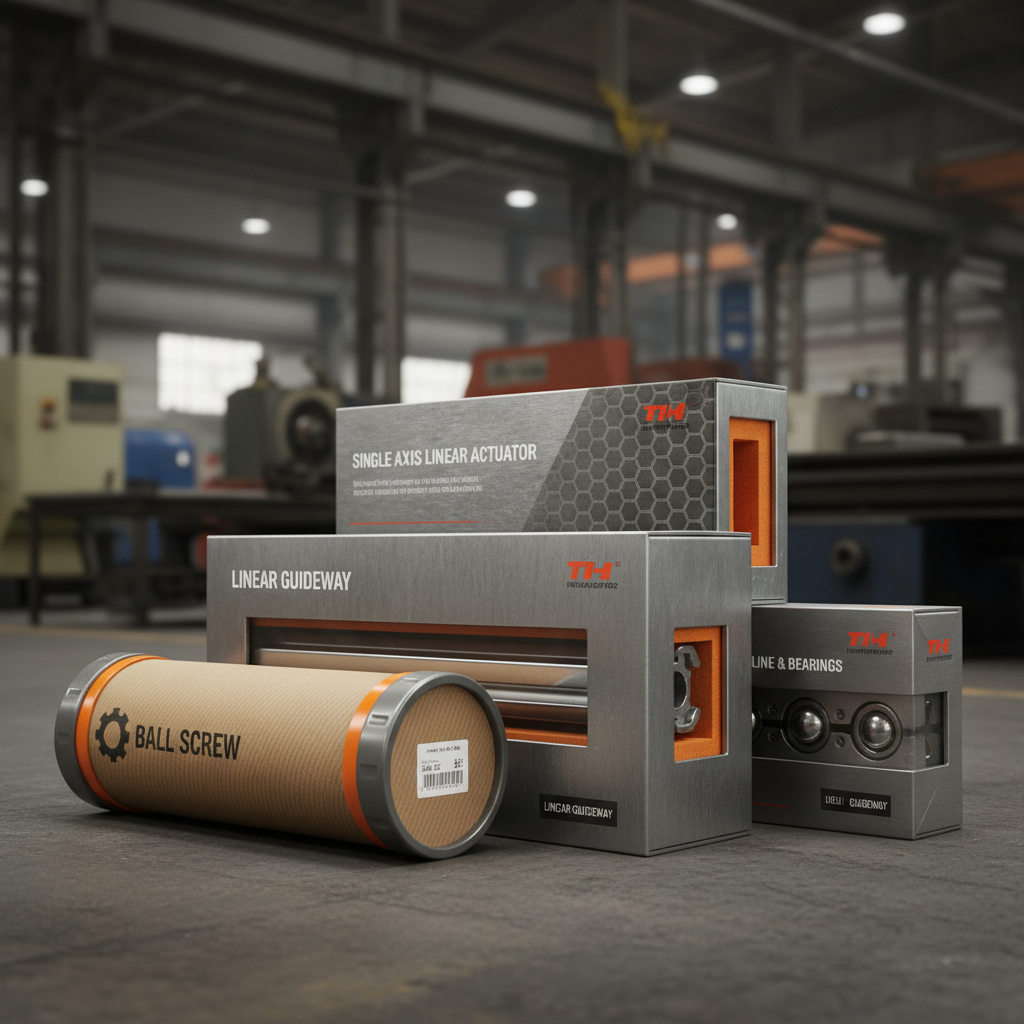
Comprehensive Guide to Antifriction Bearings Types and Effective Applications


Trusted by Industry Leaders Worldwide
From automotive giants to precision machine shops, our clients rely on YIDI Motion for OEM-grade rails without the OEM price tag.
💬 Customer Testimonials
Klaus Schneider, Operations Manager at Trumpf (Germany):
“We tested 3 suppliers for our new laser cutting line. YIDI’s rails matched THK’s precision at half the price. And their 15-day delivery saved us €12,000 in downtime.”
Maria Rodriguez, Procurement Director at Philips (Netherlands):
“Our food processing robots needed FDA-compliant rails. YIDI delivered stainless steel guides with IP67 seals—and no corrosion after 1 year.”
Chen Wei, R&D Manager at SMC Pneumatics (China):
“We’ve been burned by cheap Chinese rails before. YIDI’s S55C steel and HRC 62-64 hardness gave us 3x longer life than competitors.”