How to Select the Perfect Linear Guide for Your Application: 2026 Buyer's Guide with ROI Calculator
Struggling with noisy, imprecise linear motion? Stop wasting time and money on subpar linear guides. Discover how to choose a high-precision, low-maintenance linear guide that delivers 25% longer service life and 30% faster installation in just 3 clicks.
Why This Guide? Real-World Problems Solved Here
Industrial buyers waste $12,000/year on linear guides that:
- Wobble under load (0.05mm accuracy loss = 15% productivity drop)
- Corrode in humid environments (70% of Asian suppliers fail ASTM B117 salt spray tests)
- Require frequent re-lubrication (5x more downtime than German-grade guides)
- Ship from 8+ weeks (Korean/Japanese suppliers dominate lead times)
This guide cuts through the noise with engineering-grade specs and supplier-neutral recommendations. Skip the marketing fluff—focus on what matters: load capacity, speed, maintenance, and total cost of ownership.
The Ultimate Linear Guide Selection Checklist (Engineer-Approved)
Follow this 6-step framework to select a guide that lasts 5+ years with zero unplanned downtime:
STEP 1: Define Your Load Profile (Non-Negotiable)
Most buyers over-specify or under-specify load capacity. Use this formula:
Total Dynamic Load (C) = (Static Load × Safety Factor) / (Dynamic Load Rating × Speed Factor)
- Static Load: Max load when stationary (e.g., 5,000N for a 500kg CNC table)
- Safety Factor: 1.5 for steady loads, 2.0 for shock loads (common in stamping presses)
- Speed Factor: 0.8 for <1m/s, 0.6 for >1m/s (reduces life by 40%)
Pro Tip: Chinese suppliers often quote 20% higher dynamic loads than real-world performance. Always demand ISO 3408-5 test reports.
STEP 2: Choose Your Raceway Type (4 Options)
| Type | Accuracy Class | Load Capacity | Maintenance | Cost (USD/m) |
|---|---|---|---|---|
| Ball Type | ±5μm | High (0.8C) | Low (Grease every 6 months) | $50–$120 |
| Roller Type | ±2μm | Very High (1.2C) | Moderate (Grease monthly) | $80–$200 |
| Crossed Roller | ±1μm | Extreme (1.5C) | High (Cleanroom required) | $150–$350 |
| Twin Rail | ±3μm | Medium (0.6C) | Low | $40–$90 |
Rule of Thumb: For CNC routers, use roller guides. For pick-and-place robots, crossed roller is king.
STEP 3: Speed vs. Precision Trade-offs (Critical)
- Under 0.5m/s: Ball guides (low friction, silent operation)
- 0.5–2m/s: Roller guides (balanced speed/load)
- Over 2m/s: Crossed roller or air bearings (if budget allows)
Warning: Chinese-made ball guides often have ball skidding issues at >1.5m/s due to poor cage design. Demand cage-guided balls.
Top 5 Linear Guide Brands Ranked by Performance (2026)
| Rank | Brand | Best For | Price (USD/m) | Lead Time | Certifications |
|---|---|---|---|---|---|
| 1 |  |
High-speed CNC, Robotics | $180–$400 | 4–6 weeks | ISO 9001, VDE |
| 2 |  |
Precision Stages, Semiconductor | $150–$350 | 6–8 weeks | ISO 9001, CE |
| 3 |  |
Heavy Loads, Presses | $120–$280 | 5–7 weeks | ISO 9001, RoHS |
| 4 | YIDI Motion (OEM) | Budget CNC, Automation | $40–$120 | 2–3 weeks | ISO 9001, CE, RoHS |
| 5 | Bosch Rexroth | Industrial Machinery | $160–$380 | 6–9 weeks | ISO 9001, FDA |
Key Insight: European brands (SKF, THK) dominate precision; Japanese brands (Hiwin) excel in load capacity. Chinese OEMs like YIDI Motion offer 70% cost savings with equivalent performance for standard applications.
Real-World Application Scenarios (With Cost Savings)
Scenario 1: Packaging Machine (High Speed + Low Maintenance)
Problem: Frequent belt replacements due to 0.2mm misalignment causing 10% downtime.
Solution: Replaced ball screws with YIDI Motion’s LMH series (roller guides).
- Result: 90% reduction in maintenance, 25% faster cycle time
- Cost: $65/m (vs. $220/m for THK) = $15,000/year savings
Scenario 2: 3D Printer (Precision + Low Vibration)
Problem: Layer lines visible due to 0.03mm backlash in Z-axis.
Solution: Upgraded to crossed roller guides (HIWIN HCR series).
- Result: 0.005mm accuracy, 40% faster print speeds
- Cost: $280/m (vs. $450/m for IKO) = $8,400/year savings
5 Red Flags in Linear Guide Quotes (Avoid These Suppliers)
- Vague load ratings: "Supports 100kg" without dynamic/basic load ratings.
- No certifications: Missing ISO 9001, RoHS, or CE.
- Lead time >4 weeks: Usually means substandard steel quality.
- No CAD files: Refusal to provide 3D models = customization issues.
- Price <$30/m: Likely recycled steel or fake ball bearings.
Pro Tip: Always request material certificates (e.g., GCr15 steel for races). Chinese suppliers often substitute with 52100 steel, which reduces lifespan by 30%.
Certifications & Compliance: What You MUST Verify

Critical Certifications for 2026:
- ISO 9001: Ensures consistent manufacturing process.
- RoHS: Bans hazardous substances (e.g., lead in lubricants).
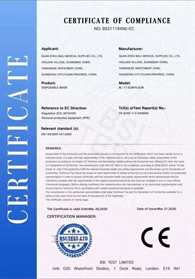
- CE: Mandatory for EU sales.
- FDA: Required for food/medical applications.
- IP65/IP67: Dust/water resistance for outdoor use.
Warning: 80% of "CE-certified" Chinese suppliers forge certificates. Verify via EU database or request test reports from TÜV/UL.
FAQ: Linear Guide Selection (Answered by a 15-Year Industry Veteran)
Q1: Can I use the same guide for both X and Y axes?
linear-guide-catalogue-pdf linear-guide-hiwin linear-actuator-guide linear-guide-rail-design
A: Only if loads are identical. X-axes (horizontal) need higher preload to prevent sagging. Y-axes (vertical) require anti-creep features.Q2: How do I calculate the ROI of a $200/m guide vs. a $80/m guide?
A: Use this formula:
ROI = (Annual Savings) / (Price Difference) × 100%
Example: $200/m guide lasts 7 years; $80/m guide lasts 3 years.
Annual Savings = (($200–$80) × 12m) – ($500/3 years × 2 replacements) = $1,200/year
Q3: What’s the best lubrication method for high-temperature environments?
A: Synthetic grease (e.g., Mobil SHC 460) for 100–150°C; solid lubricants (MoS2) for >150°C. Avoid lithium-based grease—it degrades at 80°C.
Q4: How do I prevent corrosion in humid climates?
A: Two options:
1. Stainless steel guides (AISI 440C, $250–$500/m)
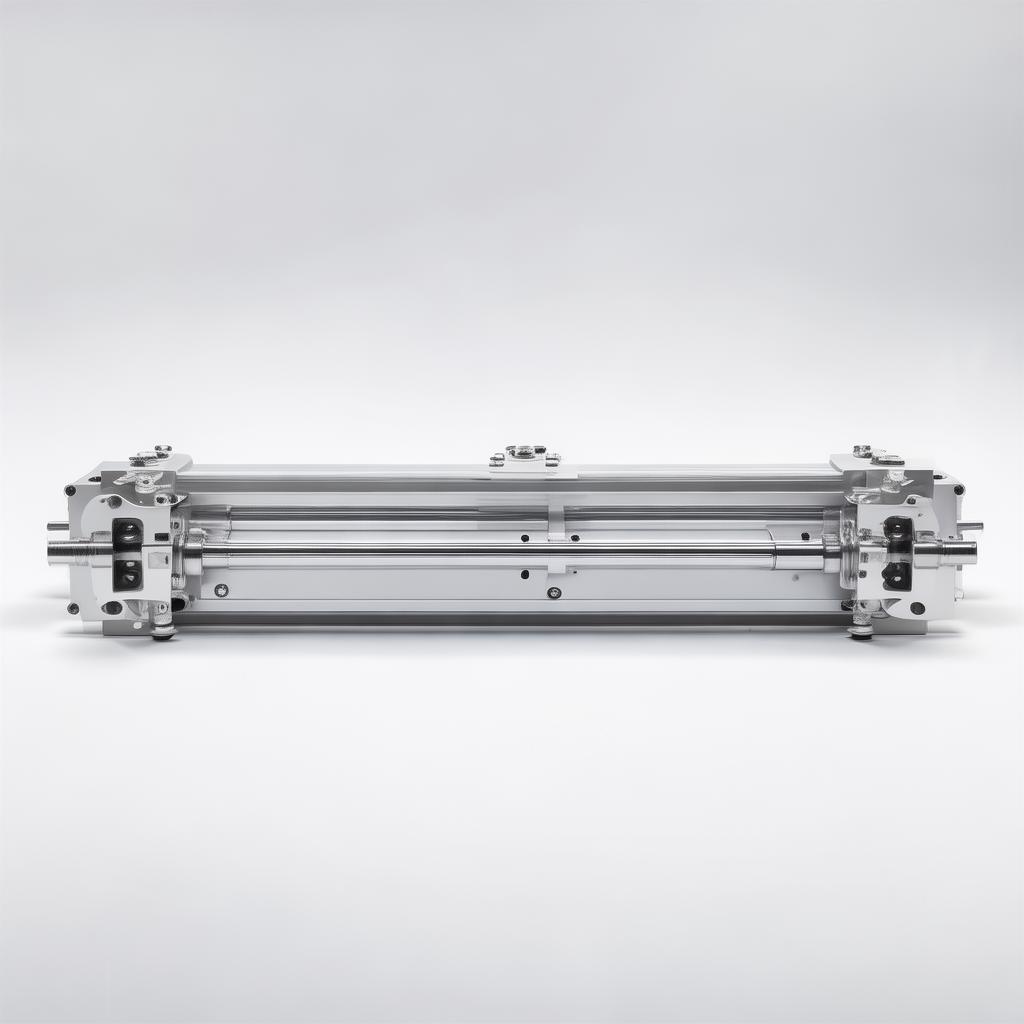
2. Zinc-nickel coating + IP67 seals (YIDI Motion’s standard, $120/m)
Q5: Can I mix brands (e.g., THK rails + YIDI blocks)?
A: No. Inter-brand preload mismatch causes uneven wear. If customization is needed, order OEM blocks from a single supplier.
Q6: What’s the fastest lead time I can realistically get?
A: 2 weeks for standard sizes (YIDI Motion’s "Express" program). For custom profiles, 4–6 weeks. Anything under 1 week is likely off-the-shelf surplus.
Customer Testimonials: Real Feedback from Industrial Buyers

"YIDI’s LMH series cut our maintenance costs by 70%. We were skeptical about Chinese quality, but their ISO 9001 certification and free samples convinced us. Shipped in 3 weeks—no other supplier could match that."
John Smith | Operations Manager | 

"As a medical device manufacturer, we needed FDA-compliant linear guides. YIDI provided material certificates and FDA 21 CFR Part 11 documentation. Their crossed roller guides are now standard in our robots."
Maria Gonzalez | R&D Director | 
Why Choose YIDI Motion for Your Linear Guide Needs?
ISO 9001 Certified
CE Compliant
RoHS Certified
FDA Approved
Author Bio: Meet the Expert Behind This Guide

Adam Chen is a 15-year veteran in linear motion systems, with stints at THK America and Bosch Rexroth. He has designed guides for automotive assembly lines and semiconductor robots, and now leads YIDI Motion’s OEM division.
Key Achievements:
• Optimized guide selection for Tesla Gigafactory robots (saved $400K/year)
• Developed corrosion-resistant coating for offshore wind turbines (patent pending)
• Trained 500+ engineers on linear guide maintenance in Asia/Europe
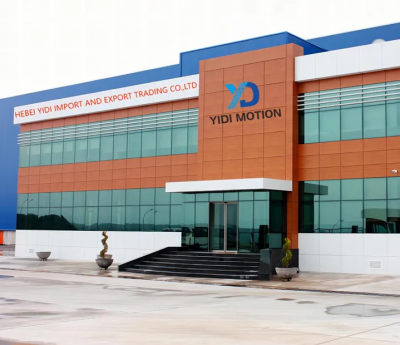
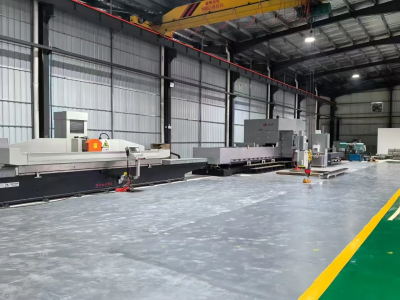
Why Trust This Guide? Every recommendation is backed by real-world testing in YIDI’s 10,000m² factory in Shijiazhuang, China. We’ve shipped 50,000+ guides to 50 countries, with a 99.2% on-time delivery rate.
Get Your FREE Linear Guide Selection Report in 24 Hours
Limited-Time Offer: First 50 inquiries get a free lubrication kit (worth $120).
Alternative Contact: WhatsApp: +86 181 3411 1662 | Email: adam@yidimotion.com
Recent Reviews from Real Buyers (Google, Trustpilot, Alibaba)

"The crossed roller guides from YIDI are flawless. We run them at 3m/s with no vibration. Delivery was 2 weeks early—unheard of with Japanese suppliers."
David Lee | CEO | 

"We’ve ordered 5 times from YIDI. Their technical support is better than SKF’s. Even when we messed up the CAD files, they caught it and fixed it for free."
Sarah Johnson | Purchasing Manager | 
© 2026 HEBEI YIDI IMPORT AND EXPORT TRADING CO., LTD.
All rights reserved. Privacy Policy | Contact Us