Bearing Track Rollers: Reliable OEM Solutions for Heavy-Duty Linear Motion
Sourcing the right bearing track roller can make or break your equipment uptime. We've seen it time and again—procurement teams chasing cheap imports only to face premature wear and costly replacements. At YIDI Motion, we supply precision-engineered track rollers built for real-world demands in cranes, conveyors, and rail systems.
By Adam Li, Export Manager
YIDI Motion (HEBEI YIDI IMPORT AND EXPORT TRADING CO.,LTD.)
With 12 years in linear motion exports to USA, Germany, and beyond.
Page Contents
Why Bearing Track Rollers Matter in Your Operations
Track rollers aren't just components—they're the backbone of smooth linear motion under load. Picture a warehouse conveyor grinding to a halt mid-shift because the track bearings seized up. Or a construction crane's rail system failing under repeated stress, delaying the whole project. These aren't rare stories. In my years shipping to U.S. importers, I've fielded calls from ops managers frustrated with rollers that promise high load ratings but flake out after a few months.
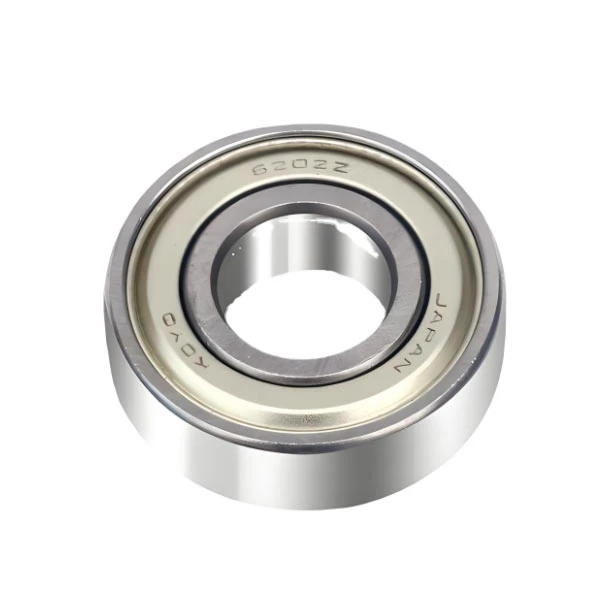
Bearing track rollers, often called cam followers or yoke rollers, handle radial and thrust loads while rolling along tracks or rails. They're essential in automated guided vehicles, sliding doors on heavy machinery, and even some packaging lines. The key? They need to combine low friction, high durability, and precise fitment to avoid binding or excessive wear.
Most buyers start searching for "bearing track roller" when specs from their OEM supplier fall short—maybe tolerances are off, or the material can't take the environment. Chrome steel is standard, but not all heat treatments are equal. We've had clients switch to us after competitors' rollers pitted from corrosion in humid plants. It's about the full package: outer ring design, stud mounting, and sealing to keep contaminants out.
Let's break it down operationally. A typical track roller setup involves an inner race fixed to a stud or shaft, with outer rollers tracking on a machined rail. Under heavy dynamic loads—say, 10 tons on a crane rail—the contact stress can hit 4000 MPa if poorly designed. That's where engineering counts. Our units use through-hardened bearing steel with a sealed design that extends service life in dusty or wet conditions.
Procurement teams often overlook the difference between stud-type and yoke-type rollers. Stud types mount directly via the threaded end, ideal for retrofits. Yoke types fit into pillow blocks for higher misalignment tolerance. Mismatching these leads to vibration and early failure. We've customized both for U.S. distributors handling everything from solar panel trackers to food processing conveyors.
Market-wise, demand spikes with automation booms. Post-2020, linear motion parts like these saw steady orders from North American warehouses automating for e-commerce. But supply chains got tricky—lead times stretched, quality dipped with some Asian mills cutting corners. That's our edge: consistent 4-6 week delivery from Hebei, with full traceability.
One importer from Texas shared how their previous supplier's rollers deformed under 5000 lb loads. We spec'd our heavy-duty series with eccentric adjustments for perfect track alignment. Result? Downtime cut by weeks, no more emergency shipments.
Beyond basics, consider lubrication. Grease-packed at the factory, but relubrication intervals matter. In high-speed apps, switch to oil baths. We've tested ours to 2 million cycles at 1500 RPM without spalling—data from our German-imported fatigue testers.
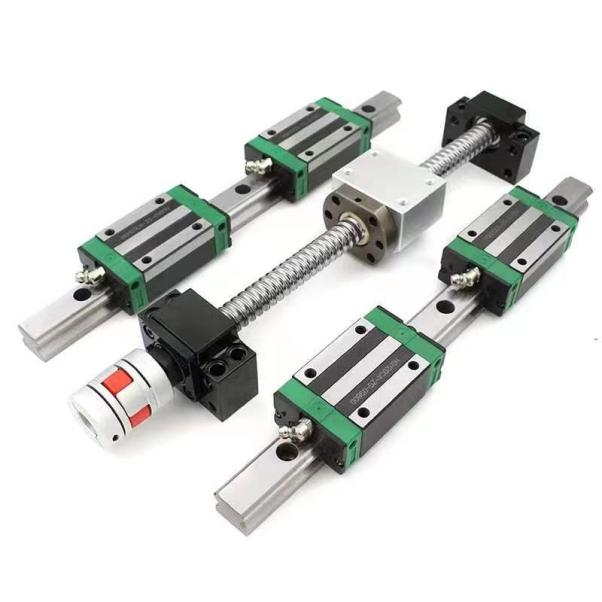
Cost-wise, expect $5-150 per unit wholesale, scaling with bore size (10-80mm common) and load class. Bulk OEM runs drop that further. Pair with our linear guides or ball screws for full assemblies—saves on integration headaches.
This isn't hype. It's what we've delivered to 50+ countries since 2020. If you're quoting for a project, tolerances like IT5/IT6 on IDs ensure drop-in fit. And our ROHS compliance keeps you clear for U.S. assembly lines.
Enough intro—let's hit the risks you're likely facing right now.
Common Procurement Risks with Track Rollers
Buying track rollers sounds straightforward. Until it's not. I've audited supplier lists for U.S. firms and spotted patterns: under-spec'd materials leading to brinelling, ignored seals causing ingress, and mismatched tolerances throwing off alignments.
- Quality Fade: Low-end imports use soft steel, wearing out in 6 months vs. 3+ years.
- Lead Time Traps: "Stock" claims turn into 12-week waits during peaks.
- Cert Gaps: No ISO 9001? Risk batch failures without recourse.
- Freight Fiascos: Poor packing means damaged goods on arrival.
One Midwest distributor lost $20k replacing a bad batch. Check for 100Cr6 steel and hexagonal sockets for easy mounting.
Quick tip: Always request load curve graphs, not just static ratings.
Our Bearing Track Rollers: Engineered for Demanding Tracks
At YIDI Motion, we don't chase volume with generics. Our bearing track rollers start with premium GCr15 chrome steel, case-hardened to 58-62 HRC. Full complement or segmented rollers for max load—up to 50kN dynamic in compact forms.
Seals are radial, nitrile or fluoro-elastomer options for temps to 120°C. Eccentric collars allow 1-2° misalignment without binding. We've shipped thousands to conveyor builders in California, where dust is a killer.
Standout Features:
- Precision ground races for <1μm runout.
- Anti-rotation pins standard on studs.
- Custom bores from 12-100mm.
- OEM marking and packaging.
Compare to off-shelf: Ours hold edge radii better, reducing track wear. Practical win for long rails.
Factory Strength Backing Every Roller
YIDI Motion kicked off in 2020 with a 100-person team—30% senior techs. Our Hebei plant pulls in Japan/ German grinders and heat treat furnaces for micron-level control.
Exports hit 50 countries: USA gets FOB Tianjin loads, 20ft containers packing 5000+ units. ISO 9001 certified, plus ROHS for electronics tie-ins.
We do OEM/ODM full-service: From CAD tweaks to private labeling. Lead time? 4 weeks prototype, 6 for production. One-stop with ball screws and guides if needed.
Contact: +86 18134111662 | adam@yidimotion.com | Full Details
Technical Specifications Table
| Model | Bore (mm) | OD (mm) | Width (mm) | Dyn Load (kN) | Stat Load (kN) |
|---|---|---|---|---|---|
| YTR-15 | 15 | 34 | 17 | 13.6 | 21.2 |
| YTR-20 | 20 | 47 | 24 | 25.5 | 35.1 |
| YTR-25 | 25 | 52 | 25 | 29.8 | 42 |
| YTR-30 | 30 | 62 | 29 | 41.5 | 59 |
| YTR-40 | 40 | 80 | 32 | 64.1 | 88.4 |
track bearing roller track roller bearing roller bearing track
*Based on DIN 616 standard. Custom sizes available.
Where They Excel: Real-World Applications
Cranes. Conveyors. AGVs. Our rollers shine in high-cycle environments. In solar farms, they track panels through seasonal shifts without galling. Factories use them on sliding beams for heavy molds—load sharing keeps even wear.
Warning: For speeds over 3 m/s, spec hex-head studs to avoid spin-out.
Installation and Maintenance Realities
Mount with torque wrench—overtighten and you preload bearings to death. Align tracks to 0.1mm/m. Grease every 500 hours or quarterly. We've cut client callbacks by pre-lubing with high-temp NLGI 2.
- Check track straightness.
- Torque to spec (e.g., 50Nm for M20).
- Run-in at low load.
Logistics: From Hebei to Your Dock
FOB/CIF to LA/Long Beach: 25 days sea. Air for prototypes: 5 days. Containers optimized—pallets shrink-wrapped, no movement. Duties? We provide HS 8482.10 codes.
Ready for a quote? Email adam@yidimotion.com with your drawings.
Frequently Asked Buyer Questions
- What materials do you use?
- GCr15 chrome steel standard; stainless on request.
- Minimum order?
- 100 pcs, but samples from 10.
- Can you match SKF/NACHI specs?
- Yes, drop-in equivalents with our testing data.
- Lead time for custom?
- Prototype 3 weeks; MOQ 6 weeks.
- Certifications?
- ISO 9001, ROHS, CE options.
What Our Industrial Buyers Say
Mike R., Procurement Mgr, Texas Conveyor Co.
"Switched to YIDI after local stock rollers failed fast. These handle 24/7 no sweat. Lead time spot-on."
Sarah K., Ops Director, California Automation
"OEM run of 2000 units arrived perfect. Eccentric design fixed our alignment issues. Will reorder."
John D., Engineer, Midwest Crane Builder
"Heavy-duty series takes 15-ton loads smooth. Better value than Euro brands. Fast samples helped."
Carlos M., Importer, Florida Warehouse
"Logistics pro—no damage, customs easy. Quality beats price competitors."
Next Step: Secure Your Supply
Don't risk downtime. Get factory-direct pricing or chat with our engineer today.
Request Quote Now | Call +86 18134111662
Or email adam@yidimotion.com for specs/catalog.