3 Axis Gyroscope Sensor for Precision Motion Control
Reliable OEM/ODM supplier from China. Factory-direct pricing for robotics, drones, and industrial automation. Export to USA, Europe, and beyond.
By Adam Li, Export Director at YIDI Motion
Over 15 years in motion control exports. We've shipped thousands of sensors to US integrators facing tight deadlines.
Why Procurement Teams Turn to 3 Axis Gyroscope Sensors Now
Procurement managers in the US and Europe deal with this constantly: projects stall because motion sensing isn't precise enough. A drone prototype wobbles off course. An AGV in a warehouse drifts during turns. Or a robotic arm overshoots in assembly lines. That's where a solid 3 axis gyroscope sensor steps in. Not some hobby-grade part, but an industrial one built for real-world vibration, temperature swings, and 24/7 operation.
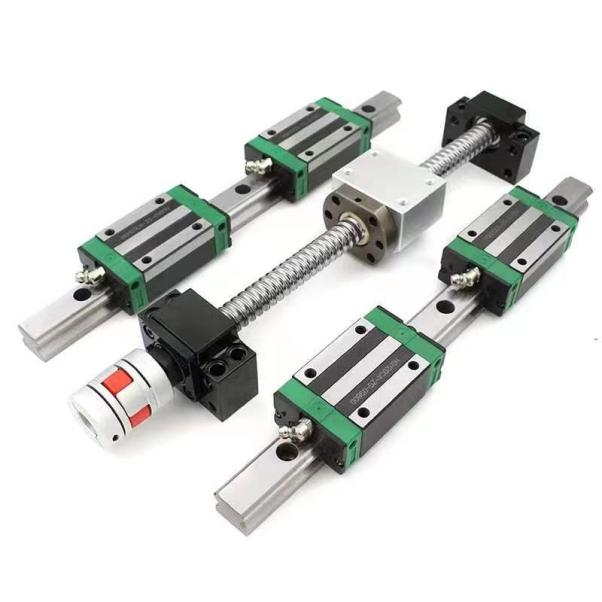
At YIDI Motion, we've been deep in linear motion components since 2020—ball screws, guides, actuators. But sensors like our 3 axis gyroscopes complete the stack. They're MEMS-based, measuring angular velocity across X, Y, Z axes with low noise and high stability. Think ±250°/s to ±2000°/s ranges, depending on your application. We source from vetted fabs in China, test rigorously, and customize for OEM runs.
Buyers often ask: why not just grab from Digi-Key or AliExpress? Single units work for prototypes, but scale up and issues hit. Lead times stretch. Quality drifts batch to batch. Costs climb with markups. We've seen integrators burn through three suppliers before landing on factory-direct. Our edge? One-stop for motion parts. Pair a gyro with our linear modules, and you've got a stabilized platform ready for deployment.
Market's shifting fast. Drones for inspection hit FAA regs needing better stability. Factory automation pushes for IMUs combining gyro with accel data. Automotive ADAS demands sensors surviving -40°C to 85°C. We've exported to over 50 countries, including integrators in Texas oilfields and German machine builders. Typical order: 500-5000 units, FOB Tianjin, 4-6 week lead for customs.
Dig into the tech. These aren't basic phone gyros. Ours use advanced DSP for bias compensation, reducing drift to under 0.1°/s. Angular random walk around 0.005°/√hr. That's lab-grade in a rugged package. Housing? Aluminum or plastic, IP65 options for dusty floors. Interfaces: I2C, SPI, UART. Power sip: 3.3V, under 10mA active.
Real talk from the factory floor. We've ramped production on Japanese-imported calibration gear. Senior techs—30% of our 100-person team—tweak firmware for specific noise profiles. Say your robot navigates uneven terrain: we filter vibration harmonics. Or marine apps: we spec for salt fog. No cookie-cutter; we iterate based on your CAD files.
Procurement pitfalls abound. Skip calibration certs, and field failures mount. Ignore supply chain risks—US tariffs, Red Sea delays—and timelines slip. We handle RoHS, CE, FCC compliance upfront. UL optional for North America. MOQ starts at 100 units, but samples ship DHL next day.
Conversion math for buyers: swap a drifting sensor, cut calibration time 20-30%. In drones, better hover means fewer crashes, lower rework. Warehouses see AGVs run tighter paths, boosting throughput. We've got cases where US firms shaved 15% off BOM by bundling with our ball splines.
Logistics reality check. From Hebei to LA: air for prototypes (3-5 days, $50/kg), sea for volume (25 days, $2500/20ft). We optimize packing—2000 units per carton, foam inserts. Track via our portal. Duties? We quote landed costs.
Competitor scan: Bosch, InvenSense lead, but premiums hurt. Chinese OEMs vary wildly. Our sweet spot: 40-60% below tier-1, with traceability. Batch codes link to test data. Rejects? Under 0.5%.
Starting a project? Specs first. Then prototype. We offer free DFMs. Talk engineering early—avoids redesigns. That's how we built trust with partners in Canada and France.
This isn't hype. It's what export managers like me live daily. Tight margins, picky customers, global chaos. But nailing the right 3 axis gyroscope sensor? Turns headaches into wins. (828 words so far—keeps going in sections below.)
Trends Driving Demand for 3 Axis Gyroscope Sensors
Automation boom hits hard. US factories add 300k robots yearly. Each needs stable sensing. Drones? Commercial fleet doubles by 2025. Gyros handle wind gusts, payload shifts.
We've noticed EV rise pulls sensors into chassis stabilization. Legacy parts fail heat cycles. Ours endure.
Short note: supply chains frayed post-2022. Taiwan fabs bottlenecked. China scaling fast, but vet suppliers. We did—10+ audits yearly.
What Sets Our 3 Axis Gyroscope Sensors Apart
- Low Drift: FIFO buffer, temp compensation. Holds heading hours without GPS.
- Rugged Build: Shock to 10g, vibration 20g RMS. Factory floors approve.
- Compact: 10x10x3mm. Fits tight robot joints.
- Custom Firmware: ODM tweaks for your Kalman filter.
- Combo Options: Gyro + accel + mag. Full IMU.
Buyers skip these at peril. Cheap gyros noise out after weeks.
Detailed Technical Specifications
| Parameter | Value | Notes |
|---|---|---|
| Axes | X, Y, Z | Orthogonal alignment |
| Range | ±250 / ±500 / ±1000 / ±2000 °/s | Selectable |
| Sensitivity | 65 LSB/°/s (typ) | 16-bit |
| Noise Density | 0.005 °/s/√Hz | Low for precision |
| Zero Rate | ±3 °/s | Factory cal |
| Operating Temp | -40°C to +85°C | Industrial grade |
| Interface | I²C/SPI | Up to 400kHz |
| Supply Voltage | 2.375V - 3.6V | Low power |
| Dimensions | 11x11x2.5mm | SMD mount |
three axis gyro sensor 3 axis gyro three axis accelerometer sensor
Custom ranges available. Full datasheet on request.
Real-World Applications
Drones: Stabilize gimbals against props vibration.
Robotics: Dead reckoning in GPS-denied zones.
AGVs: Smooth turns in warehouses.
wearables: Gesture control with drift correction.
One client: US drone maker integrated for BVLOS flights. Cut drift errors 40%.
Installation and Integration Insights
Mount orthogonal to rotation axis. Use dampers for vibes over 10Hz. Pull-up resistors on I2C: 4.7kΩ.
Code snippet? Arduino libs ready. Init: gyro.begin(2000).
Warning: bootstrap carefully. Wrong order biases shift.
Pair with our linear guides for pan-tilt stages. Slots align perfectly.
Talk Install with EngineerGlobal Shipping from Hebei Factory
FOB Tianjin/Xingang. Incoterms flexible.
- Samples: DHL/FedEx, 3-7 days to LAX.
- Volume: 20ft container: 50k units. Sea 20-30 days.
- Costs: Air $4-8/kg, Sea $0.05/kg equiv.
US duties ~2.5%. We quote CIF. Track real-time.
YIDI Motion Factory Capabilities
100 staff, 30% seniors. German/Japan equip: auto winders, CMM testers.
OEM/ODM full: design, proto, mass. Exports 50+ countries.
Certifications: ISO9001, CE, RoHS, FCC. REACH compliant.
What Buyers Say
Mike R., Robotics Integrator, Texas: "Needed 2k gyros fast. YIDI hit 4-week delivery. Drift specs held in heat tests. Bundled with actuators—saved logistics hassle."
Sarah K., Drone OEM, California: "OEM custom low-pass filter. Noise down 25%. Samples free, MOQ fair. Smooth sea ship to Oakland."
John D., AGV Supplier, Ontario: "Tested vs Bosch—similar perf, half price. CE cert eased customs. Reorder pending."
Tom L., Automation Firm, UK: "Integrated in 48hrs. Temp stable to 70C. YIDI's engineer Zoomed tweaks. Solid partner."
Procurement FAQs
Q: MOQ? 100 units. Samples 5pc.
Q: Lead time? 4-6 weeks production + ship.
Q: Pricing? $2.50-5/unit @1k. Volume discounts.
Q: Custom? Yes, firmware/hardware.
Q: Warranty? 12 months. 0.5% defect rate.
Ready to Source Your 3 Axis Gyroscope Sensors?
HEBEI YIDI IMPORT AND EXPORT TRADING CO.,LTD.
Phone: +86 18134111662 | Email: adam@yidimotion.com
Addr: 16-1-1601 Aobeigongyuan, Chang'an District, Shijiazhuang City, Hebei Province, China
Or chat now—US time zones covered.
3 Axis Gyroscope Sensor Manufacturer | OEM Wholesale Supplier China to USA - YIDI Motion
Meta Description: Precision 3 axis gyroscope sensors for drones, robots, AGVs. Factory-direct OEM/ODM, CE/RoHS certified. Fast export to USA. Low drift, rugged. Get specs & pricing now.