Rack and pinion systems are fundamental to modern engineering, found in a surprisingly wide array of applications, from steering mechanisms in vehicles to precise positioning in industrial machinery. Understanding what is rack and pinion used for unlocks insight into how these systems translate rotational motion into linear motion, and vice-versa. This understanding is crucial for anyone involved in mechanical design, automation, or simply appreciating the ingenuity of everyday technology.
Globally, the demand for efficient and reliable motion control systems is constantly increasing, driven by advancements in manufacturing, robotics, and automation. According to the International Federation of Robotics (IFR), robot density in manufacturing reached 141 robots per 10,000 workers in 2021, highlighting the growing reliance on automated systems. These systems frequently leverage rack and pinion drives for their precision and power. This trend emphasizes the importance of comprehending what is rack and pinion used for.
The increasing focus on Industry 4.0 and smart manufacturing further underscores the relevance of rack and pinion technology. Its ability to integrate seamlessly with digital control systems makes it an essential component in modern, data-driven production processes. Mastering the concepts behind what is rack and pinion used for provides a strong foundation for navigating this evolving landscape.
Introduction to Rack and Pinion Systems
Rack and pinion systems represent a class of rotary to linear (or linear to rotary) motion conversion devices. They've become indispensable in scenarios where precision and force are needed. Their relatively simple design belies their powerful capabilities, making them a cost-effective solution for diverse engineering challenges.
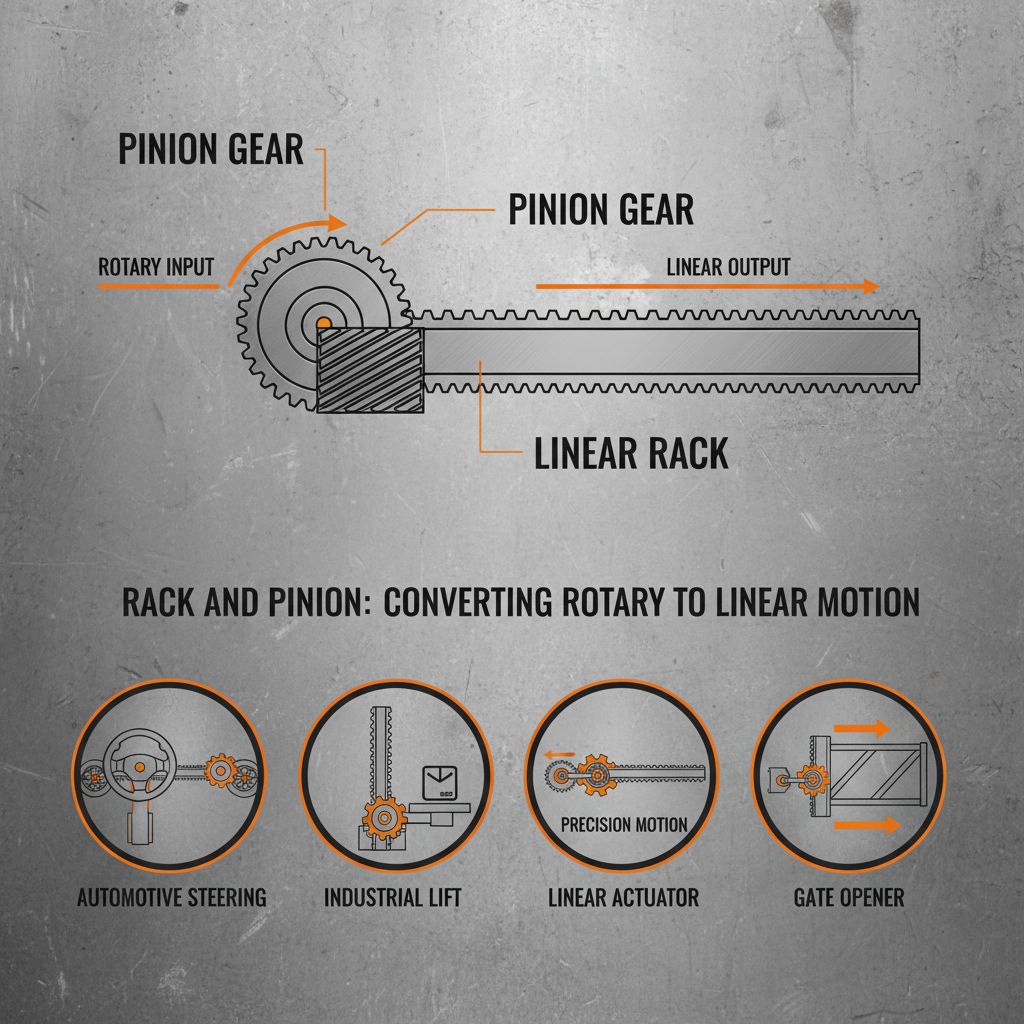
The core principle behind these systems lies in the meshing of a circular gear (the pinion) with a linear gear (the rack). Rotating the pinion causes the rack to move linearly, and conversely, moving the rack causes the pinion to rotate. Understanding this fundamental interaction is key to grasping what is rack and pinion used for.
Defining Rack and Pinion Technology
At its most basic, a rack and pinion system comprises two primary components: the rack and the pinion. The rack is a straight, toothed bar, while the pinion is a circular gear that engages with those teeth. The most common application transforms rotational motion into linear motion, for example, in steering systems. However, the system can also function in reverse, converting linear motion into rotation.
The precision of what is rack and pinion used for relies heavily on the quality of the gear teeth and their precise engagement. Materials selection plays a crucial role – steel alloys are common for their durability and strength, while polymers are used in lighter-duty applications. The pitch and module of the gear teeth directly affect the system’s resolution and force transmission capabilities.
Rack and pinion systems stand out due to their simplicity, reliability, and efficiency. Compared to other linear actuators like lead screws or belt drives, they often offer higher load capacities and faster speeds, making them a go-to solution in many industrial and commercial applications.
Core Components and Functionality
The core functionality of what is rack and pinion used for depends on several key factors. Firstly, the gear ratio between the pinion and the rack influences the mechanical advantage and speed of the system. A larger pinion results in higher speed but lower torque, while a smaller pinion offers higher torque but lower speed.
Secondly, the material properties of both the rack and pinion are critical. High-strength materials like hardened steel are essential for applications demanding high loads and wear resistance. Lubrication also plays a vital role, reducing friction and extending the system's lifespan.
Finally, the precision of the manufacturing process significantly affects performance. Accurate tooth profiles and minimal backlash (the amount of play between the gears) are crucial for achieving smooth and accurate motion. These factors directly impact the overall efficiency and reliability of what is rack and pinion used for.
Advantages and Performance Characteristics
One of the primary advantages of what is rack and pinion used for is its high efficiency. Due to the direct engagement of the gear teeth, minimal energy is lost to friction or slippage. This translates to higher power transmission and reduced energy consumption.
Rack and pinion systems also offer excellent load capacity and stiffness. They can handle significant forces without deformation, making them suitable for heavy-duty applications. This, combined with their relatively compact size, provides a powerful and space-efficient solution.
Performance Metrics for Rack and Pinion Systems
Global Applications of Rack and Pinion
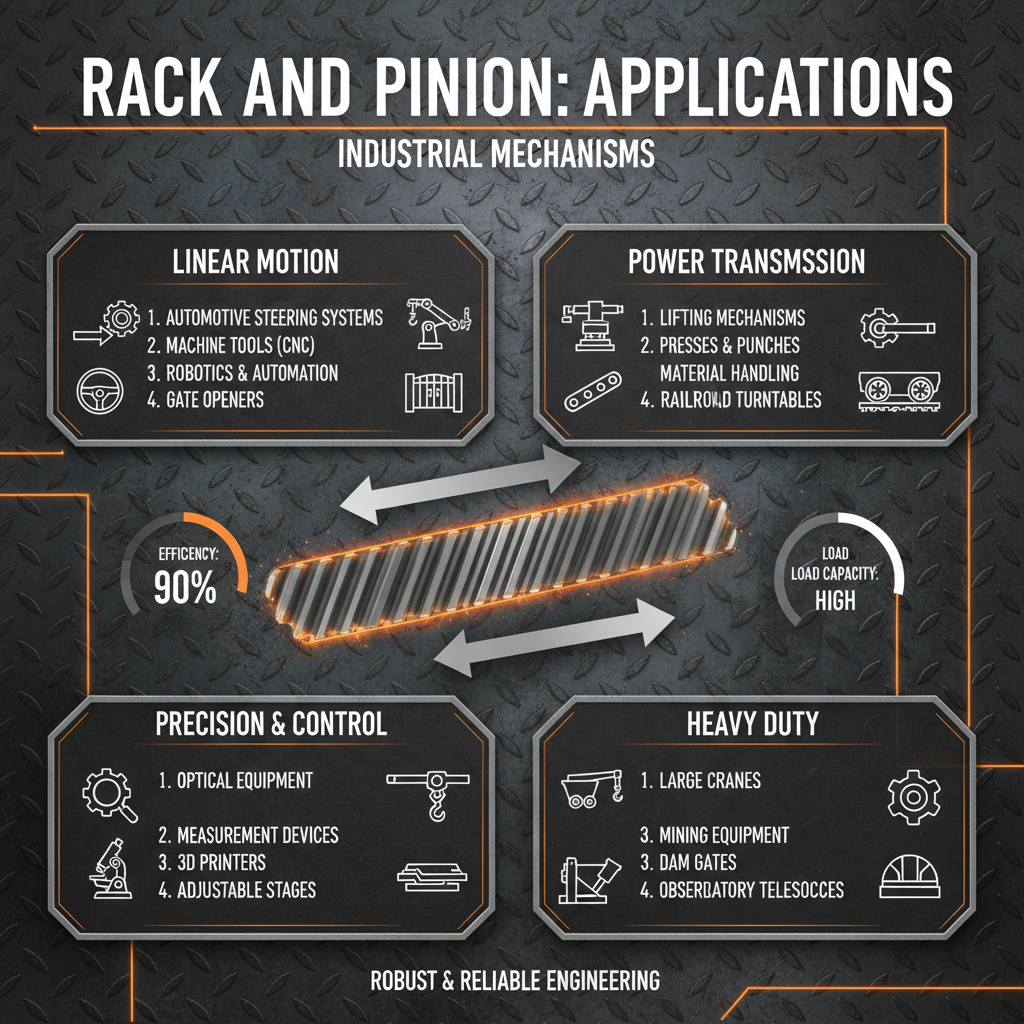
The applications of what is rack and pinion used for are incredibly diverse. In the automotive industry, they are critical components of steering systems, enabling precise control and maneuverability. Beyond automotive, they are prevalent in robotics, used for accurate positioning of robotic arms and end-effectors.
Industrial automation relies heavily on rack and pinion drives for tasks like pick-and-place operations, material handling, and CNC machine tooling. In regions like Germany and Japan, known for their advanced manufacturing sectors, rack and pinion systems are integral to maintaining high levels of precision and efficiency.
Long-Term Value and Benefits
Investing in quality rack and pinion systems yields significant long-term benefits. The durability and reliability of these systems translate to reduced maintenance costs and minimized downtime, increasing overall productivity. The precision they offer ensures consistent and accurate operation, leading to improved product quality.
From a sustainability perspective, the efficiency of rack and pinion drives contributes to lower energy consumption, reducing environmental impact. The robust construction and long lifespan minimize the need for frequent replacements, further enhancing their eco-friendliness. This solidifies the value of what is rack and pinion used for.
Ultimately, the value of what is rack and pinion used for extends beyond purely economic considerations. They enable safer and more efficient operations, fostering trust and innovation in a wide range of industries.
Future Trends and Innovations
Ongoing research focuses on improving the performance and efficiency of rack and pinion systems. New materials, such as advanced polymers and lightweight alloys, are being explored to reduce weight and enhance durability. Digital integration is another key trend, with smart rack and pinion drives incorporating sensors and data analytics for predictive maintenance and optimized control.
The rise of electric vehicles (EVs) is driving demand for more efficient and compact steering systems, further fueling innovation in rack and pinion technology. Simultaneously, advancements in additive manufacturing (3D printing) are enabling the creation of customized rack and pinion components with complex geometries and tailored performance characteristics.
Furthermore, the integration of artificial intelligence (AI) and machine learning (ML) algorithms promises to optimize rack and pinion system operation in real-time, adapting to changing conditions and maximizing efficiency. These innovations will continue to shape the future of what is rack and pinion used for.
Analysis of Challenges and Potential Solutions in Rack and Pinion Systems
| Challenge |
Impact on what is rack and pinion used for |
Potential Solution |
Implementation Cost (1-10) |
| Backlash |
Reduced precision and positional accuracy |
Anti-backlash gears or preloading mechanisms |
6 |
| Wear and Tear |
Decreased lifespan and performance |
Advanced lubrication systems and hardened materials |
7 |
| Noise Generation |
Unpleasant working environment and potential safety concerns |
Noise dampening materials and optimized gear design |
4 |
| Manufacturing Tolerances |
Inconsistent performance and reliability |
High-precision machining and quality control processes |
8 |
| Environmental Factors (Dust, Corrosion) |
Reduced lifespan and increased maintenance requirements |
Sealed housings and corrosion-resistant coatings |
5 |
| Load Capacity Limitations |
Inability to handle heavy-duty applications |
Utilizing larger pinion and rack sizes and stronger materials |
7 |
FAQS
While both convert rotational to linear motion, rack and pinion systems typically offer higher speed and load capacity for a given size. Ball screws provide greater precision and efficiency, but are generally more expensive and have lower speed capabilities. The choice depends on the specific application requirements. Understanding what is rack and pinion used for versus ball screws is crucial for optimal system design.
The best lubrication depends on the operating environment and load. For general applications, a high-quality grease is sufficient. In high-speed or high-temperature environments, synthetic lubricants may be necessary. Proper lubrication minimizes friction, reduces wear, and extends the lifespan of what is rack and pinion used for.
Calculating torque involves considering the load, gear ratio, efficiency, and friction. You'll need to determine the linear force required to move the load and then convert it to torque using the pinion's radius. Accounting for efficiency losses is also crucial for accurate torque estimation, ensuring what is rack and pinion used for can handle the task.
Backlash can be caused by manufacturing tolerances, wear, or improper assembly. It's often addressed by using anti-backlash gears, preloading mechanisms, or adjusting the gear mesh. Minimizing backlash is essential for applications requiring high precision, ensuring the accuracy of what is rack and pinion used for.
Yes, but require special considerations. Corrosion-resistant materials like stainless steel or coated components must be used. Sealed housings and regular maintenance are also crucial to protect the system from harsh chemicals or moisture. Choosing the right materials will maximize the operational life of what is rack and pinion used for.
The lifespan varies greatly depending on factors like load, operating environment, maintenance, and material quality. With proper maintenance and lubrication, a well-designed rack and pinion system can last for many years. Regular inspections and proactive repairs are key to maximizing the longevity of what is rack and pinion used for.
Conclusion
In conclusion, rack and pinion systems are remarkably versatile and efficient motion control solutions with a wide range of applications across diverse industries. Their simplicity, reliability, and high load capacity make them a staple in automotive, industrial automation, and robotics. Understanding the core principles of what is rack and pinion used for and the factors influencing their performance is essential for engineers and designers alike.
Looking ahead, ongoing innovation in materials, manufacturing processes, and digital integration promises to further enhance the capabilities of rack and pinion technology. By embracing these advancements, we can unlock even greater efficiency, precision, and sustainability in motion control systems. To learn more about how rack and pinion systems can benefit your application, visit our website: www.yidibearings.com