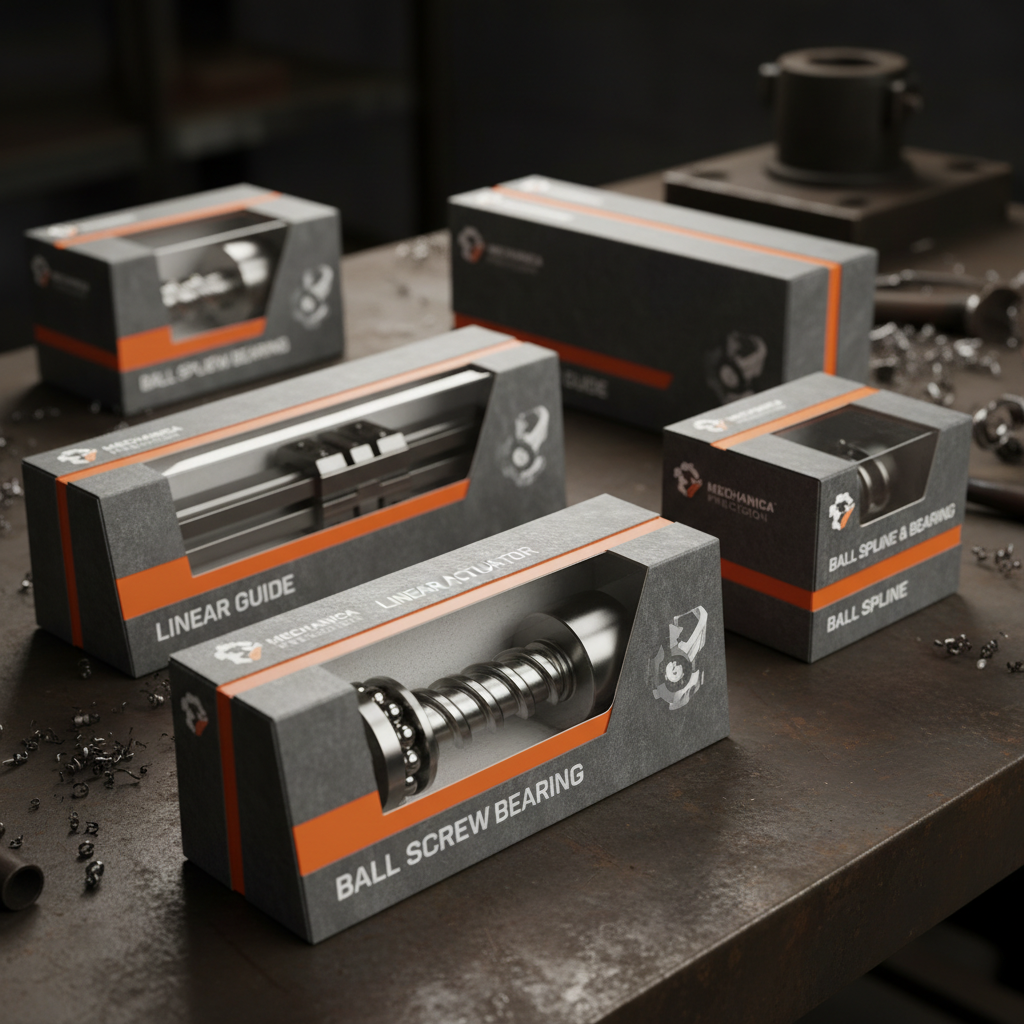
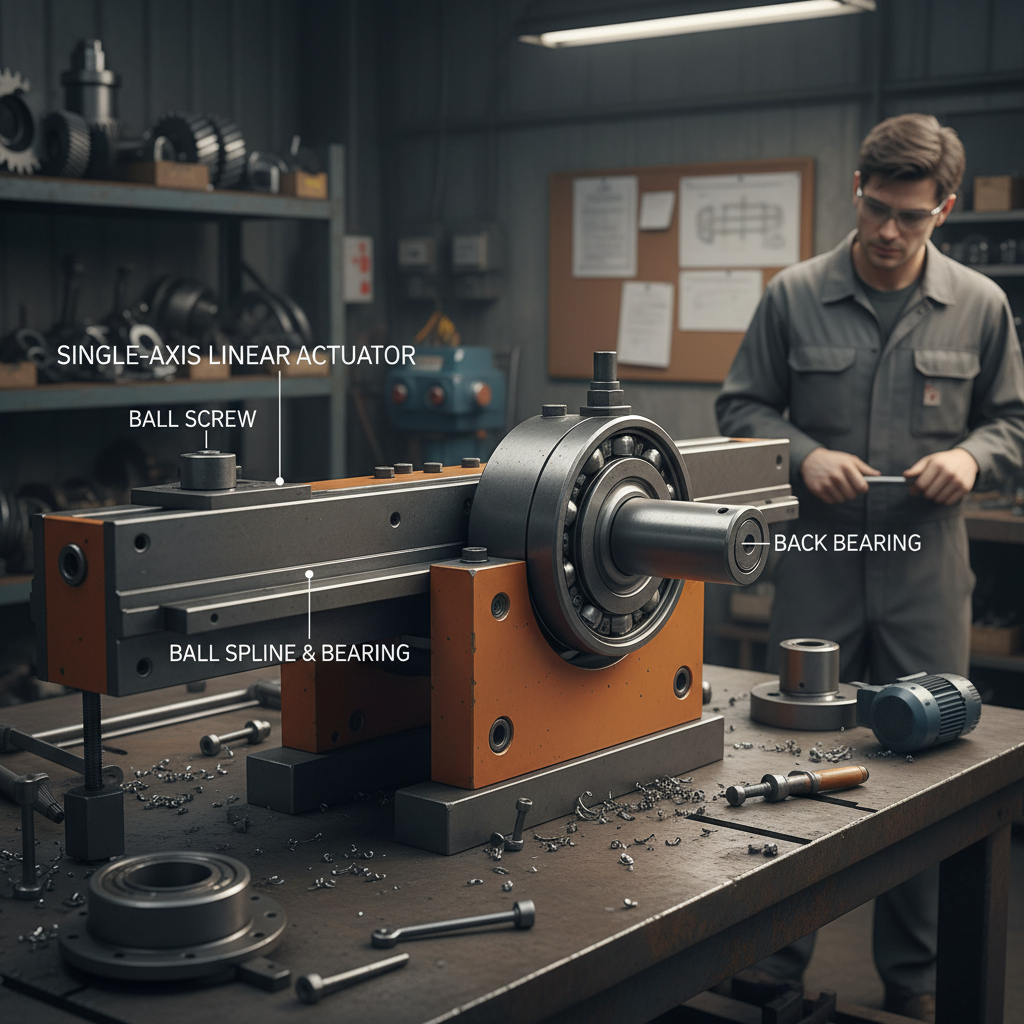
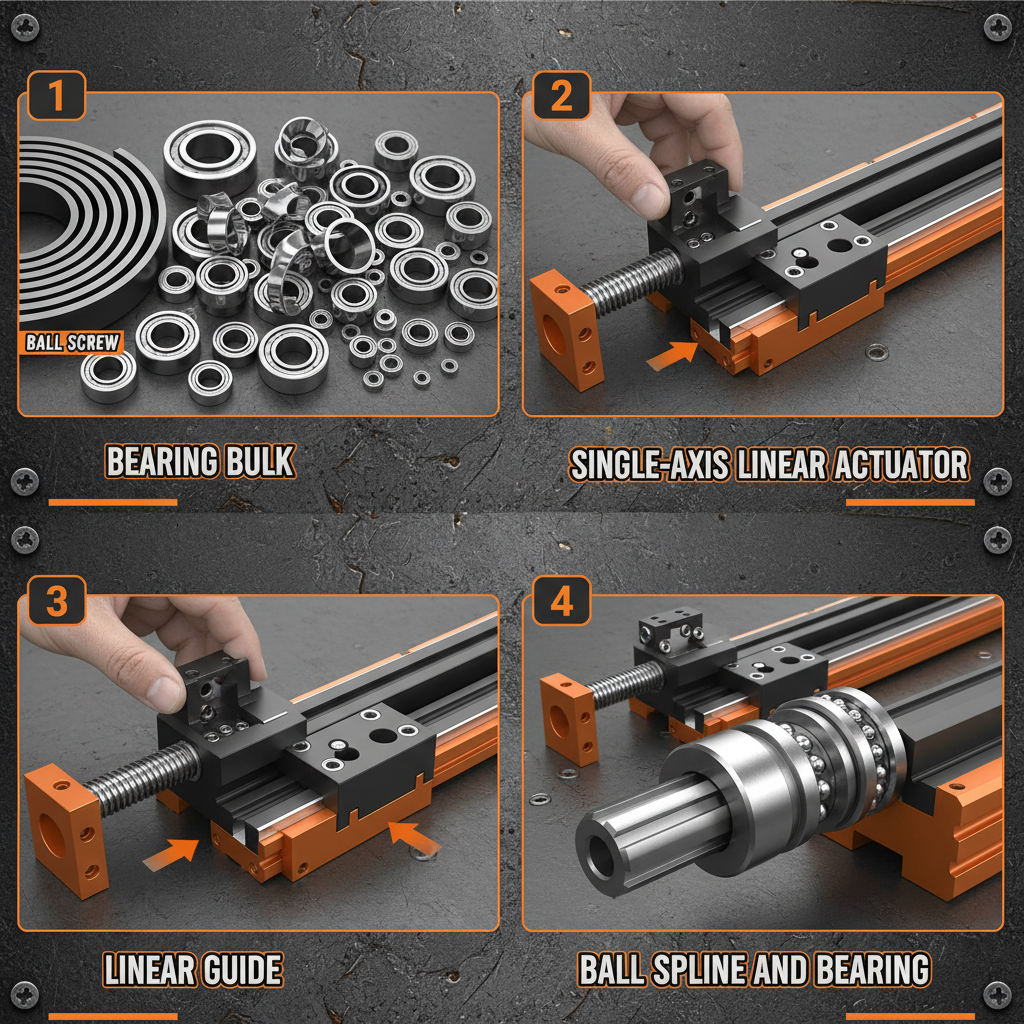
Ball screw bearings are crucial components in modern precision machinery, providing efficient and accurate linear motion. These bearings, a type of linear actuator, convert rotary motion into linear displacement, finding application in a wide range of industries from manufacturing and robotics to aerospace and medical technology. Their reliability and precision contribute significantly to the performance and efficiency of countless systems.
The global demand for ball screw bearings is steadily increasing, driven by the growth of automated manufacturing processes and the need for high-precision equipment. According to market research reports, the global ball screw market is projected to reach substantial figures in the coming years, reflecting a strong and continuous investment in this technology. This growth stems from industries demanding increasingly precise and reliable motion control.
Understanding ball screw bearings is paramount for engineers, designers, and manufacturers aiming to optimize machine performance and reduce downtime. The benefits extend beyond sheer mechanical advantage; proper selection and maintenance lead to improved product quality, increased productivity, and ultimately, a competitive edge in the global marketplace. This makes proficiency in ball screw bearing technology a critical skillset in many engineering disciplines.
The Fundamental Principles of ball screw bearing
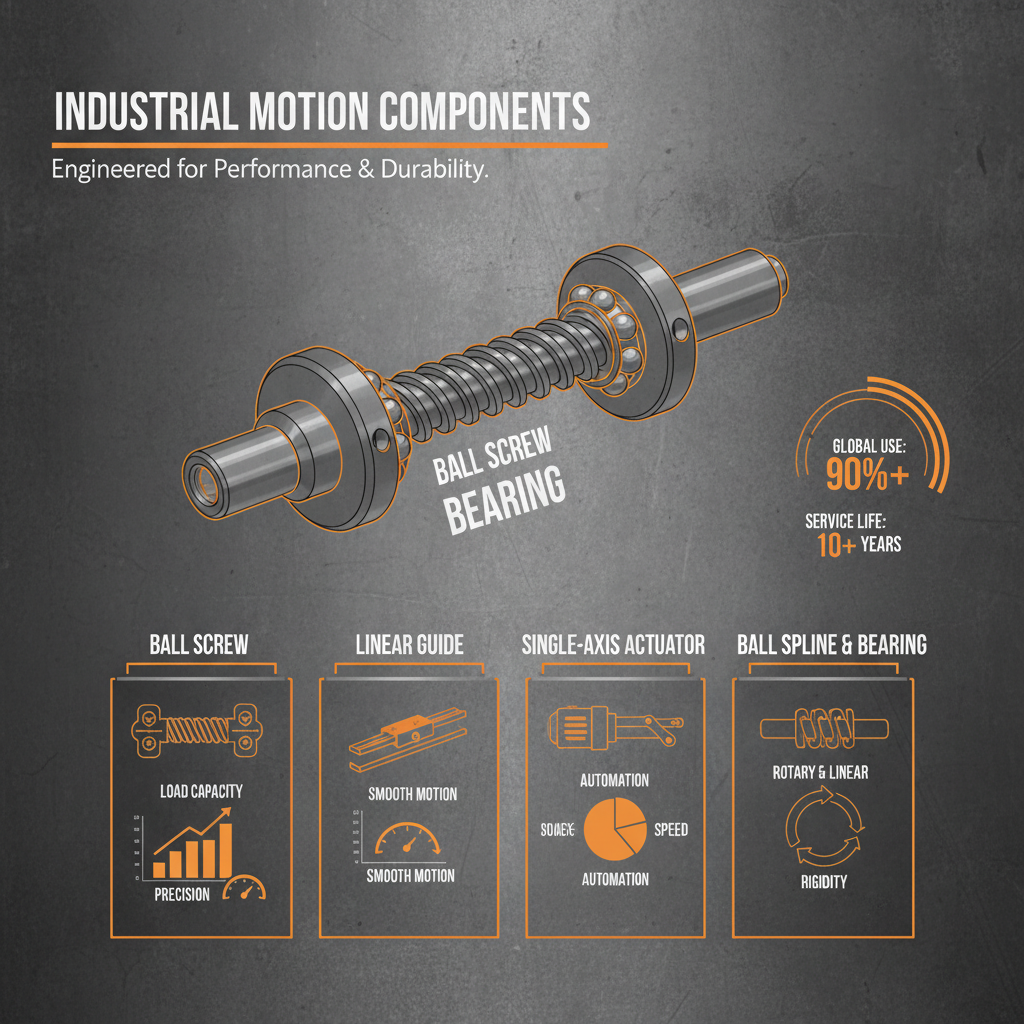
At its core, a ball screw bearing transforms rotational motion into linear motion – and vice-versa – with remarkable precision and efficiency. This is achieved through a carefully engineered system featuring a screw shaft and a nut containing multiple ball bearings. As the screw rotates, the ball bearings roll within the helical grooves of both the screw and the nut, facilitating smooth, low-friction linear movement. This principle is fundamental to understanding the effectiveness of ball screw bearing systems.
The design of the ball screw bearing optimizes load distribution, minimizes wear, and reduces energy loss. The preloading of the ball bearings ensures zero backlash, leading to exceptional positioning accuracy. The choice of materials – typically high-grade steel for the screw and nut, and hardened steel or ceramic for the ball bearings – significantly impacts the bearing's lifespan and performance under demanding conditions.
Global Significance of ball screw bearing
Ball screw bearings are a global commodity, essential to a vast network of industries. Manufacturing sectors across Asia, Europe, and North America heavily rely on these bearings for their production lines, from automotive assembly and machine tool building to semiconductor fabrication. The demand is particularly strong in emerging economies experiencing rapid industrialization, such as China and India, where automation is key to enhancing competitiveness.
The global ball screw bearing market is influenced by several factors, including economic growth, technological advancements, and government policies promoting industrial automation. The increasing adoption of Industry 4.0 principles, with a focus on smart manufacturing and interconnected systems, is driving the demand for even more precise and reliable linear motion solutions. The total market value is significant, reaching billions of dollars annually.
A key challenge facing the industry is the need to balance performance with cost-effectiveness. Manufacturers are constantly seeking innovative materials and designs to improve efficiency and reduce production costs, while maintaining the high levels of precision and reliability that are critical to their customers. ball screw bearing manufacturers are at the forefront of these efforts, continually refining their products to meet evolving market demands.
Defining ball screw bearing: A Core Component
A ball screw bearing, also known as a recirculating ball screw, is a linear actuator that converts rotational motion into linear motion using a series of ball bearings. Unlike traditional lead screws, which rely on sliding friction, ball screws utilize rolling friction, significantly reducing wear, increasing efficiency, and enabling higher load capacities. This fundamental difference makes them ideal for applications requiring precision, smoothness, and long service life.
The key components of a ball screw bearing include the screw shaft (typically with a helical groove), the nut (containing the ball bearings and return mechanisms), and the ball bearings themselves. The return mechanisms, often located at either end of the nut, guide the ball bearings back from one end to the other, ensuring continuous circulation and smooth operation. The precise arrangement and quality of these components determine the overall performance of the ball screw bearing.
Their application extends far beyond simply moving objects linearly; they’re integral to controlling precise positioning in CNC machines, robotic arms, and even medical imaging equipment. They represent a critical link between control systems and physical actions, and their reliability is paramount to the overall functionality of the equipment they serve.
Key Performance Characteristics of ball screw bearing
Several key performance characteristics define the suitability of a ball screw bearing for a specific application. Accuracy is paramount, referring to the bearing's ability to achieve and maintain a precise position without deviation. This is closely linked to the concept of backlash – the amount of free play within the system, which should ideally be minimized or eliminated through preloading.
Load capacity is another critical factor, representing the maximum force the bearing can withstand without experiencing permanent deformation or failure. This is influenced by the size of the ball bearings, the screw's pitch, and the materials used in construction. Stiffness is also important, as it determines the bearing's resistance to deflection under load, impacting positional accuracy.
Ball Screw Bearing Performance Metrics
Real-World Applications of ball screw bearing
Ball screw bearings find extensive use in Computer Numerical Control (CNC) machines, providing the precise linear motion required for cutting, milling, and turning operations. Their high accuracy and rigidity are crucial for achieving tight tolerances and producing high-quality parts. The aerospace industry utilizes these bearings in flight control surfaces, landing gear, and engine actuators, where reliability is paramount.
In the medical field, ball screw bearings are integral to surgical robots, medical imaging equipment (like MRI and CT scanners), and patient positioning systems, enabling precise and controlled movements. The robotics industry leverages ball screw bearing technology in a wide range of applications, including industrial automation, collaborative robots (cobots), and even humanoid robots.
Long-Term Value and Benefits of ball screw bearing
Investing in high-quality ball screw bearings delivers substantial long-term value. Reduced friction translates to lower energy consumption and decreased operating costs. The extended lifespan of these bearings minimizes the need for frequent replacements, reducing downtime and maintenance expenses. Their precision contributes to improved product quality and reduced scrap rates.
Beyond the tangible benefits, ball screw bearings offer a significant return on investment through increased productivity and improved operational efficiency. The reliability of these components fosters trust and confidence in the performance of the machinery they power, leading to enhanced customer satisfaction and a stronger brand reputation.
The inherent precision and repeatability of ball screw bearing technology also contribute to enhanced safety in various applications, particularly those involving automated machinery and robotic systems.
Future Trends and Challenges in ball screw bearing Technology
Ongoing research and development efforts are focused on improving the performance and sustainability of ball screw bearings. The exploration of new materials, such as advanced ceramics and self-lubricating polymers, promises to further reduce friction, increase wear resistance, and extend bearing life. Additive manufacturing (3D printing) is also emerging as a promising technique for creating customized ball screw components with complex geometries.
A key challenge is addressing the issue of noise reduction, particularly in applications where quiet operation is critical. Innovative designs and lubrication techniques are being developed to minimize noise levels without compromising performance. The integration of sensors and smart monitoring systems will enable predictive maintenance, allowing for timely interventions and preventing costly breakdowns.
The drive towards digitalization and Industry 4.0 is also influencing the development of ball screw bearings, with a growing emphasis on connectivity, data analytics, and remote monitoring capabilities. Future ball screw bearing systems will likely be integrated into larger, interconnected networks, providing real-time insights into their performance and enabling optimized operation.
Summary of Challenges and Solutions for Ball Screw Bearing Technology
| Challenge Area |
Specific Challenge |
Potential Solution |
Implementation Difficulty (1-10) |
| Material Wear |
Reduction in lifespan due to friction. |
Utilize advanced ceramic materials. |
7 |
| Noise Emission |
Audible noise during operation. |
Implement optimized lubrication systems. |
5 |
| Backlash Control |
Loss of precision due to free play. |
Apply advanced preloading techniques. |
6 |
| Cost Optimization |
High manufacturing costs. |
Explore additive manufacturing methods. |
8 |
| Monitoring & Diagnostics |
Lack of real-time performance data. |
Integrate embedded sensors and data analytics. |
7 |
| Environmental Impact |
Use of potentially harmful materials. |
Develop bearings with biodegradable lubricants. |
9 |
FAQS
The lifespan of a ball screw bearing depends heavily on operating conditions, load, speed, and lubrication. However, with proper maintenance and within specified parameters, a well-manufactured ball screw bearing can last for millions of cycles or tens of thousands of hours of operation. Regular relubrication and inspection are vital to maximizing its service life, and the quality of the original materials and manufacturing processes will influence longevity.
The pitch of a ball screw—the distance the nut travels per revolution of the screw—directly impacts its speed and torque characteristics. A larger pitch results in faster linear travel for a given rotational speed, but requires more torque to drive. Conversely, a smaller pitch provides higher torque capacity but slower linear speed. Selecting the appropriate pitch is crucial for matching the bearing to the specific application's requirements.
The best lubrication for a ball screw bearing depends on factors such as load, speed, temperature, and environment. Common options include greases, oils, and solid lubricants. Greases are often preferred for their ability to provide long-lasting lubrication and sealing. Oils are suitable for high-speed applications, while solid lubricants can be used in extreme environments where traditional lubricants are ineffective. Regular lubrication is critical to minimize friction and wear.
Preloading refers to the application of an axial force to the ball screw assembly to eliminate backlash and improve stiffness. Backlash is the amount of free play within the system, which can cause positional errors and reduce accuracy. Preloading ensures that the ball bearings remain in constant contact with the screw and nut, resulting in precise and consistent motion. Different levels of preloading can be applied depending on the application's requirements.
Corrosion can significantly reduce the lifespan and performance of a ball screw bearing. To prevent corrosion, select bearings made from corrosion-resistant materials, such as stainless steel. Ensure proper sealing to prevent ingress of moisture and contaminants. Regular lubrication with a corrosion-inhibiting lubricant can also provide protection. In harsh environments, consider using protective coatings or corrosion-resistant enclosures.
Rolled ball screws are manufactured through a rolling process, resulting in a cost-effective solution for many applications. Ground ball screws, on the other hand, are precisely ground to achieve higher accuracy and surface finish. Ground ball screws are typically used in applications requiring exceptional precision and smoothness. Rolled screws are generally better for high load applications. The choice depends on the application's specific needs and budget.
Conclusion
In conclusion, ball screw bearings are indispensable components in a vast array of modern industrial applications, offering a unique combination of precision, efficiency, and reliability. Their ability to convert rotational motion into linear motion with minimal friction and high accuracy makes them essential for CNC machines, robotics, aerospace, and medical equipment. Understanding the fundamental principles, performance characteristics, and future trends of this technology is crucial for engineers and manufacturers seeking to optimize their designs and processes.
As technology continues to advance, we can expect to see further innovations in ball screw bearing materials, designs, and manufacturing processes. The integration of smart sensors and data analytics will enable predictive maintenance and optimized performance, further enhancing the value of these critical components. To learn more about our extensive range of high-quality ball screw bearing solutions and how we can support your specific application needs, please visit our website today.