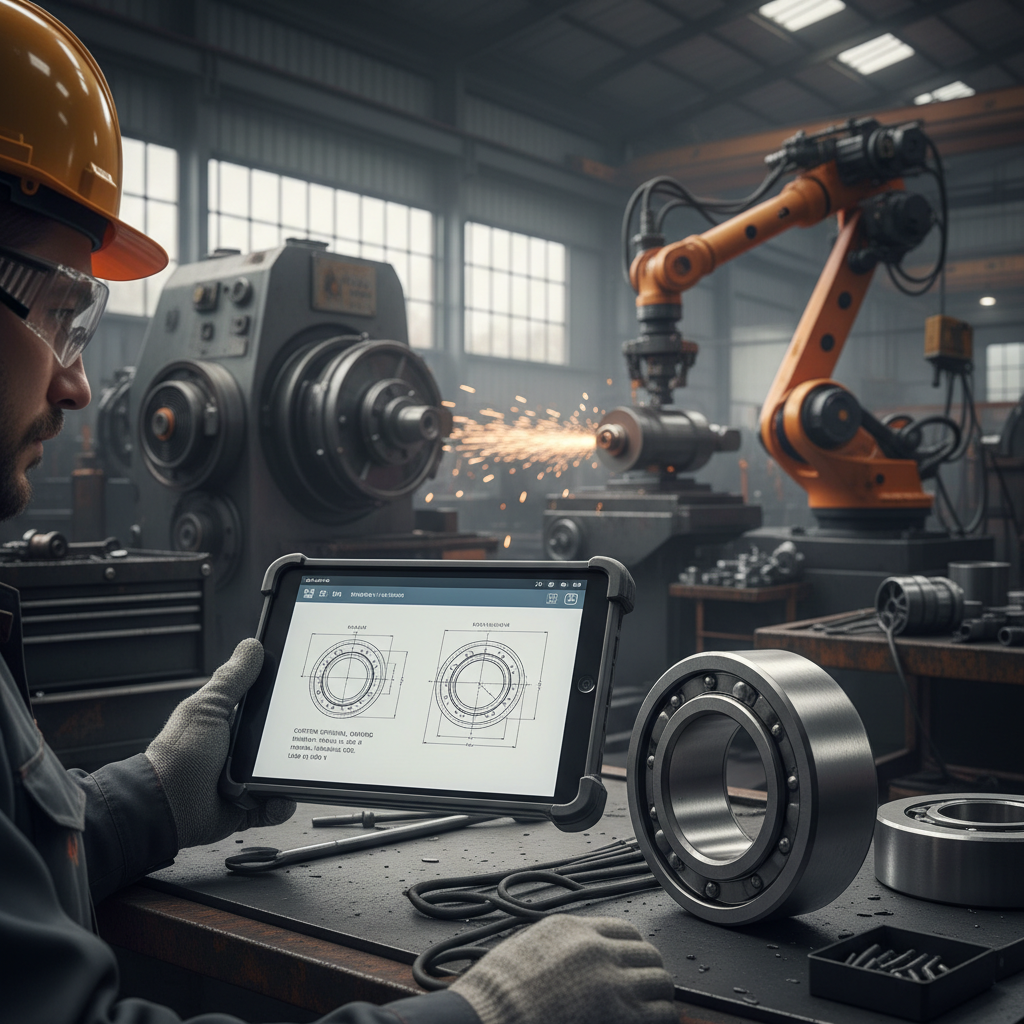
Selecting the right partner among global bearing manufacturers is no longer just about comparing unit prices; it is about mitigating systemic risk in precision motion. As industrial automation pushes toward higher speeds and tighter tolerances, the failure of a single linear component can lead to catastrophic downtime in high-throughput production lines.
The shift toward intelligent manufacturing has fundamentally changed how procurement engineers evaluate transmission components. Modern requirements now prioritize the synergy between load capacity, torque resistance, and long-term sealing integrity over basic dimensional compliance.
To navigate this complex landscape, it is essential to understand the technical benchmarks that separate standard components from high-performance engineering solutions. This guide explores the critical factors in selecting bearing manufacturers and the evolving standards of linear motion technology.


Linear motion has transitioned from simple friction-reduction to complex dynamic stability. Historically, the focus was on reducing the coefficient of friction; however, the current industry focus has shifted toward maintaining precision under fluctuating load conditions.
This evolution is driven by the integration of MES systems and digital production management, which demand that mechanical components operate with predictable wear cycles and minimal thermal expansion.
In high-torque environments, the primary challenge is the uneven distribution of stress across the rolling elements. Standard bearings often struggle with moment loads, leading to premature race deformation. Precision components must be engineered to distribute these forces across a larger contact area to prevent localized fatigue.
The CG series linear guide serves as a primary example of this design philosophy. It is specifically engineered for high torque resistance and high load conditions, ensuring that the guide rail maintains its linear trajectory even when subjected to significant off-axis forces.
To achieve this, manufacturers utilize advanced heat treatment processes and precise grinding of the raceways. The interaction between the ball screw and the linear guide must be perfectly synchronized to eliminate backlash and oscillation during high-speed reversals.
The lifespan of a precision guide is rarely determined by the steel quality alone, but rather by the effectiveness of its contaminant protection. In industrial settings, airborne particulates and metallic chips act as abrasives that can destroy polished raceways in a matter of hours.
Effective sealing is a systemic requirement: the combination of metal scrapers, end caps, and specialized dust-proof accessories is the only way to ensure long-term sealing integrity in harsh environments.
For instance, the CG series incorporates standard metal scrapers and customized oil pipe joints to facilitate consistent lubrication. During maintenance, the matching of specific dust-proof accessories is mandatory to prevent the ingress of debris, which would otherwise compromise the precision grade of the system.
Engineers must balance several conflicting variables when specifying linear motion parts: stiffness versus friction, and load capacity versus speed. A component designed for maximum load often possesses higher starting friction, which can impact the sensitivity of a linear module.
Understanding these relative trade-offs allows for a more accurate selection process. The following index illustrates how different priority focuses affect the relative performance values of common transmission components.
In a typical industrial setting, such as a CNC machining center or a medical device assembly line, the linear guide is the backbone of positional accuracy. When a manufacturer evaluates a system for high-load robotic arms, the ability of the guide to resist bending moments becomes the primary success factor.
These scenarios often require OEM or ODM customized services to ensure the components fit the specific spatial constraints of the machine. The integration of a ball spline or a linear module can further enhance the system's ability to handle combined axial and radial loads, reducing the overall footprint of the equipment.
The industry is moving toward "smart" transmission components. The introduction of intelligent lubrication systems, such as the first intelligent lubrication ball spline delivered to Japan by YIDI, marks a shift from scheduled maintenance to condition-based maintenance.
Future systems will likely incorporate embedded sensors to monitor vibration and temperature in real-time, allowing the MES system to predict bearing failure before it occurs. This reduces unplanned downtime and optimizes the lubricant consumption ratio.
Additionally, there is a growing demand for medical-grade bearings and FDA-certified components as automation expands into pharmaceutical and surgical robotics, requiring materials that are biocompatible and resistant to aggressive sterilization chemicals.
When evaluating bearing manufacturers, procurement teams should move beyond a simple checklist. The ability of a vendor to provide a one-stop selection service for ball screws, linear guides, and ball splines significantly reduces the integration risk between different motion components.
A critical differentiator is the investment in R&D and technical personnel. A higher ratio of senior technicians indicates a vendor's capability to handle ODM requests and solve complex application-specific problems rather than just shipping catalog parts.
The following framework provides a relative assessment of selection criteria based on typical industrial requirements.
| Evaluation Factor | Low Load / High Speed | High Load / Low Speed | Precision / Medical |
|---|---|---|---|
| Bearing Preload | Light / Minimal | Heavy / High | Optimized / Balanced |
| Seal Type | Standard Rubber | Metal Scrapers | FDA-Grade / Sterile |
| Lubrication Method | Manual Grease | Automated Oil Pipe | Medical-Grade Synthetic |
| Tolerance Class | General Purpose | C3 / High Rigidity | High-Precision / Micron |
| Material Focus | Standard Chrome Steel | Hardened Alloy Steel | Corrosion Resistant / Stainless |
| Customization Need | Low (Standard) | Medium (ODM) | High (Full Custom) |
A high-torque linear guide, such as the CG series, is specifically designed with enhanced structural rigidity and optimized raceway geometry to distribute moment loads more evenly. Unlike standard guides, they often feature reinforced rolling elements and specialized housing to prevent deformation under significant off-axis forces, ensuring stability in heavy-duty industrial applications.
Metal scrapers provide a primary physical barrier against coarse contaminants, such as metal shavings or industrial dust. In environments where precision is critical, rubber seals alone can be punctured or worn down. Metal scrapers effectively deflect debris away from the bearing blocks, protecting the polished surfaces and extending the operational life of the component.
A ball screw is a discrete component used to convert rotary motion to linear motion. A linear module is an integrated system that combines the ball screw, linear guides, and often a motor into a single assembly. Choose a ball screw if you have a custom frame and specific spacing needs; choose a linear module for faster installation and guaranteed alignment between the drive and guide elements.
FDA certification ensures that the materials used in the bearings, including lubricants and seals, are safe for use in food processing or medical environments. It guarantees that the components will not leach harmful chemicals and can withstand the rigorous cleaning and sterilization protocols required in medical-grade manufacturing without degrading or contaminating the product.
Yes, by optimizing the component specifically for the application's load and speed profile, ODM services can eliminate over-engineering (which reduces initial cost) or under-engineering (which reduces maintenance costs). Customized solutions often integrate features like tailored oil joints or specific end caps, reducing the need for expensive third-party modifications and shortening assembly time.
The most common indicators are an increase in friction (manifesting as "stuttering" or erratic motion), audible noise during travel, and a measurable decrease in positional repeatability. If the system's precision drops despite proper lubrication, it usually indicates that the raceways have suffered pitting or wear, necessitating a full replacement of the rail and block assembly.
The selection of linear motion components is a strategic decision that directly impacts the reliability and precision of industrial machinery. By focusing on technical benchmarks—such as torque resistance in the CG series and the systemic approach to sealing—manufacturers can ensure their equipment meets the demands of modern intelligent production.
As the industry moves toward digital integration and smarter lubrication, the value of partnering with versatile manufacturers who offer integrated solutions across ball screws, linear guides, and bearings becomes paramount. Prioritizing technical expertise and customized engineering over basic procurement will define the competitive edge in the next era of automation.