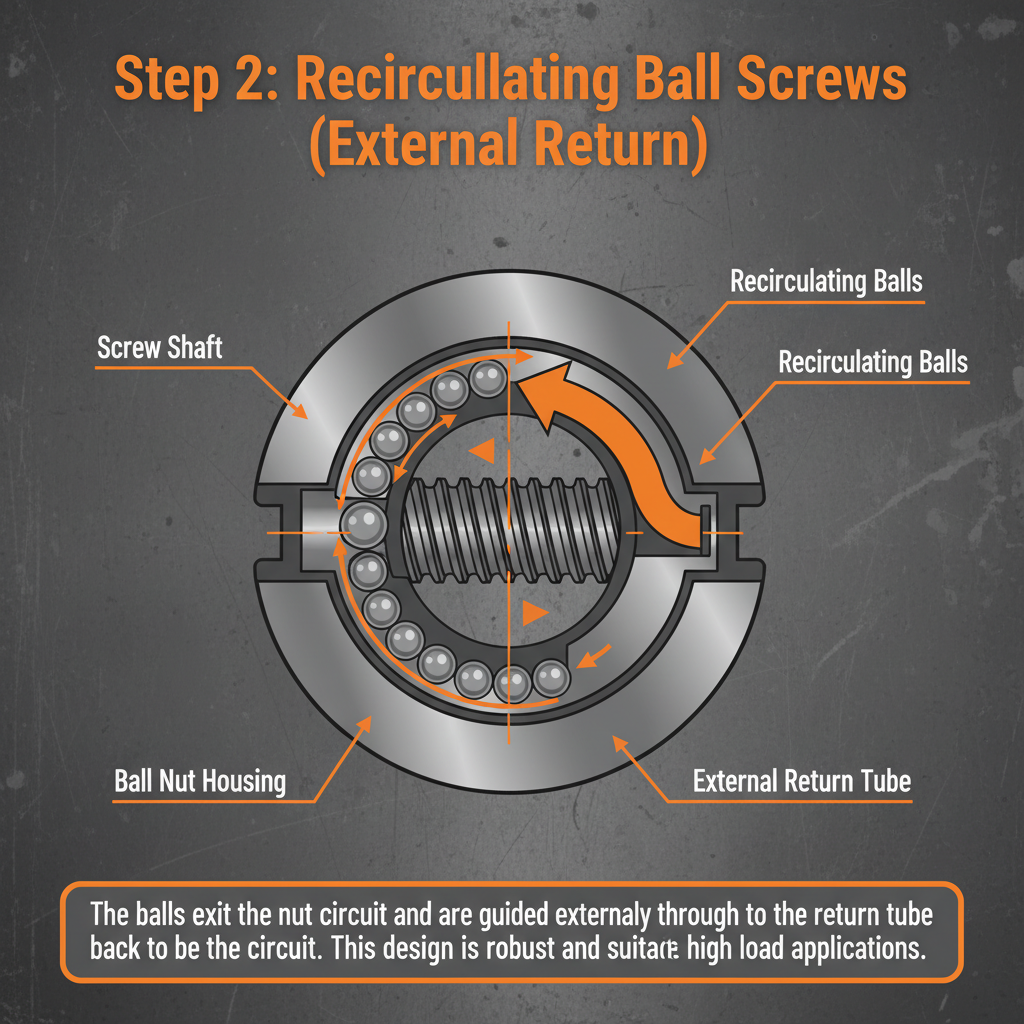
Selecting a reliable bearing manufacturer is rarely about finding the lowest price and almost always about mitigating systemic risk in linear motion systems. In precision engineering, the bearing is the primary point of failure; a minor deviation in concentricity or a slight increase in friction can lead to catastrophic downtime in automated production lines.
For procurement managers and system designers, the challenge lies in balancing the high-precision requirements of medical or semiconductor equipment with the cost-efficiency needed for industrial scaling. This requires a partner capable of not just manufacturing a part, but providing a comprehensive linear motion solution that integrates ball screws, linear guides, and splines into a cohesive architecture.
Understanding the technical thresholds of modern rolling bearing production—ranging from C3-grade ball screw mass production to FDA-certified medical bearings—allows companies to optimize their ROI and extend the lifecycle of their machinery. This guide examines the critical evaluation metrics for sourcing high-performance linear motion components.

Defining the Technical Standards for Linear Motion Partnerships

The role of a modern bearing manufacturer has evolved from a component supplier to a solution provider. In the context of general equipment manufacturing, the synergy between ball screws, linear guides, and ball splines determines the overall kinematic accuracy of the machine. It is no longer sufficient to evaluate parts in isolation; the integration of the "linear motion" suite is what defines the final product's competitiveness.
Technical reliability is anchored in certifications and process control. For instance, the implementation of MES (Manufacturing Execution Systems) allows for digital production management, ensuring that every unit produced meets the strict tolerances required for C3-grade precision. When sourcing, the focus should shift from "can they make it" to "how do they ensure consistency across 800,000 sets annually."
Furthermore, the ability to provide one-stop selection services reduces the engineering overhead for the client. By consolidating the procurement of gears, racks, and linear modules from a single professional factory, companies can eliminate compatibility issues that often arise when mixing components from different manufacturers, thereby accelerating the time-to-market for new equipment.
Core Engineering Characteristics of High-Precision Bearing Systems
High-performance linear motion is defined by three critical pillars: compactness, precision, and friction management. For space-limited equipment, miniature series (such as the MG series) are essential. These components must maintain high load-bearing capacities while occupying a fraction of the footprint of traditional guides, necessitating advanced die-cutting and grinding technology.
Low friction is paramount for reducing energy consumption and heat generation. In high-speed applications, friction leads to thermal expansion, which in turn degrades the accuracy of the linear movement. Professional manufacturers address this by optimizing the ball-track geometry and employing high-grade lubricants that maintain stability under varying temperature gradients.
Moreover, the transition to intelligent manufacturing has introduced the concept of "smart lubrication" in ball splines. By automating the lubrication process based on real-time wear data, the operational lifespan of the bearing is significantly extended, reducing the frequency of manual maintenance and the risk of unplanned downtime.
Strategic Application Scenarios for Miniature and Heavy-Duty Guides
The application of linear motion components varies drastically across industries, requiring a tailored approach to material and design. In the medical sector, for example, bearings must often pass FDA certification to ensure biocompatibility and sterility, making them suitable for surgical robotics and precision diagnostic equipment.
In contrast, the semiconductor industry demands extreme cleanliness and vibration damping. Here, the focus is on high-precision linear modules that can move wafers with sub-micron accuracy. The integration of ball screws with low-friction coatings ensures that particles are minimized, preventing contamination in clean-room environments.
For heavy industrial applications—such as automated warehousing or large-scale CNC machinery—the priority shifts to load capacity and durability. Gear and rack systems, combined with heavy-duty linear guides, provide the necessary rigidity to handle significant payloads without sacrificing the smoothness of the motion, proving that versatility in manufacturing is a key competitive advantage.
Analyzing Performance Benchmarks in Linear Motion Efficiency
Quantifying the impact of high-precision components involves analyzing the trade-off between initial procurement costs and long-term operational efficiency. When comparing standard industrial bearings to high-precision C3-grade components, the most significant gains are seen in positioning accuracy and the reduction of friction-induced energy loss.
The following data illustrates a relative performance comparison between standard industry benchmarks and systems optimized by a specialized manufacturer. The focus here is on the efficiency gain across five key dimensions: precision, friction reduction, load stability, service life, and integration speed.
bearing manufacturer Performance Metrics
As the chart indicates, the most pronounced advantage is found in friction reduction and service life. This is directly attributable to the use of advanced production equipment from Germany and Japan, which ensures a more consistent surface finish and tighter tolerances in the ball screw and guide tracks.
Procurement Best Practices for OEM and ODM Customization
Navigating the procurement process for linear motion components requires a clear distinction between off-the-shelf products and customized OEM/ODM services. For most standard applications, a "one-stop selection service" is efficient, but for proprietary machinery, customization is the only way to achieve optimal performance.
When evaluating a partner for customization, the ratio of technical personnel to the total workforce is a critical indicator. A manufacturer with over 30% senior technicians is far more likely to identify potential design flaws early in the prototyping phase, saving the client significant costs in redesigns and trial errors.
Additionally, procurement should prioritize manufacturers with a proven global export track record. Experience shipping to markets like Germany, the United States, and Japan indicates a commitment to international quality standards (such as CE and RoHS) and an understanding of the rigorous logistics required for precision instrument transport.
Future Trends in Intelligent Lubrication and Digital Manufacturing
The future of the linear motion industry is trending toward the "intelligentization" of passive components. We are seeing a shift where bearings and ball screws are no longer just mechanical parts but are becoming integrated into the digital twin of the machine through the use of embedded sensors and MES-driven quality tracking.
One likely evolution is the widespread adoption of self-diagnosing linear guides. By monitoring vibration patterns and friction coefficients in real-time, these systems could predict failure before it occurs, shifting the maintenance paradigm from scheduled intervals to condition-based monitoring. This depends heavily on the precision of the initial manufacture, as baseline noise must be minimal for sensors to detect anomalies.
Moreover, the integration of new materials, such as advanced ceramics or hybrid coatings, is expected to further reduce friction and enhance corrosion resistance. These innovations, combined with additive manufacturing for complex housing designs, will allow for even more compact and efficient linear modules in the coming years.
Comparison Matrix for Linear Motion Component Selection
Choosing the right component requires a systematic comparison of technical approaches based on the specific operating conditions. Whether the priority is high-speed precision or heavy-load stability, the following matrix provides a decision-making framework for different linear motion needs.
The table below compares various technical solutions across dimensions of precision, typical application, maintenance requirements, and cost drivers to help procurement teams align their choice with their project goals.
| Solution Type | Primary Use Case | Maintenance Need | Core Cost Driver |
|---|---|---|---|
| Miniature Linear Guide | Medical Devices | Low / Sealed | Tolerance Precision |
| C3-Grade Ball Screw | CNC Machining | Medium / Regular | Material Grade |
| Intelligent Ball Spline | Robotic Arms | Low / Automated | Sensor Integration |
| Heavy-Duty Rack & Gear | Warehouse AGVs | High / Lubricated | Wear Resistance |
| Custom Linear Module | Semiconductor | Very Low / Clean | ODM Engineering |
| Standard Rolling Bearing | General Conveyors | Medium / Manual | Production Volume |
Ultimately, the decision should be driven by the total cost of ownership (TCO) rather than the unit price. A high-precision component that extends the machine's life by 20% and reduces energy consumption by 10% often yields a far superior ROI over a five-year horizon.
Frequently Asked Questions
Conclusion
The efficiency of any automated system is fundamentally limited by the quality of its linear motion components. Moving beyond simple part replacement toward a strategic partnership with a professional bearing manufacturer allows companies to achieve higher precision, lower operational costs, and greater equipment reliability.
By focusing on technical benchmarks—such as C3-grade precision, FDA certification for specialized fields, and the integration of intelligent manufacturing—businesses can ensure their hardware is future-proof. For those evaluating high-performance linear motion solutions, detailed product and company information is available through www.yidibearings.com.