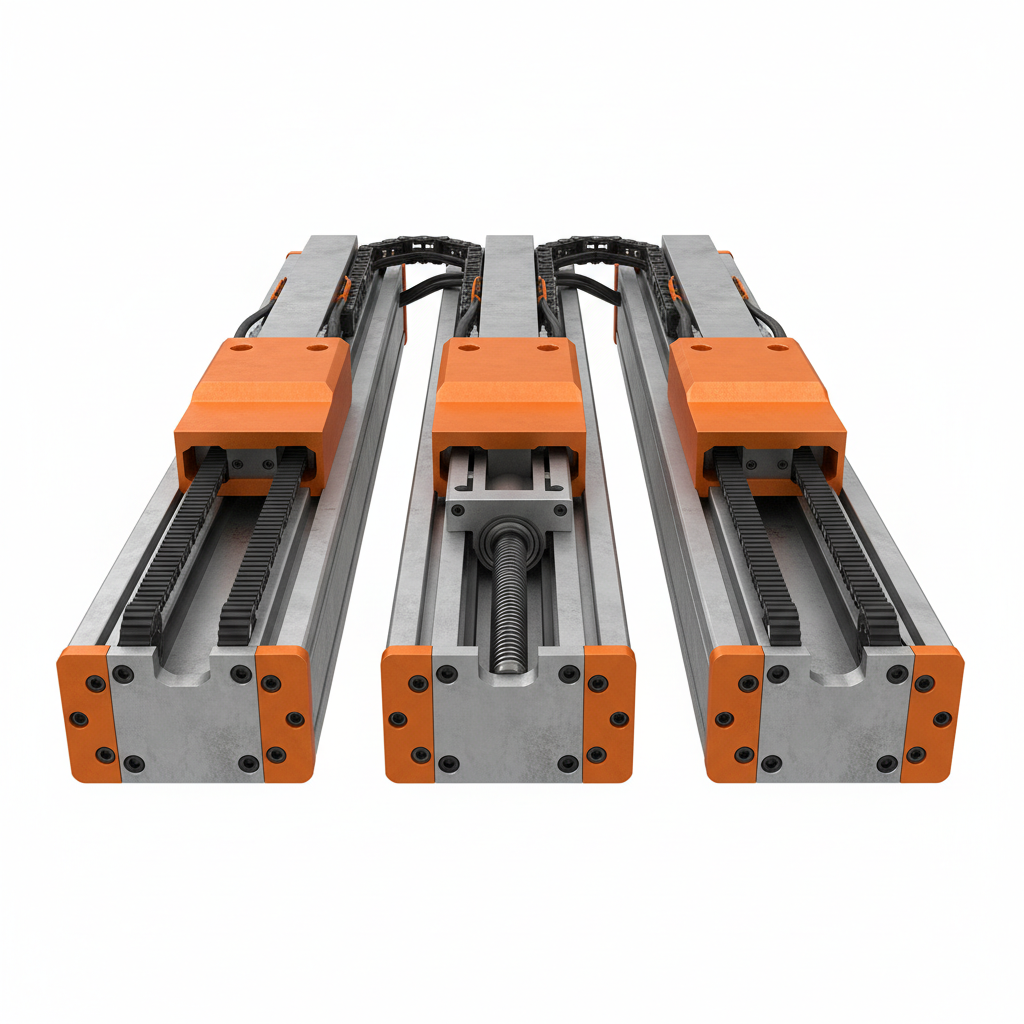
The shift toward precision automation has forced a re-evaluation of standard motion components, as off-the-shelf solutions often fail to meet the rigorous demands of specialized industrial machinery. In high-stress environments, the requirement for a bearing custom configuration is no longer a luxury but a technical necessity to ensure system longevity and operational accuracy.
Engineering teams now face the challenge of balancing load capacity with noise reduction and friction coefficients, particularly in medical and high-end electronics manufacturing. Standard bearings often introduce vibration and uneven wear when pushed beyond generic specifications, leading to unplanned downtime and reduced throughput in automated lines.
This analysis explores the technical frameworks behind customized linear motion solutions, evaluating how specific architectural choices—such as those found in the QH series silent heavy-duty guides—address the critical trade-offs between speed, precision, and acoustic performance.


The core of a high-performance linear system relies on the geometry of the contact surface. A four-column single arc tooth contact design provides a stable base that distributes loads more evenly than standard configurations, reducing localized stress and preventing premature deformation of the raceway.
When engineers specify a bearing custom solution, they are primarily manipulating the interaction between the rolling elements and the guide rail to optimize for specific kinematic requirements, such as extreme rigidity or ultra-low friction.
The selection of materials and tolerances determines the operational envelope of the system. For instance, C3-grade precision in ball screws and matching tolerances in linear guides are essential to prevent internal pre-load buildup, which can increase friction and heat generation during high-speed cycles.
Load capacity is not merely about the maximum weight supported but the dynamic load rating under varying speeds. Customization allows for the adjustment of ball diameters and arrangement patterns, enabling the system to handle heavy-duty loads without sacrificing the smoothness required for precision positioning.
Furthermore, the integration of specialized seals and lubrication channels is a key part of the customization process. In environments with particulate contamination, custom sealing prevents debris from entering the raceways, which is critical for maintaining the integrity of the rolling surfaces over millions of cycles.
Acoustic noise in linear guides is typically caused by the irregular impact of balls against the raceway during circulation. Standard guides often suffer from "ball clustering," where multiple balls hit the same point simultaneously, creating a distinct rhythmic noise and vibration.
This technical approach is particularly vital for medical-grade equipment or cleanroom environments where vibration can interfere with sensitive sensors. The result is a heavy-duty system that operates with the acoustic profile of a much lighter, low-load component.
Evaluating the efficacy of a custom linear system requires a comparative analysis of normalized performance scores. Engineers typically weigh the trade-off between structural rigidity and acoustic output to determine the ideal configuration for a specific machine tool or automated arm.
The following assessment provides a relative engineering rating across different design configurations, illustrating how specialized architectures like the QH series optimize the balance between heavy-duty capacity and noise suppression.
In typical deployment scenarios, such as the assembly of semiconductor wafers or medical diagnostic imaging systems, the requirement for a bearing custom setup focuses on the elimination of micro-vibrations. When a heavy-duty rail is integrated into a high-speed gantry, the synchronized ball arrangement ensures that the motion remains fluid even during rapid acceleration and deceleration phases.
Another representative engineering scenario is found in automated laboratory equipment. Here, the system must maintain micron-level repeatability while operating in a silent mode to avoid disturbing sensitive acoustic sensors. The use of optimized arc tooth contact designs allows these systems to maintain structural rigidity without the noise penalties typically associated with high-load linear guides.
The future of linear motion is trending toward the integration of self-lubricating composites and advanced heat-treatment processes. By modifying the surface hardness of the raceways through selective induction hardening, manufacturers can create guides that are extremely wear-resistant on the surface but retain core toughness to absorb shocks.
Research is also expanding into the use of hybrid ceramic rolling elements to reduce mass and friction. Reducing the inertia of the moving parts allows for higher acceleration rates, which directly increases the productivity of automated production lines.
As industry 4.0 advances, the demand for "smart" linear components—those with embedded sensors for real-time wear monitoring—is increasing. This evolution will transform the maintenance cycle from a scheduled task to a predictive one, reducing the total cost of ownership for heavy industrial equipment.
Selecting the correct configuration requires a systematic approach to matching technical capabilities with operational constraints. A failure to align the bearing's dynamic load rating with the actual operational stresses can lead to premature failure and system instability.
Engineering managers should evaluate the selection based on a matrix of precision, noise, and load capacity. While a standard guide may suffice for basic material handling, specialized applications in medical or high-speed electronics require the enhanced stability provided by synchronized ball technologies.
The table below outlines the technical trade-offs between different configuration profiles to assist in the decision-making process for system integration.
| Configuration Profile | Primary Performance Goal | Acoustic Level | Recommended Use Case |
|---|---|---|---|
| Basic Configuration | Cost Efficiency | Standard | General Material Handling |
| Standard Configuration | Balanced Load/Speed | Moderate | Industrial Packaging |
| High-Duty Configuration | Maximum Load Support | Higher | Heavy Machinery Frames |
| Precision Configuration | Micron-level Accuracy | Low | Optical Positioning |
| Automated Configuration | High-Speed Cycling | Moderate | Pick-and-Place Robotics |
| SynchMotion Profile | Silent Heavy-Duty | Ultra-Low | Medical/High-End Tech |
Custom configurations allow for the optimization of the contact geometry and rolling element distribution to meet specific operational demands. For example, customized linear guides can be engineered for higher dynamic load ratings or lower friction coefficients, ensuring that the system can handle heavy loads without sacrificing the precision or speed required for high-end automated processes.
SynchMotion technology uses patented synchronous couplings to maintain a uniform spacing between the balls within the linear guide. By preventing the clustering of balls—which typically causes uneven impacts against the raceway—the system distributes the load evenly, which significantly dampens vibrations and reduces the acoustic output of the machinery.
For medical applications, the most critical parameters are acoustic emissions, vibration levels, and material biocompatibility or certification (such as FDA compliance). Engineers must ensure that the guide can support heavy diagnostic equipment while remaining silent and vibration-free to avoid interfering with sensitive imaging or sensing components.
Yes, by reducing the coefficient of friction through optimized raceway geometry and advanced lubrication channels, a custom bearing setup reduces the torque required to move the load. This decrease in resistance allows the drive motors to operate more efficiently, reducing overall power consumption and heat generation in the system.
Pre-load is essential for eliminating play and increasing rigidity, but excessive pre-load increases internal friction and stress on the rolling elements. A customized solution allows engineers to tune the pre-load to the specific load profile of the machine, balancing the need for rigidity with the goal of maximizing the service life of the bearing.
Customized seals are designed to prevent the ingress of specific contaminants based on the operating environment. By effectively blocking dust, metal shavings, or chemicals, these seals prevent premature wear of the raceways and balls, thereby extending the lubrication interval and significantly increasing the time between major system overhauls.
The transition from standard components to a bearing custom architecture represents a strategic shift toward system-level optimization. By addressing the fundamental causes of noise and friction through technologies like SynchMotion and optimized arc tooth contacts, manufacturers can achieve a rare synergy of heavy-duty capacity and acoustic refinement.
Ultimately, the practical implication for industrial buyers is a reduction in total cost of ownership through increased reliability and machine throughput. As automation requirements continue to tighten, the ability to specify precise linear motion parameters will remain a primary differentiator in the performance of high-precision engineering systems.